About Lepidodactylus lugubris (Duméril & Bibron, 1836)
Size Measurements
Lepidodactylus lugubris (Duméril & Bibron, 1836) measures 8.5–10 cm in total length including the tail, with a snout-to-vent length of 4–4.4 cm.
Baseline Coloration
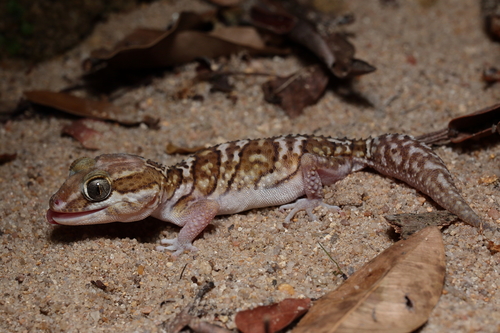
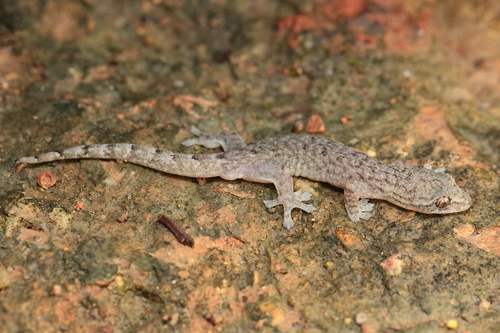
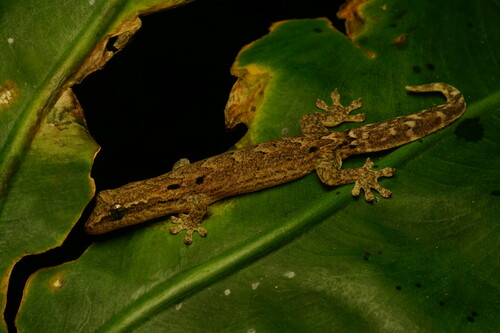
This species has cryptic coloration, and is typically light to dark tan with dark spots running the full length of its back, plus a brown stripe extending from the ear to the tip of the nose.
Color Change Capability
It is capable of changing color, so the same individual can appear light or dark at different times of day.
Native Distribution Range
This species is widespread across coastal regions of the Indian and Pacific oceans, including the Maldives, Sri Lanka, India, Myanmar, Malaysia, Vietnam, Thailand, Cambodia, Japan, Taiwan, China, Indonesia, Singapore, Philippines, Papua New Guinea, Fiji, Australia (Cocos Island), Western Samoa, Guam, the Society Islands, Pitcairn, and the Mascarene Islands.
Neotropical Introductions
It has been widely introduced to the Neotropics, including Mexico, Brazil, Guatemala, Honduras, El Salvador, Nicaragua, Costa Rica, Panama, Florida, The Bahamas, Guadeloupe, Ecuador (including the Galapagos), Colombia and Chile.
Additional Introduced Ranges
It has also been introduced to Hawai'i and the Seychelles in the Indian Ocean.
Activity Pattern
L. lugubris is primarily nocturnal, but can occasionally be found exposed near cover during the day.
Parthenogenetic Reproduction
This species consists almost entirely of females that reproduce via parthenogenesis.
Male Occurrence
While males do occur occasionally, they are very rare and often sterile.
Egg Laying Traits
Females lay 1–2 eggs per clutch, and glue the eggs to surfaces in protected locations.
Clutch Frequency
New clutches are laid every 4–6 weeks.
Reproductive Mechanism
Its obligate parthenogenetic reproductive mechanism relies on premeiotic endoreplication of chromosomes.