About Laticauda semifasciata (Reinwardt, 1837)
Nomenclature
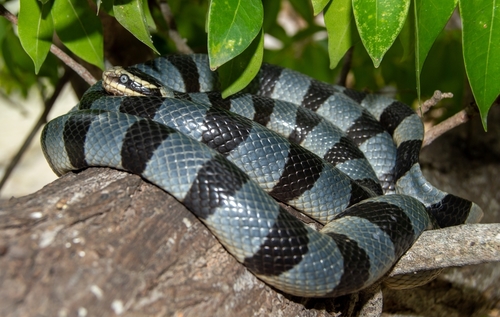
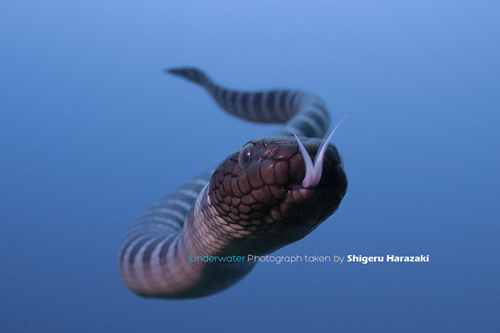
The black-banded sea krait, with the scientific name Laticauda semifasciata, is also commonly known as the Chinese sea snake or erabu. It is a largely amphibious, extremely venomous marine reptile that belongs to the subfamily Laticaudinae of the family Elapidae, which also includes cobras, mambas, coralsnakes, and their close relatives.
General Distribution
This species occurs across most of the western Pacific Ocean and parts of the Sea of Japan. In Japan, it is called erabu umi hebi, meaning erabu sea snake, while in Okinawa it is simply known as irabu.
Habitat
This sea krait is most often found in coral reef habitats. Its body has a short head, thick trunk, and no easily noticeable neck, which lets it explore tight spaces to find prey.
Body Structure
Its tail is made of extended skin spread wide like a fin, with no bony projections from the vertebral column supporting it. The snake's stomach is comparatively wide.
Breeding Behavior
Black-banded sea kraits gather in large groups near the shore, and breed between narrow cracks in reefs and inside caves. This is a nocturnal species, so it is rarely seen during the day.
Breathing Frequency
It breathes air, and must surface to breathe at least once every six hours.
Solo Hunting Behavior
Because it is too slow to chase prey in open water, black-banded sea kraits hunt mostly by exploring small spaces within coral reefs to locate hidden fish and other appropriately sized prey. This careful searching of narrow reef nooks and crannies is similar to the hunting behavior of one of the snake's main prey items, the moray eel.
Cooperative Foraging
Black-banded sea kraits have also been observed foraging in mutually beneficial partnerships with bluefin trevally: the sea krait searches the reef for prey, while waiting groups of trevally stand by to catch any smaller fish or crustaceans that are accidentally flushed out of the coral.
Venom Function
The species' bite delivers highly potent venom that paralyzes prey.
Reproduction
Females of this species lay their eggs on land.
Distribution Range
The black-banded sea krait lives in the warm waters of the western Pacific Ocean. Its established distribution range includes China, Indonesia, Japan, the Philippines, and Taiwan.
Range Expansion
Recently, researchers have discovered populations of L. semifasciata in the waters around southern South Korea. This northward expansion beyond the species' original range is linked to climate change, which has caused deterioration of its original habitat.