About Lathyrus linifolius (Reichard) Bässler
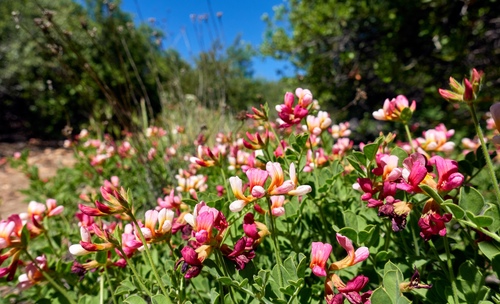
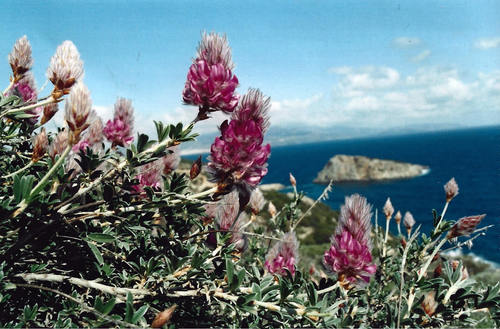
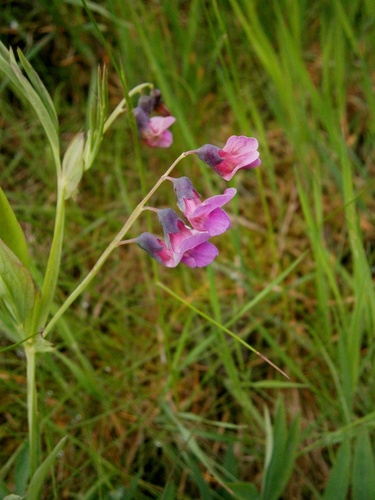
Lathyrus linifolius (Reichard) Bässler is a perennial plant that grows dark-colored tubers up to 3 centimetres (1+1⁄4 in) wide, which attach to its roots. Its erect, winged stems grow to 50 cm (20 in) tall and are nearly hairless. Its leaves are alternate, with short winged stalks and large stipules. The leaf blades are pinnate, with two to four pairs of narrow lanceolate leaflets that have blunt tips, entire margins, and no tendrils. Its inflorescence has a long stem and bears two to six red flowers, each 10 to 16 mm (3⁄8 to 5⁄8 in) long; the flowers turn bluer as they age. Each flower has five sepals, five irregularly arranged petals, ten stamens, and a single carpel. The petals are differentiated into a large uppermost "standard", two lateral "wings", and two lower petals joined to form a "keel". The fruit is a long reddish-brown pod that holds up to ten seeds. This plant flowers in May and June.
Lathyrus linifolius is native to Europe and parts of Asia. Its typical habitat includes rough grassy areas, broad-leaved woodland, forest margins, hedgerows, and banks.
The tubers of Lathyrus linifolius can be eaten raw, but they are better when cooked and eaten like chestnuts. This plant may be the species eaten by Roman soldiers during the battle of Dyrrhacium in 48 BCE. Until the 18th century, when potatoes became an important crop in the Scottish Highlands, the plant was part of the local Highland diet during periods of food scarcity. The small tubers were removed from the roots and dried; when eaten, they were reported to suppress thirst and hunger pangs. Certain medieval herbals claimed this effect could last for days or even weeks. This effect is surmised to come from transethanol present in the tubers. Attempts are currently being made to cultivate this plant on a commercial scale.