About Larus pacificus Latham, 1801
Range Distinction
Pacific gulls are the only large gulls in their native range, aside from occasional individual kelp gulls.
Adult Size
Adult Pacific gulls measure 58 to 66 cm (23 to 26 in) in length, with a wingspan of 137 to 157 cm (54 to 62 in), and typically weigh between 900 and 1,180 g (1.98 to 2.60 lb).
Adult Plumage
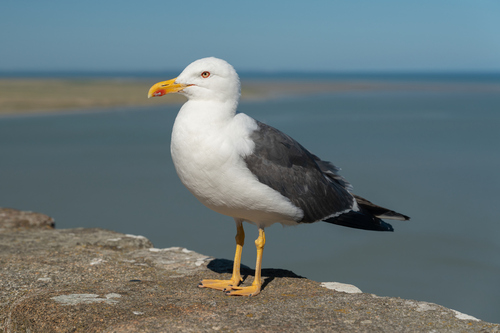
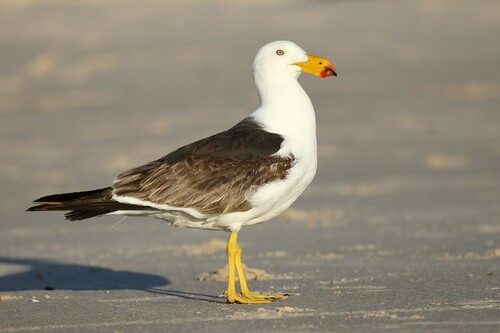
Their plumage is mostly white, with dark wings and a dark back.
Adult Bill Structure
They have a very thick, powerful yellow bill with a red tip, which is noticeably thicker than the bills of most other gull species.
Salt Gland Adaptation
Like many seabirds, they possess salt glands that secrete excess salt as salty water through the nostrils.
Juvenile Plumage
Juvenile Pacific gulls are covered in mottled brown plumage across their entire bodies, and develop adult plumage gradually.
Maturation Timeline
By their fourth year, young Pacific gulls are usually almost indistinguishable from fully mature adult birds.
Subspecies Recognition
There are two recognized subspecies of this species.
Subspecies Habitat Preferences
The nominate eastern subspecies favors sheltered beach habitats, while the western subspecies L. p. georgii regularly occurs even on exposed shorelines.
Nesting Social Structure
Both subspecies nest either in pairs or in loose colonies on offshore islands.
Nest Construction and Clutch
They build cup-shaped nests from grasses and sticks in exposed locations, and lay two or three mottled brown eggs per clutch.