About Larus delawarensis Ord, 1815
Size
The ring-billed gull (Larus delawarensis Ord, 1815) is a medium-sized gull. On average, it measures 43 to 54 centimetres (16.9 to 21.3 in) in length, with a wingspan ranging from 105 to 117 centimetres (41.3 to 46.1 in). Adult ring-billed gulls weigh between 300 and 700 grams (10.6 to 24.7 oz).
Adult Plumage
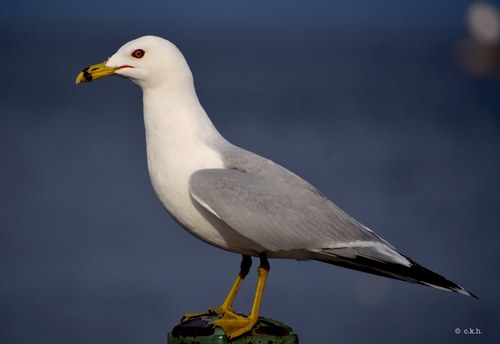
Their head, neck, and underparts are white; they have a relatively short yellow bill marked with a black ring, silver grey back and wings with black wingtips that hold white 'mirrors', and yellow legs. Their eyes are yellow, with red eye rims.
Plumage Development
This species takes three years to develop breeding plumage, starting with largely brown juvenile plumage, and its appearance changes with each annual fall moult.
Lifespan
The average lifespan of a ring-billed gull that reaches adulthood is 10.9 years. The oldest recorded ring-billed gull was observed alive at 28 years old in Cleveland in 2021.
Breeding Range
Ring-billed gulls breed near lakes, rivers, or coasts across most of Canada and the northern United States.
Nesting Habits
They nest in colonies on the ground, often on islands, and are increasingly nesting on flat factory roofs. This bird is usually faithful to its nesting site each year, though not always to its mate.
Common Habitats
Ring-billed gulls are a common, easily spotted sight in North American parking lots, where they regularly gather in large groups. In some regions, they displace less aggressive bird species such as the common tern.
Migration Patterns
They are migratory birds: most individuals move south to the Gulf of Mexico, and the Atlantic and Pacific coasts of the United States and northern Mexico for winter. A small number remain in Canada through winter in the mildest areas: along the Pacific coast in southwest British Columbia, and along the Atlantic coast in Nova Scotia.