About Kinosternon subrubrum Bonnaterre, 1789
Physical Description
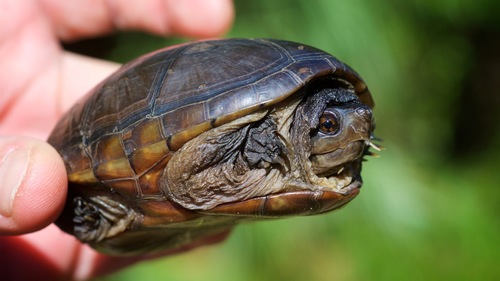
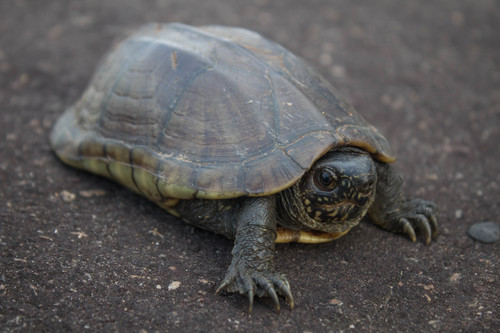
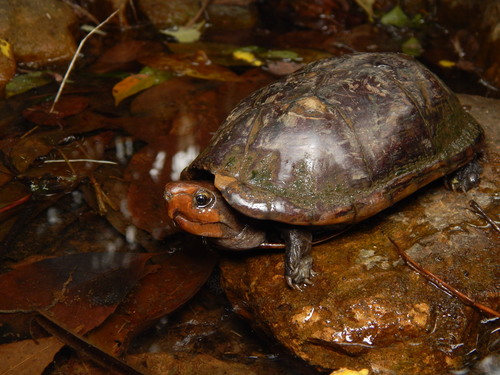
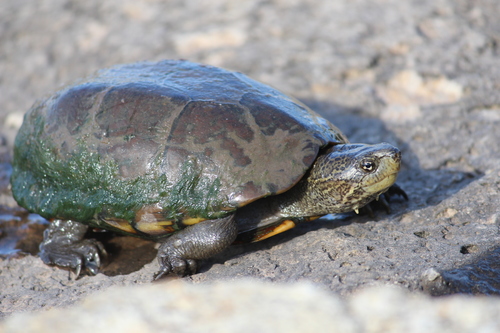
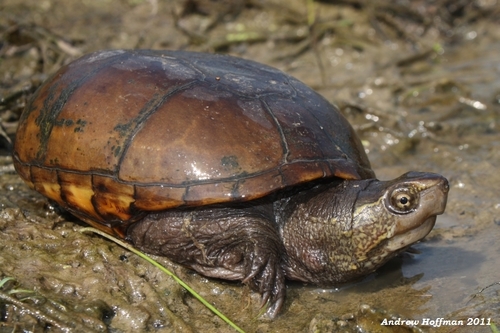
The eastern mud turtle (Kinosternon subrubrum Bonnaterre, 1789) is a small species that is often difficult to identify. Its carapace length measures 3–4 inches (7.6–10.2 cm).
Carapace Features
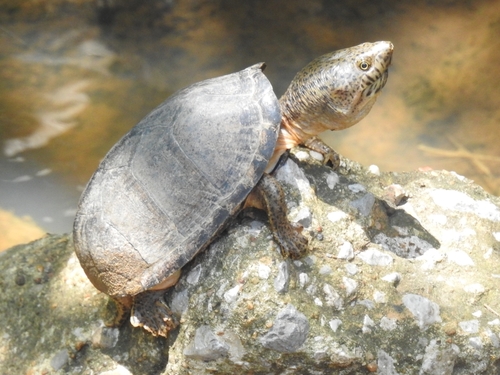
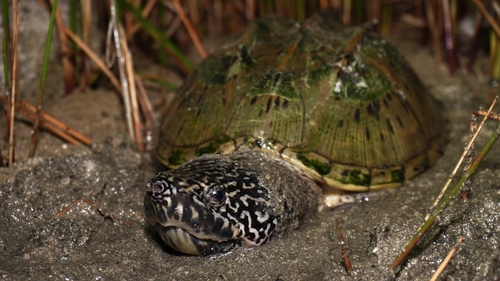
The carapace has no keel, lacks any pattern, and ranges in color from yellowish to black. The plastron is large, double-hinged, and can be yellowish to brown, sometimes with a dark pattern.
Soft Tissue Traits
The chin and throat are yellowish gray, streaked and mottled with brown, while the limbs and tail are grayish. The iris of the eastern mud turtle's eye is yellow with dark clouding, and its feet are webbed.
Taxonomy and Distribution
Eastern mud turtles are freshwater turtles belonging to the genus Kinosternon, found across the Southeastern and Northeastern United States. They inhabit rivers, lakes, and swamps, and prefer ponds with abundant vegetation.
Aquatic Habitat Preferences
They are also commonly found in spring-fed streams, and prefer clean, oxygenated water. Eastern mud turtles rarely bask, but when they do, they bask on rocks or debris floating on the water surface.
Terrestrial Habitat Use
In the wild, they prefer sandy and muddy areas, as they hibernate by burrowing into mud. They choose hibernacula sites around 70 meters from wetlands, with large amounts of leaf and pine litter and sparse tree cover.
Hibernation Burrow Details
They burrow at wetland edges at depths ranging from a minimum of 1.3 cm below the soil surface to a maximum of 3 cm. Leaf litter helps maintain consistent soil moisture and temperature, while a more open canopy exposes turtles to higher temperatures before they emerge.
Brackish Water Tolerance
Mud turtles can tolerate brackish water, so they may also be found near salt marshes and on coastal islands.
U.S. State Range
The confirmed geographic range of the eastern mud turtle within the United States includes the states of Alabama, Arkansas, Delaware, Florida, Georgia, Illinois, Indiana, Kentucky, Louisiana, Maryland, Mississippi, Missouri, New Jersey, New York, North Carolina, Oklahoma, Pennsylvania, South Carolina, Tennessee, Texas, and Virginia. In Indiana, the eastern mud turtle is listed as an endangered species.
Reproductive Timing
Mating for Kinosternon subrubrum occurs in early spring, followed by egg laying from May to early June. Clutch sizes range from 2 to 5 eggs.
Clutch Size Patterns
Clutch size increases as the female's plastron length increases, and females have at least 3 clutches per year. Reproductive patterns for this species vary widely by latitudinal location.
Geographic Clutch Variation
One clutch per year has been reported in some areas, while multiple clutches per year are reported in others. A study conducted in South Carolina found that clutch frequency averaged multiple clutches in warmer parts of the state, while the approximate average was two clutches per year in cooler regions of the state.
Incubation and Hatchlings
The incubation period for eggs ranges from 76 to 124 days. Hatchlings have a wider carapace than the width of the egg they hatch from, which indicates the carapace unfolds immediately after hatching.