Plants — 23,508 Species
Top Families in Plants
All Plants Species
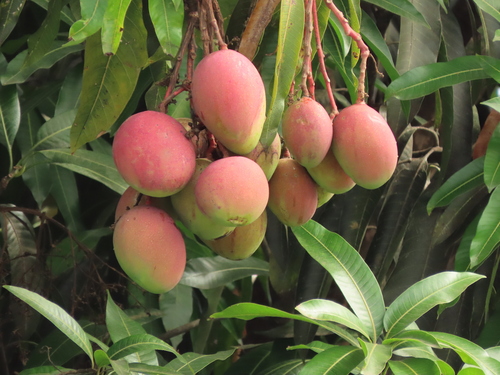
Indian mango
Mangifera indica L.
Mangifera indica (mango) is a large tropical tree grown globally for its popular edible fruit.
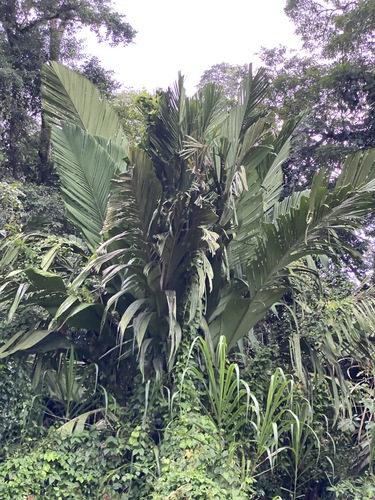
Troolie Palm
Manicaria saccifera Gaertn.
Manicaria saccifera is an obligate Neotropical swamp palm threatened by agricultural wetland draining, with a history of human use for thatch.
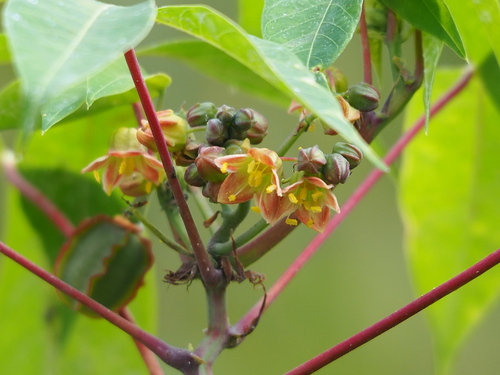
Cassava
Manihot esculenta Crantz
Manihot esculenta Crantz (cassava) is a starchy root crop with toxic cyanogenic glycosides that requires proper processing before human consumption.
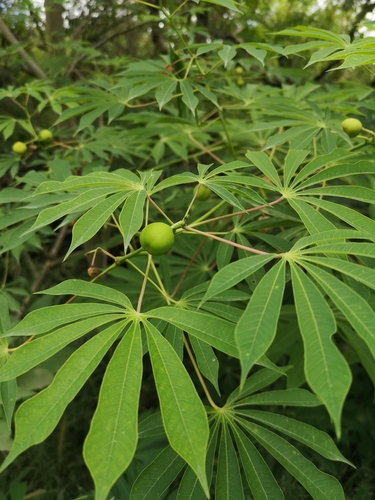
hardy tapioca
Manihot grahamii Hook.
Manihot grahamii is a fast-growing South American shrub or treelet related to edible tapioca, reaching up to 3 m tall.
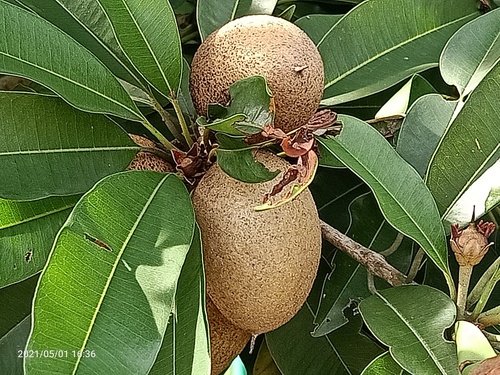
Sapodilla
Manilkara zapota (L.) P.Royen
Manilkara zapota, or sapodilla, is a long-lived tropical tree grown for its edible fruit and latex used for chewing gum.
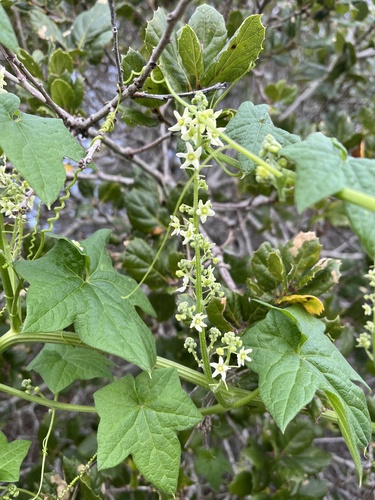
California manroot
Marah fabacea (Naudin) Greene
Marah fabacea, California manroot/bigroot, is a common native California vine with traditional Native American fishing uses.
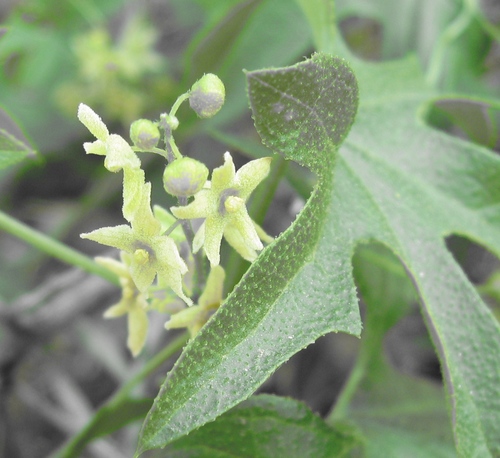
Gila manroot
Marah gilensis (Greene) Greene
Marah gilensis is an uncommon perennial desert vine native to the Southwestern United States, growing from a large branched tuber.
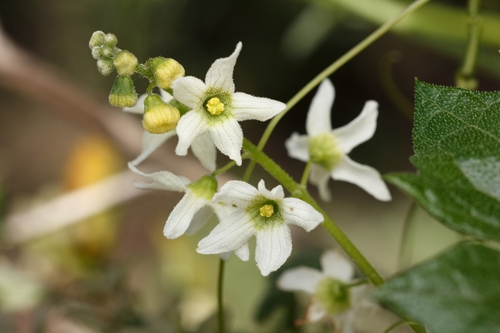
Chilicothe
Marah macrocarpa (Greene) Greene
Marah macrocarpa is a wild California/Mexico vine with a massive tuber, used traditionally by Indigenous peoples, that is toxic to consume.
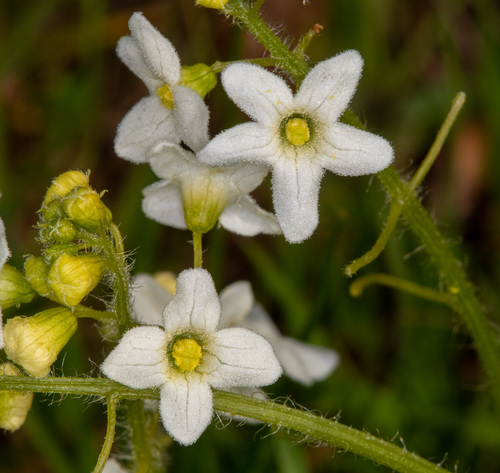
coastal manroot
Marah oregana (Torr. & A.Gray) Howell
Marah oregana is a common toxic northwest North American manroot with various traditional Native American uses.
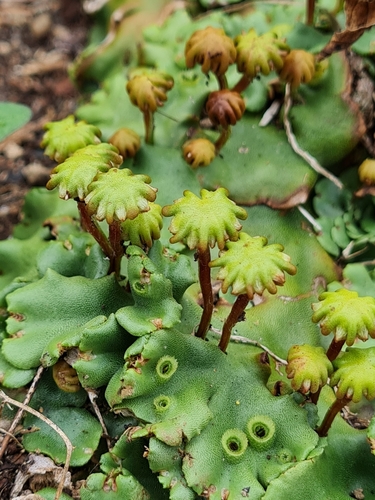
Bonfire Liverwort
Marchantia berteroana Lehm. & Lindenb.
Marchantia berteroana is a dioicous thalloid liverwort that can reproduce both sexually and asexually, found across many Southern Hemisphere regions.
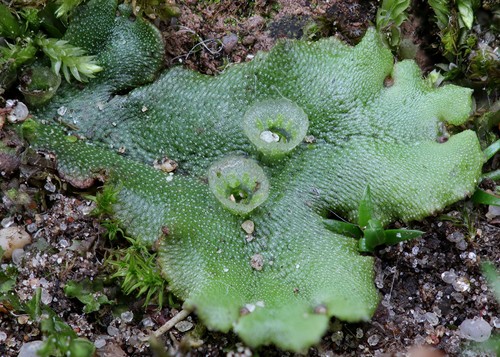
Common Liverwort
Marchantia polymorpha L.
Marchantia polymorpha L. is a widespread thallose liverwort with key roles in post-fire soil recovery and uses in treating fungal infections.
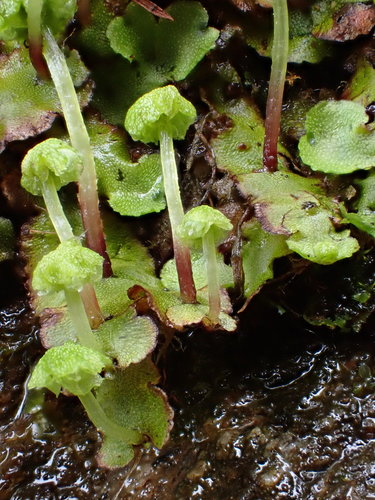
Narrow Mushroom-headed Liverwort
Marchantia quadrata Scop.
Marchantia quadrata is a liverwort defined by thick midribless thalli, distinct seasonal reproductive development, and strong regenerative ability.
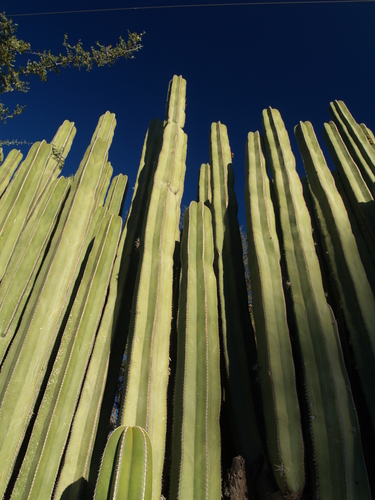
Mexican Fence Post Cactus
Marginatocereus marginatus (DC.) Backeb.
Marginatocereus marginatus is a rarely branching columnar cactus native to Mexico and southern border US states, sometimes used for fencing.
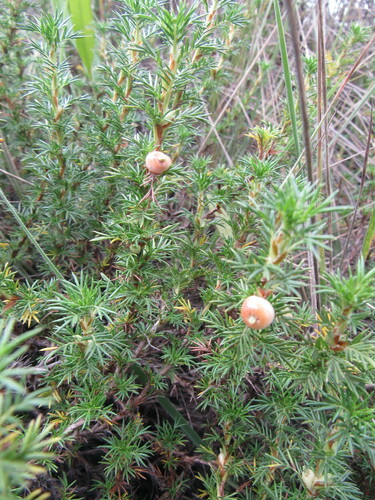
Pearl fruit
Margyricarpus pinnatus (Lam.) Kuntze
Pearl-fruit, Margyricarpus pinnatus, is a South American native ornamental plant in the Rosaceae family.
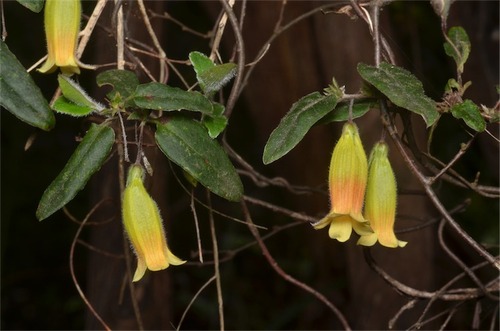
Orange Bell-climber
Marianthus bignoniaceus F.Muell.
Marianthus bignoniaceus is a climbing twiner found only in parts of Victoria and South Australia.
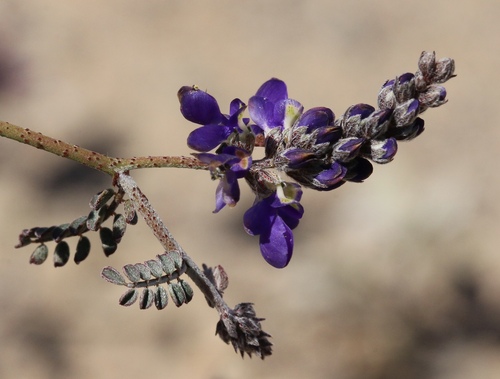
Parry's false prairie-clover
Marina parryi (Torr. & A.Gray) Barneby
Marina parryi, or Parry's false prairie-clover, is a perennial legume native to deserts of the southwestern US and northern Mexico.
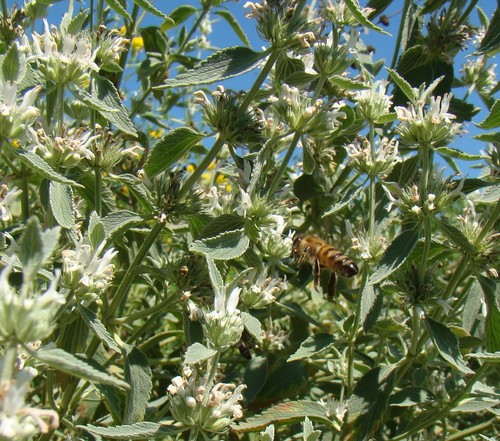
Marrubium peregrinum L.
Marrubium peregrinum L.
Marrubium peregrinum is a 60 cm tall herbaceous perennial horehound native to parts of Europe and Asia Minor.
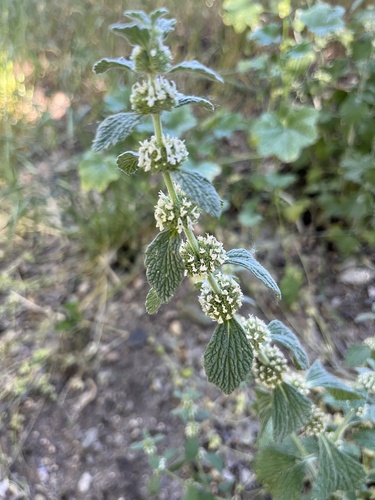
White Horehound
Marrubium vulgare L.
Marrubium vulgare (white horehound) is a Lamiaceae flowering plant with a long history of folk medicinal use.
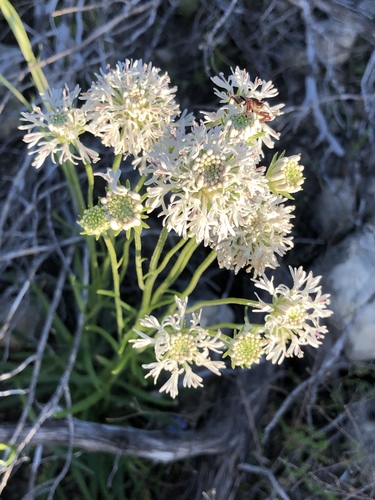
Barbara's-buttons
Marshallia caespitosa Nutt. ex DC.
Marshallia caespitosa is a perennial herb with white to pink flowers that grows on rocky, shale, and hilly sites.
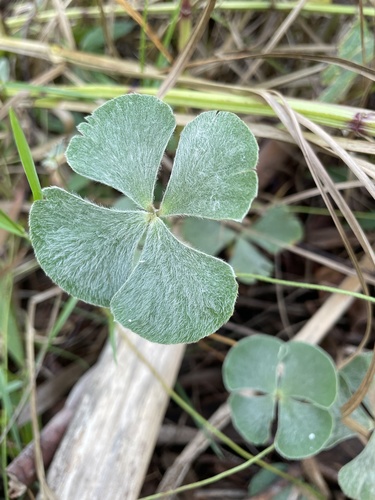
Common Nardoo
Marsilea drummondii A.Braun
Marsilea drummondii, commonly nardoo, is a native Australian aquatic fern with edible but toxic-unless-prepared sporocarps.
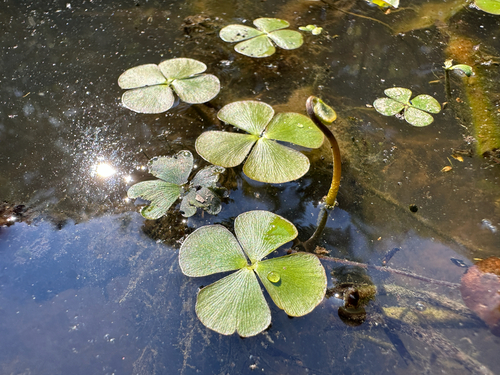
clover fern
Marsilea quadrifolia L.
Marsilea quadrifolia L. is an aquatic four-leaf fern with documented traditional uses and adaptable cultivation requirements.
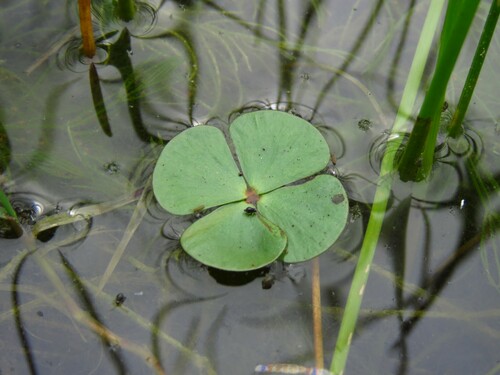
water clover
Marsilea vestita Hook. & Grev.
Marsilea vestita, or hairy water-clover, is an aquatic fern native to parts of the Americas that grows two forms depending on conditions.
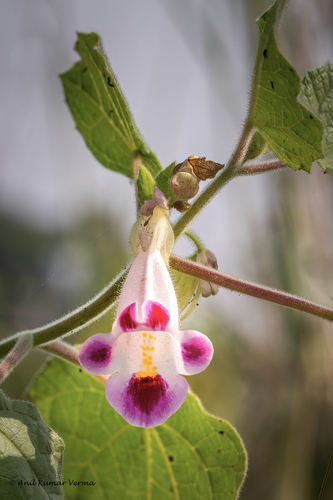
Cat's Claw
Martynia annua L.
Martynia annua is a hooked-fruited annual, widely naturalized tropically, used for ornaments and traditional South Asian medicine.
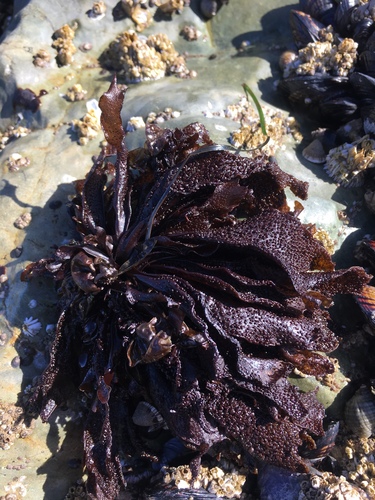
Turkish washcloth
Mastocarpus papillatus (C.Agardh) Kützing, 1843
Mastocarpus papillatus is an edible northeastern Pacific red alga with a complex life cycle and multiple common names.
Start Exploring Nature Today
Download iNature for free. 10 identifications on us. No account needed. No credit card required.
Scan with iPhone camera
Scan with Android camera


