Plants — 23,508 Species
Top Families in Plants
All Plants Species

Ghost Orchid
Epipogium aphyllum Sw.
Epipogium aphyllum, the ghost orchid, is a rare chlorophyll-lacking mycoheterotrophic orchid distributed across Eurasian temperate forests.
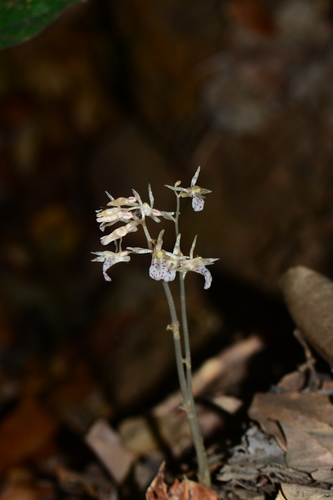
Rose Epipogium
Epipogium roseum (D.Don) Lindl.
Epipogium roseum is a leafless mycotrophic orchid that grows on decaying wood in high rainfall areas across Asia, Africa, Australia and Pacific islands.
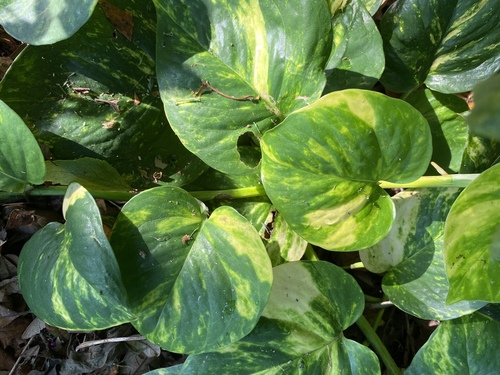
Golden Pothos
Epipremnum aureum (Linden & André) G.S.Bunting
Epipremnum aureum, commonly golden pothos, is a popular evergreen houseplant toxic to pets and mildly toxic to humans.
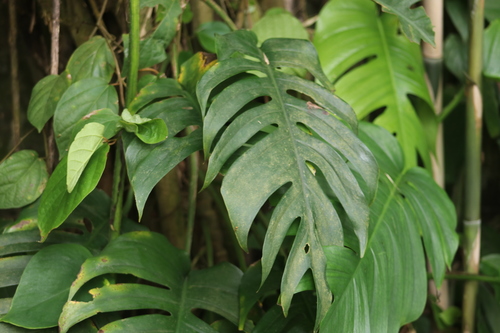
Dragon-tail
Epipremnum pinnatum (L.) Engl.
Epipremnum pinnatum is a vining aroid plant commonly grown ornamentally as a houseplant or garden plant.
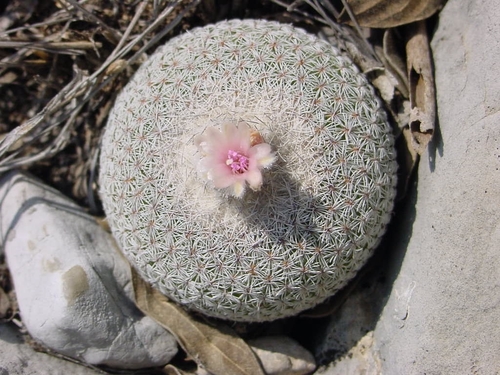
Button Cactus
Epithelantha micromeris (Engelm.) F.A.C.Weber
Epithelantha micromeris is a small button cactus native to the southwestern US and northeast Mexico that bears edible bright red fruit.
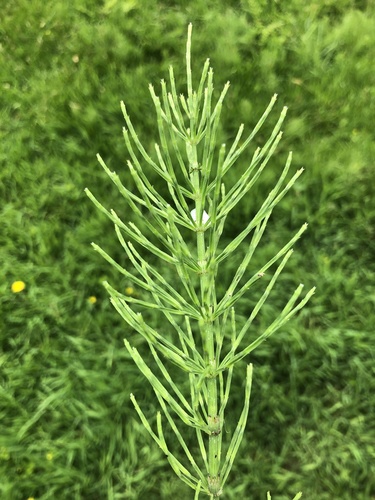
field horsetail
Equisetum arvense L.
Equisetum arvense L., or field horsetail, is a dimorphic non-flowering perennial herb with many traditional and potential modern medicinal uses.
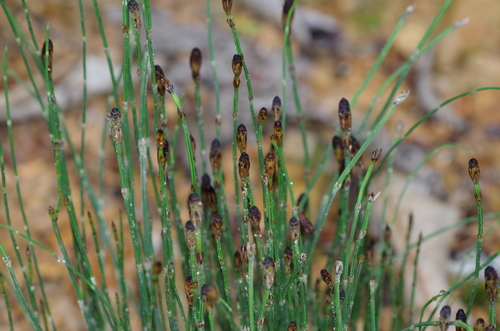
Andean Horsetail
Equisetum bogotense Kunth
Equisetum bogotense, the Andean horsetail, is an ancient herbaceous perennial diuretic horsetail used in traditional and modern herbal medicine.
Equisetum braunii Milde
Equisetum braunii Milde
Equisetum braunii Milde is an herbaceous perennial horsetail with two stem types, spreading via deep rhizomes in damp habitats.
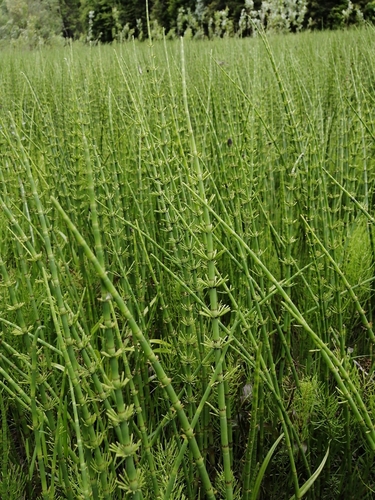
water horsetail
Equisetum fluviatile L.
Equisetum fluviatile L., or water horsetail, is a Northern Hemisphere aquatic plant with historical medicinal and fodder uses.
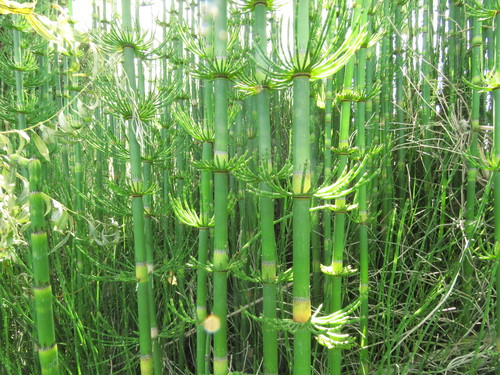
Southern Giant Horsetail
Equisetum giganteum L.
Equisetum giganteum L. is one of the largest and stoutest-stemmed horsetail species, native to parts of South America.
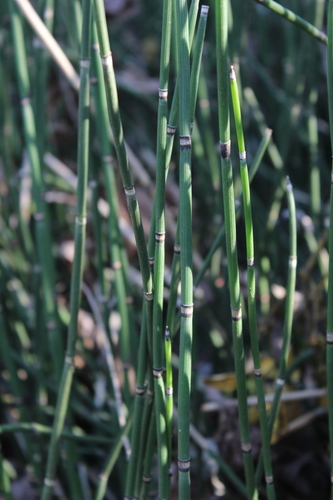
rough horsetail
Equisetum hyemale L.
Equisetum hyemale L. is a rough-stemmed spore-bearing plant, native to northern regions, widely cultivated as a garden ornamental.
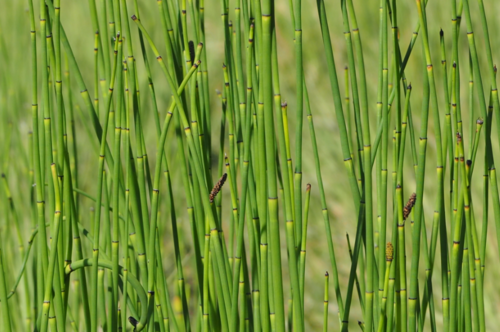
smooth horsetail
Equisetum laevigatum A.Braun & Engelm.
Equisetum laevigatum, smooth horsetail, is a North American horsetail species native to most of the continent.
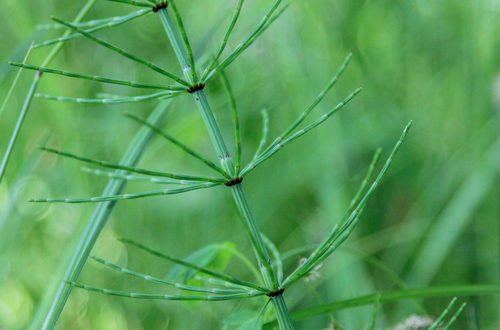
marsh horsetail
Equisetum palustre L.
Equisetum palustre L. (marsh horsetail) is a toxic wetland fern ally that occurs across Europe and the northern circumpolar region.
smooth horsetail
Equisetum praealtum Raf.
Equisetum praealtum is an evergreen herbaceous perennial that grows in wet habitats across North America.
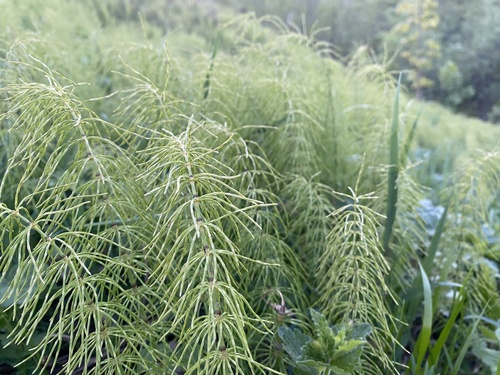
meadow horsetail
Equisetum pratense Ehrh.
Equisetum pratense is a widespread toxic pioneer horsetail found across northern Eurasia and North America.
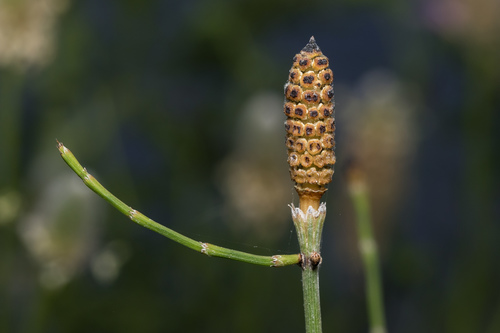
Branched Horsetail
Equisetum ramosissimum Desf.
Equisetum ramosissimum Desf. is a branching horsetail with variable growth form, found in damp places and shingle.
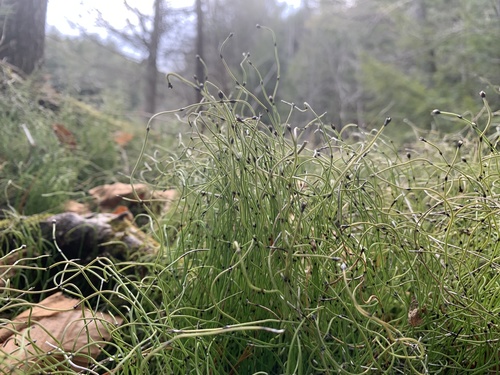
dwarf horsetail
Equisetum scirpoides Michx.
Equisetum scirpoides Michx. is the smallest living horsetail, a small unbranched wiry species with a broad northern distribution.
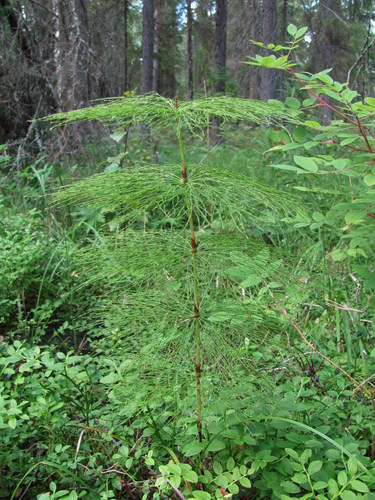
wood horsetail
Equisetum sylvaticum L.
Equisetum sylvaticum L. (wood horsetail) is a perennial pteridophyte of forested moist habitats that mainly reproduces vegetatively.
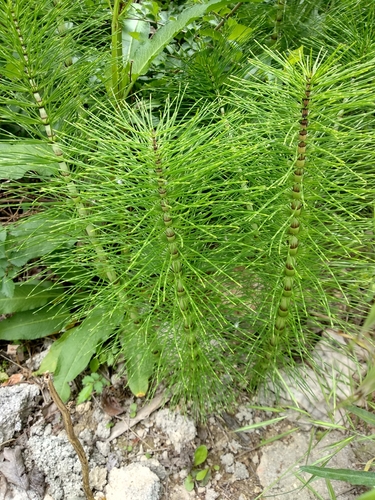
great horsetail
Equisetum telmateia Ehrh.
Equisetum telmateia, the great horsetail, is a branched perennial with distinct fertile and sterile stems, found across Europe and western Asia.
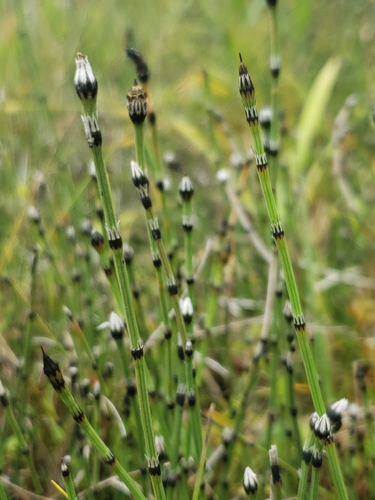
variegated horsetail
Equisetum variegatum Schleich. ex F.Weber & D.Mohr
Equisetum variegatum is a variable, circumpolar northern-hemisphere fern relative that grows in open, lime-rich seasonally flooded sites.
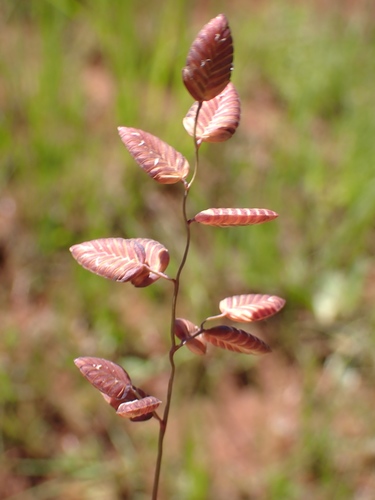
Cape Love Grass
Eragrostis capensis (Thunb.) Trin.
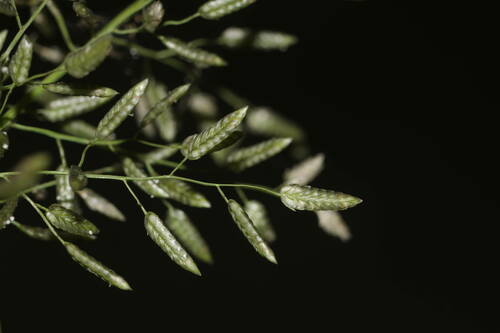
stinkgrass
Eragrostis cilianensis (All.) Vignolo ex Janch.
Eragrostis cilianensis is an aromatic annual bunchgrass native to Eurasia and Africa, widely naturalized across North America.
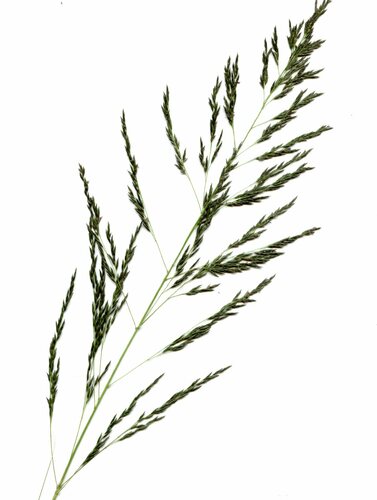
African love grass
Eragrostis curvula (Schrad.) Nees
Eragrostis curvula is a variable grass used for forage, erosion control, and craft, and invasive in some regions.
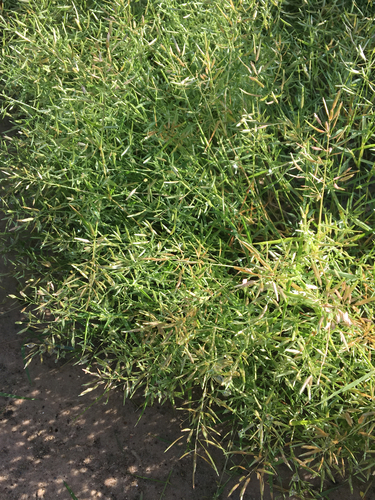
Teal Lovegrass
Eragrostis hypnoides (Lam.) Britton, Sterns & Poggenb.
Eragrostis hypnoides is a low, mat-forming creeping annual grass with small colored spikelets on its short erect stems.
Start Exploring Nature Today
Download iNature for free. 10 identifications on us. No account needed. No credit card required.
Scan with iPhone camera
Scan with Android camera


