About Kalimeris incisa subsp. incisa
Nomenclature
Kalimeris incisa subsp. incisa is also known by the synonym Aster incisus, with common names including kalimeris and Japanese cutleaf aster.
Growth Habit
It is a herbaceous perennial that grows 30 to 120 cm tall, and reaches approximately 50 cm in spread.
Stem Characteristics
Its stems are erect, glabrous, and branched in their upper section.
Leaf Characteristics
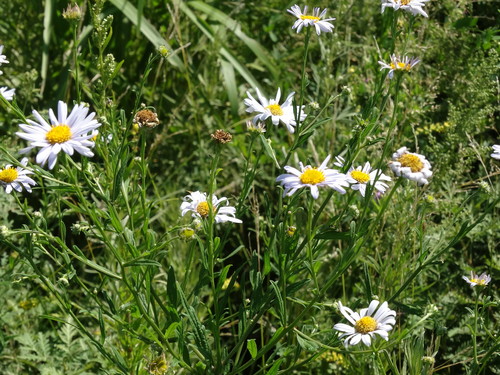
Its leaves are lanceolate and arranged alternately along the stem; the species' Latin name references the toothed or incised appearance of these leaves.
Flower Characteristics
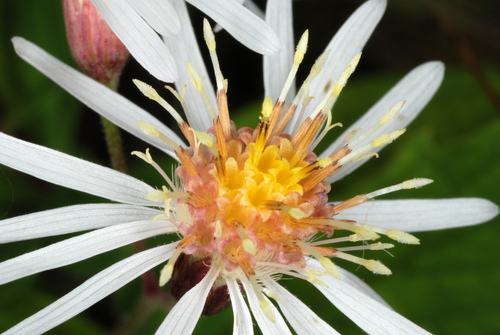
Its flowers are stellate: ray florets range in colour from pink to bluish-purple, while disk florets are yellow.
Flowering Period
Flowering occurs from June to October.
Fruit Characteristics
It produces a dry fruit called an achene; achenes are brownish, ovoid, and measure 3 to 3.5 mm long.
Maturation Timeline
Individual plants take two to five years to reach full maturity.
Colony Formation
Over time, groups of this plant spread to form colonies.
Natural Habitat
This plant grows naturally in meadows and lowlands.
Traditional Use
It has been used in Korean traditional medicine.
Pharmacological Properties
Research conducted in Korea shows that this species has antioxidant and anti-inflammatory properties, and may potentially be useful for treating several types of cancer.