About Justicia gendarussa Burm.fil.
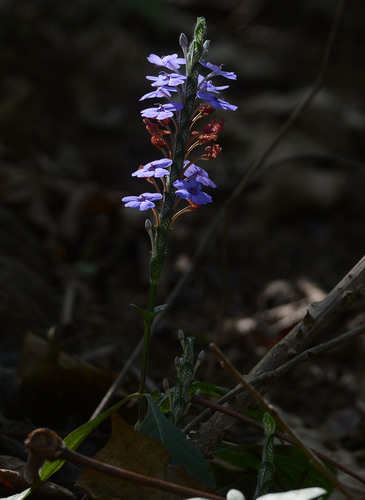
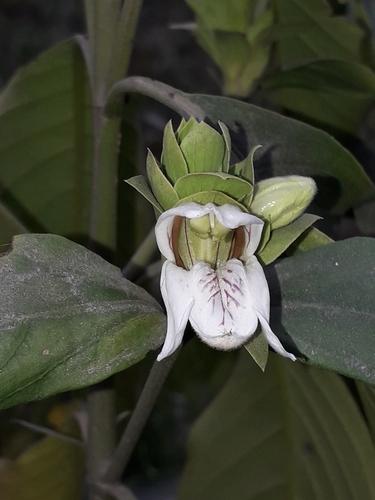
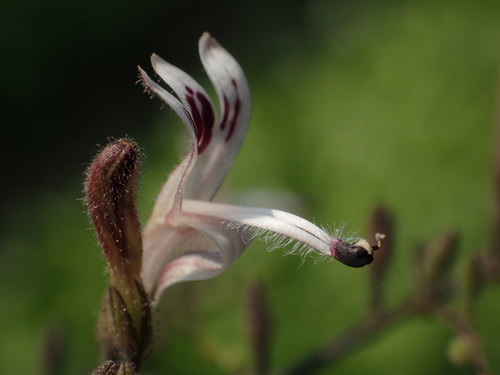
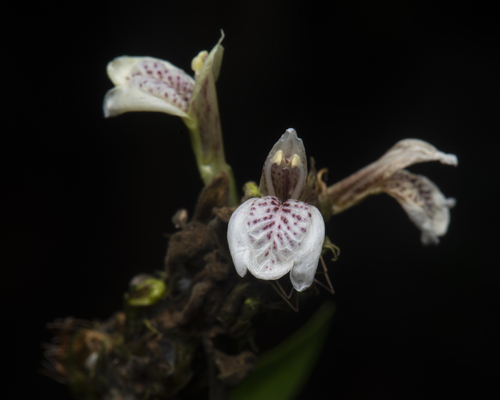
Justicia gendarussa Burm.fil. is an erect, branched dicotyledonous shrub in the Acanthaceae family, growing up to 1.5 meters tall. Its lanceolate leaves measure 4–14 cm long and 1–2.5 cm wide, and can be white, green, or grey, with hairs on both sides. The leaves are described as bitter, acrid, and thermogenic. Rather small flowers form 4–12 cm long spikes at branch ends or in leaf axils; they are white or pink with purple spots, and are hermaphrodite. The plant’s bark is dark purple, and its smooth capsule grows to around 1.2 cm long. This species contains a wide range of biologically active compounds, including flavonoids, alkaloids, steroids, and phenolic compounds. J. gendarussa prefers shaded environments, so it grows naturally in forests of India, Malaysia, and Sri Lanka. It is currently harvested from the wild. Uncontrolled harvesting driven by its extensive medicinal use, combined with habitat destruction, has led to population decline. Additionally, the plant reproduces via seeds that only remain viable for a very short period of time. For these reasons, developing alternative sustainable cultivation and conservation methods is important. Hydroponic cultivation is one alternative method for large-scale production: J. gendarussa explants are placed in thermocole sheets, then submerged in water containing a nutrient solution. Plant growth regulators such as Indole-3-butyric acid can be added to increase biomass production, particularly in the initial phase to stimulate root growth. Temperatures are maintained between 28° and 34 °C, and plants can be harvested after 50 days. Silviculture is another method that can improve J. gendarussa production. Possible fertilizers for this approach include chicken manure and bamboo charcoal applied at a rate of 1.5 t/ha. The plant has a high rate of root infection and forms a strong mycorrhizal association. Arbuscular mycorrhizal fungi play an important role in maintaining soil fertility and plant vigor, through their effects on soil microflora and nutrient cycling. This mycorrhizal association can increase the plant’s growth and yield. J. gendarussa has been confirmed to contain multiple phytochemicals (natural secondary plant compounds). Alkaloids, flavonoids, tannins, and phenols have been found across the whole plant, in roots, stems, and leaves. The plant’s phytochemical content can vary based on the plant’s age, the physiological stage of individual plant parts, and the geographic region where it is grown. The plant has demonstrated both anti-microbial and anti-fungal activity against selected pathogen strains, so it can be used to develop herbal drugs. J. gendarussa leaf extract has shown potential as a non-hormonal male contraceptive, due to its competitive, reversible inhibition of the sperm hyaluronidase enzyme. This plant is already used as a traditional contraceptive in Indonesia. Patentiflorin A, a compound found in J. gendarussa, has shown higher activity against multiple HIV strains than zidovudine (AZT), the first clinically used anti-HIV drug. Leaf extracts also have an anti-inflammatory effect, which has been demonstrated specifically in mice with carrageenan-induced paw edema. Leaf juice can be dripped into the ear to relieve earache, and a leaf oil is used to treat external edema. J. gendarussa has potential as a phytoremediator, as it can absorb high amounts of aluminium, iron, and copper in its leaves, roots, and stems. A key limitation is that plants used for phytoremediation cannot also be used for medicinal purposes.