About Andrographis paniculata (Burm.fil.) Nees
Growth and Habitat Overview
Andrographis paniculata (Burm.fil.) Nees is an erect herb that grows 30 to 110 cm (12 to 43 inches) tall in moist, shady locations.
Stem Characteristics
Its slender stem is dark green, square in cross-section, with longitudinal furrows and wings along its corners.
Leaf Characteristics
The leaves are lance-shaped, with hairless blades that reach up to 8 cm (3.1 inches) long and 2.5 cm (0.98 inches) wide.
Flower Characteristics
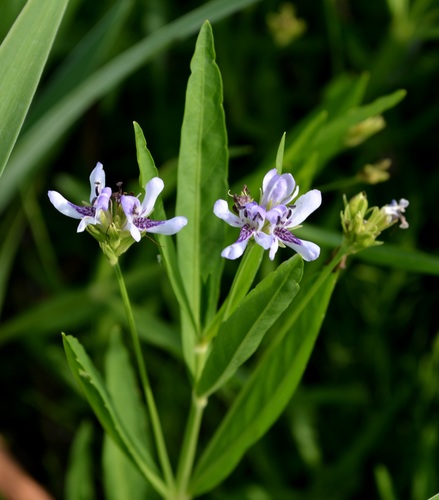
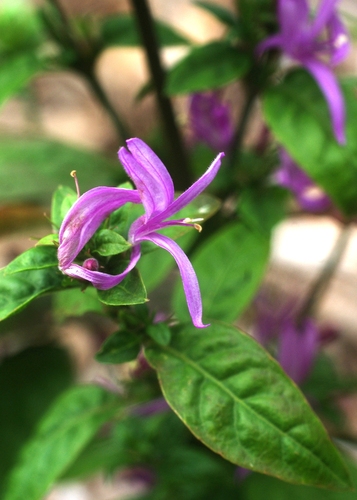
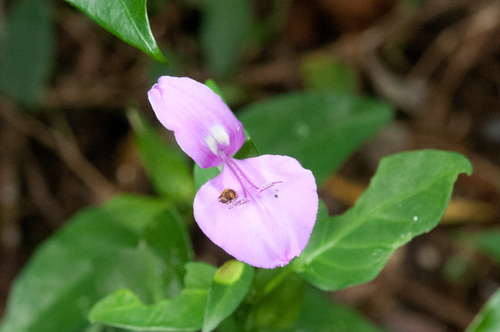
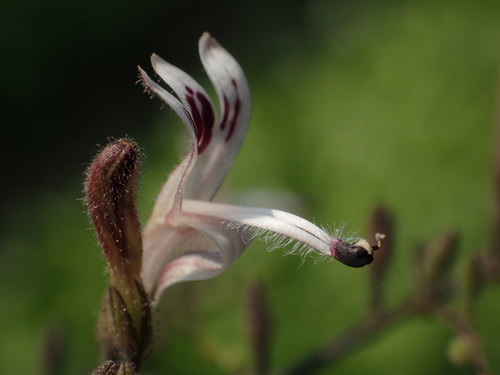
Its small pink flowers grow solitary, arranged in loose, spreading racemes or panicles.
Fruit Characteristics
The fruit is a capsule around 2 cm (0.79 inches) long and a few millimeters wide, holding many yellow-brown seeds.
Seed Characteristics
The seeds are subquadrate, wrinkled, and hairless.
Flowering Period
This species flowers from September to December.
General Distribution Range
This plant is distributed across tropical Asian countries, where it often grows in isolated patches.
Habitat Tolerance
It can grow in a wide range of habitats, including plains, hillsides, coastlines, and disturbed or cultivated areas such as roadsides and farms.
Native Population Range
Native populations of A. paniculata are spread across southern India and Sri Lanka, which is likely the center of origin and diversity for the species.
Introduced Population Range
It is an introduced species in northern India, Java, Malaysia, Indonesia, the West Indies, and other parts of the Americas.
Uncertain Status Regions
It also grows in the Philippines, Hong Kong, Thailand, Brunei, Singapore, and other parts of Asia, where its native status is uncertain.
Cultivation Status
The species is also cultivated in many regions.
India Distribution Details
Unlike other species in the Andrographis genus, A. paniculata is common across most of India, including plains and hilly areas up to 500 m (1,600 ft) elevation, which contributes to its wide use.
Harvest Source in India
In India, most harvested A. paniculata is collected from wild habitats.
Conservation Status
The IUCN categorizes this plant as Least Concern (Low Risk).
Trade Volume
Traded under the name Kalmegh in India, an average of 2,000 to 5,000 tonnes (2,200 to 5,500 tons) of the plant is traded annually.
TGA Safety Review Status
Safety evaluations of this herb by the Australian Therapeutic Goods Administration (TGA) are ongoing.
TGA Regulatory Actions
A TGA spokesperson stated that this ongoing work includes further strengthening labelling requirements and/or restrictions on the availability of Andrographis paniculata as an ingredient.
Drug Metabolism Interaction Risk
A 2012 review found that A. paniculata extracts can inhibit the expression of several cytochrome C enzymes, and may therefore interfere with the metabolism of other pharmaceutical drugs.
Adverse Reaction Risk
A 2019 review noted that A. paniculata compounds such as andrographolide have poor solubility and relatively low potency, and that Xiyanping, a semi-synthetic injectable derivative of the plant, can cause sometimes life-threatening allergic reactions.
Cultivation Light Requirement
For cultivation, this plant grows best in a sunny location.
Sowing Period
In the northern hemisphere, its seeds are sown during May and June.
Transplant Spacing
Seedlings are transplanted spaced 60 cm (24 inches) by 30 cm (12 inches) apart.
Traditional and Supplement Uses
A. paniculata has been used in Siddha and Ayurvedic medicine, and is marketed as a dietary supplement for cancer prevention and treatment.
Cancer Claim Evidence
There is no scientific evidence that it helps prevent or cure cancer.
Other Traditional Uses
In Indian traditional medicine, it has also been used to treat jaundice, and it has seen traditional use for the common cold and influenza in both India and China.
ARTI Efficacy Research
A 2017 pre-COVID-19 meta-analysis of A. paniculata for treating acute respiratory tract infections (ARTI) found possible tentative support for its efficacy and safety, but cautioned that the included trials were of poor quality so results are not conclusive.
Culinary Uses
As food, in Cambodia the dried root is macerated in alcohol and consumed as an aperitif, while the seeds are used to make a black jelly called chahuoy khmau.