About Justicia californica (Benth.) D.N.Gibson
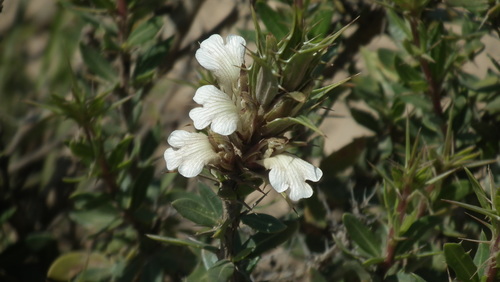
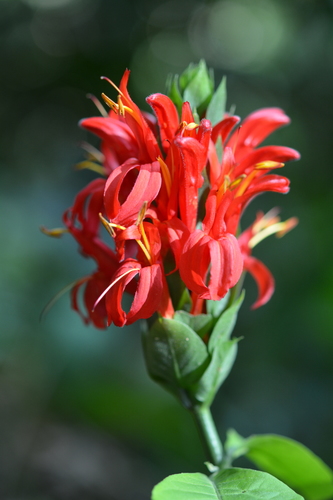
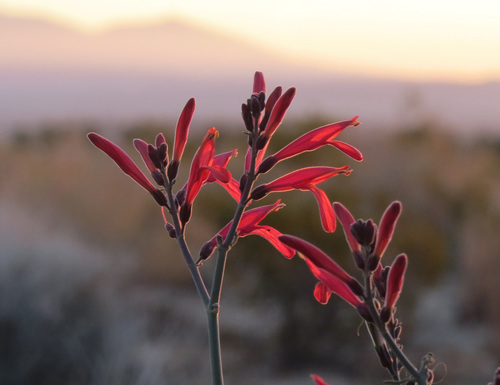
Justicia californica is a deciduous species of flowering shrub native to the deserts of southern California, southern Arizona, and northern Mexico. Its common names are beloperone, chuparosa (derived from the Spanish chuparrosa, meaning hummingbird), and hummingbird bush. It can grow to 1.5 metres (5 feet) in height and almost as wide. It produces short-lived succulent leaves about 1.5 centimetres (5⁄8 inch) wide. After losing its leaves, it produces abundant tubular flowers 2.5–4 cm (1–1+5⁄8 in) long between February and June. Flowers are usually bright to deep red, sometimes yellow, with a two-lobed upper lip and a wide three-lobed lower lip that opens to reveal the inside of the blossom. It is one of the northernmost distributed species of the mostly tropical genus Justicia. It grows as a low bush in watered areas of dry, hot sandy regions or rocky terrain on the desert floor, usually below 750 m (2,460 ft) above sea level. Hummingbirds visit the bush to feed on its nectar, and other birds eat its sugar-rich flower centers. This plant is sometimes cultivated as a landscape ornamental in desert regions for its bright flowers and to attract birds. It is thought that Southwestern Native Americans ate this plant. In ecology, hummingbirds are a crucial pollinator for this plant, as its common name implies, and the two have coevolved. Through its tube-like flower structure and protruding anthers, the flower ensures pollination by coating the hummingbird's head in pollen every time the hummingbird uses its long, slender beak to drink nectar from the base of the flower. This plant is also effectively pollinated by bees, which use its nectar to make honey. This species has several companion plants that benefit from growing near each other: Ambrosia dumosa, Chilopsis linearis, Larrea tridentata, and Encilia farinosa. Justicia californica has documented antimicrobial properties, giving it medicinal potential. The plant contains useful phytochemicals, phenolic compounds, and flavonoids throughout its root system, stem, and leaves. Glycosides used to treat heart disease are also present in this species. Its flowers are edible. Local Native Americans such as the Diegueno tribe, as well as Spanish people, have a history of eating its flowers. Flower nectar can be consumed on its own, or whole flowers can be added to salads. As a desert plant, Justicia californica is relatively low maintenance once established. It can self-propagate in a desert garden in sandy or gravelly soil. It typically prefers soil that drains quickly with a pH between 6.0 and 8.0. It is drought tolerant, needs full sun exposure, and requires very little water: it only needs a thorough soak once a month after establishment.