About Isopogon ceratophyllus R.Br.
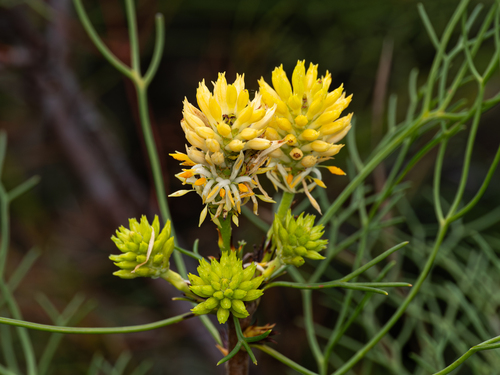
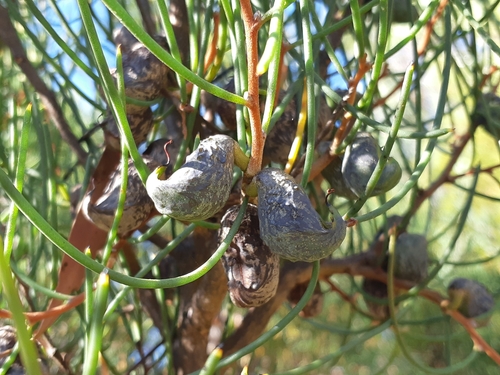
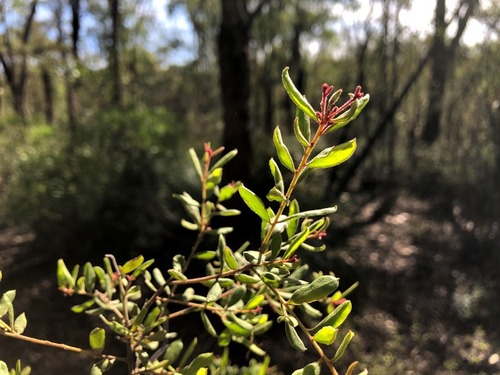
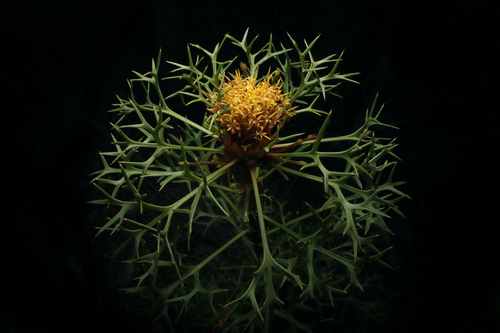
Isopogon ceratophyllus R.Br. is a prickly shrub that grows 15 to 100 cm (6 to 40 inches) tall, and reaches up to 120 cm (4 feet) across. Its oval to round clustered flower structures called inflorescences grow to around 3 cm in diameter, and emerge between July and January. The species is distributed from south-western Victoria into the south-eastern corner of South Australia, and across the Furneaux Group of Bass Strait islands, where it occurs mainly on Flinders, Cape Barren and Clarke Islands. A historical record of the species on King Island has not been reconfirmed and is considered unlikely. It is the only Isopogon species that is native to South Australia. It grows on sandy soils in open eucalyptus forest, open eucalyptus woodland, or heathland. Isopogon ceratophyllus is listed as endangered on the IUCN Red List, based on an assessment completed in February 2019. In South Australia, the Department for Environment and Water classifies the species as least concern across most of its distribution within the state, and rare in some areas east of Adelaide. Isopogon ceratophyllus is extremely sensitive to dieback, which is caused by infection from the pathogen Phytophthora cinnamomi. Fieldwork conducted in the Brisbane Ranges in 1994 found that I. ceratophyllus, which was once common in the area before a dieback outbreak and disappeared from the area along with other dieback-sensitive species, had not returned 30 years after the outbreak. This differs from other sensitive species, such as grasstree (Xanthorrhoea australis), smooth parrot-pea (Dillwynia glaberrima), erect guinea flower (Hibbertia stricta) and prickly broom heath (Monotoca scoparia), which eventually regenerated around 10 years after infection. All Tasmanian populations of the species are at risk of complete elimination by P. cinnamomi. Individual plants are already dying from exposure to the pathogen at Wingaroo Nature Reserve on Flinders Island. Isopogon ceratophyllus is rarely cultivated. It grows slowly and requires well-drained yet moist sandy soils, and is a good fit for rockery gardens.