About Inimicus filamentosus (Cuvier, 1829)
Adult Size and Weight
Adults of Inimicus filamentosus are typically 13 to 25 centimeters long, and can reach a maximum weight of 480 grams.
Body Coloration
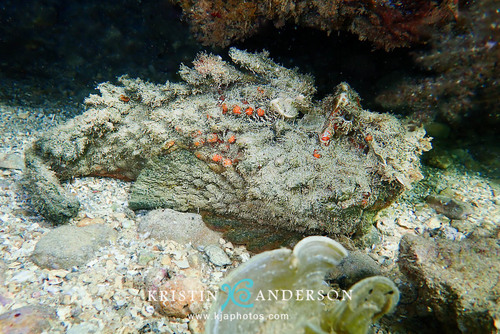
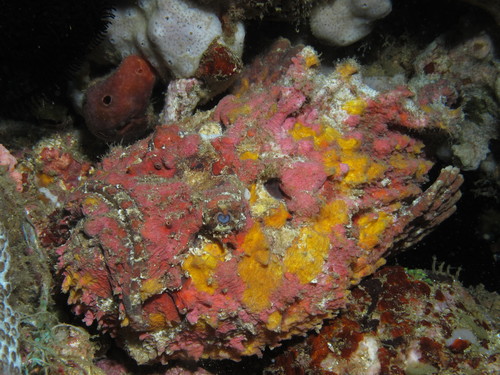
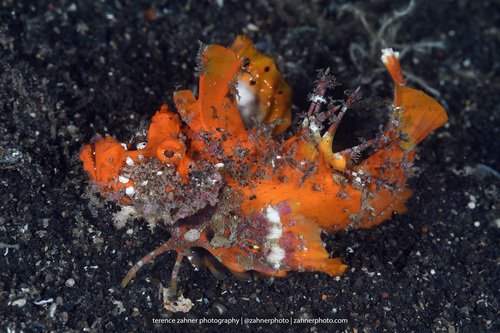
Their body color may be dull yellow, gray, brown, or rust, marked with light blotches.
Camouflage Function
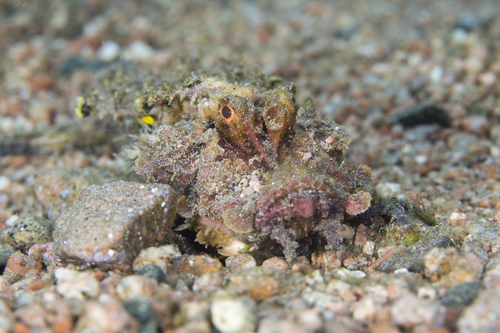
This coloration closely matches the surrounding sandy or coral seabed where the species lives, acting as camouflage that makes them extremely hard to detect in their natural habitat.
Skin Characteristics
Their skin lacks scales except along the lateral line, and is covered in venomous spines and wart-like glands that give it a knobby texture.
Head Morphology
The head is flattened, depressed, and concave; the eyes, mouth, and nostrils project upwards and outwards from the dorsal side of the head.
Sexual Dimorphism
No sexual dimorphism is known to occur in this species.
Dorsal Fin Structure
For fin morphology, the dorsal fin is made up of 15 to 17 spines and 7 to 9 soft rays.
Caudal Fin Structure
The caudal fin has 2 to 4 spines and 4 to 14 soft rays, with dark bands at its basal and subterminal positions.
Pelvic Fin Structure
The pelvic fin consists of one spine and 3 to 5 soft rays.
Pectoral Fin Ray Structure
The pectoral fin has 10 to 12 rays; the two most caudal rays of each pectoral fin are detached from the rest of the fin and angled ventrally.
Modified Pectoral Ray Function
The fish use these two rays to prop up the front of their body, and to "walk" along the substrate bottom.
Pectoral Fin Ventral Markings
The ventral surface of the pectoral fins has broad black bands at the basal and distal ends, and these bands contain smaller, lighter spots.
Interspecific Marking Difference
In Inimicus filamentosus, these bands are less prominent, while the corresponding bands on the closely related Inimicus sinensis have yellow spots.
Species Distinction Feature
This difference is a key feature used to distinguish the two species, which are nearly identical in all other aspects.
Geographic Distribution
This species is distributed in the Western Indian Ocean, ranging from the Red Sea and East Africa to the Maldives.