About Himantopus novaezelandiae Gould, 1841
Adult Physical Traits
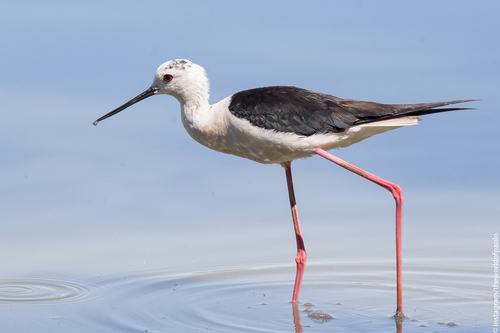
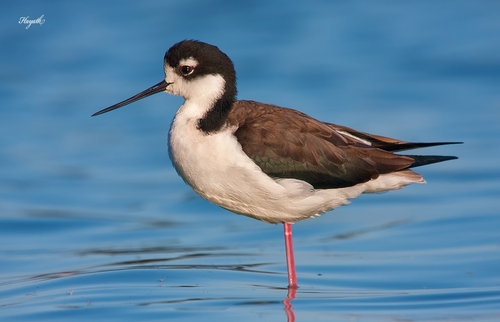
Himantopus novaezelandiae, commonly known as the black stilt, is a medium-sized wader that averages 220 grams in weight. This species has extremely long pink legs, red eyes, a long slender black bill, and distinct all-black plumage in mature adults.
Juvenile Plumage
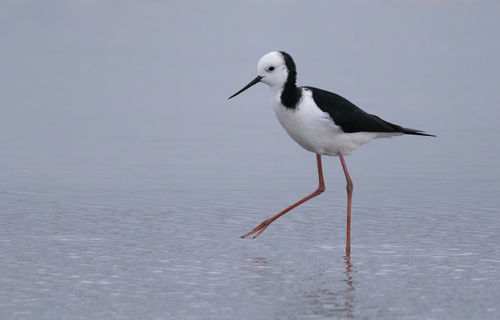
Juvenile black stilts have white heads, necks, and breasts, a black patch surrounding the eyes, and black belly feathers, a feature that distinguishes them from juvenile pied stilts. Black stilts develop their full adult black plumage during their first or second year of life.
Plumage Adaptation Hypothesis
It has been suggested that the all-black plumage may be an adaptation to absorb heat more effectively in the cold, windswept glacial riverbed and lakeshore habitats the species occupies.
Hybrid Plumage Traits
Hybrids between black stilts and pied stilts have highly variable plumage, but almost always have black breast feathers, a trait that pure pied stilts never possess.
Pre-Human Historical Range
Subfossil bone evidence shows that before human arrival to New Zealand, black stilts occurred across a wide range of habitats, including narrow bush streams in Hawkes Bay and a forest-surrounded wetland lake in North Canterbury.
19th Century Breeding Range
In the 19th century, the species bred on riverbeds and in wetlands across the central and eastern North Island, and most of the South Island excluding Fiordland.
Mid-20th Century Population Status
As recently as the 1940s, black stilts were still common in South Canterbury and Central Otago, and nesting was recorded in Central Otago as late as 1964.
Pied Stilt Colonization
Across the species' former range, black stilts have been almost entirely replaced by pied stilts, which colonized New Zealand after human settlement and now have a population of approximately 30,000 individuals.
Current Breeding Range
Currently, black stilts only breed in braided river systems of the South Island, specifically restricted to the upper Waitaki River system in the Mackenzie Basin.
Wintering Behaviour
Most black stilts overwinter in the Mackenzie Basin, but around 10% of the population, particularly hybrids and individuals paired with pied stilts, migrate to North Island harbours including Kawhia and Kaipara in January to spend the winter.
Habitat Modification Threats
Black stilts depend on wetlands and braided riverbeds for feeding, but these habitats have been extensively drained and modified for agriculture, irrigation, and flood control.
Invasive Weed Impacts
Invasive weeds including Russell lupin and crack willow colonize braided riverbeds, reducing available nesting habitat and providing cover for predators.
Hydroelectric Dam Threats
Because black stilts nest directly on braided riverbeds, they are threatened by changes to river flows caused by existing and new hydroelectric dams.
Flow Regime Impact
As part of the Upper Waitaki Power Development, reduced water flow in Upper Waitaki braided riverbeds allowed weeds to encroach into black stilt breeding areas, which in turn provided more cover for predators.
Flow Regime Adjustment
In 1991, a new water flow regime was implemented to reduce this encroachment of vegetation.
Artificial Foraging Habitat Creation
Artificial lowering of Lake Benmore's water level exposed shallow riverbed in the deltas of its feeder rivers, creating temporary foraging areas for black stilts.