About Hibiscus trionum L.
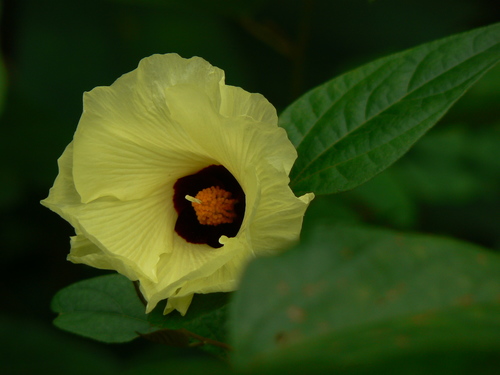
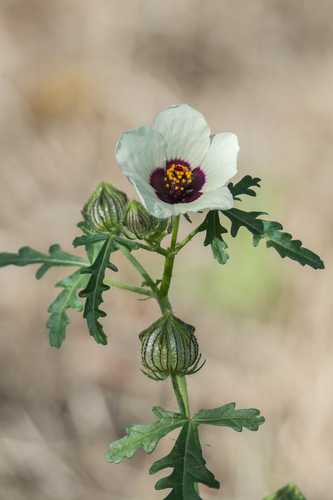
Hibiscus trionum L. grows 20 to 50 centimetres (8 to 20 inches) tall, and sometimes grows taller than 80 centimetres (30 inches). It produces white or yellow flowers that have a purple centre. The surface of the flower’s deeply pigmented central area has striations, and there is ongoing controversy over whether these striations act as a diffraction grating to produce iridescence. Pollinated but unripe seedpods of this species resemble oriental paper lanterns; they are less than 25 mm (1 in) across, with a pale green colour and purple highlights. Hibiscus trionum can produce seed through both outcrossing and self-pollination. In the first few hours after anthesis, the plant’s style and stigma stand upright and are receptive to pollen from other plants. If no pollen from other plants is received, the style bends to come into contact with the anthers of its own flower, triggering self-pollination. While outcrossing individuals of this species generally perform better than self-pollinating individuals, this reproductive assurance strategy may have helped H. trionum thrive in multiple different environments.