About Alcea rosea L.
Scientific Classification and Common Name
Alcea rosea L., commonly known as common hollyhock, is an ornamental dicot flowering plant that belongs to the family Malvaceae.
Introduction to Europe
It was brought into Europe from southwestern China during the 15th century, or potentially even earlier.
Etymology of English Name
William Turner, a herbalist working in that period, named the plant "holyoke", which is the origin of its modern English name.
Faunal Interactions
In the Americas, the flowers of this plant attract both hummingbirds and butterflies.
Life Cycle Classification
Alcea rosea has been described variously as a biennial with a two-year life cycle, an annual, or a short-lived perennial.
Self-Sowing Trait
It often self-sows freely, which can lead to the perception that individual plants are long-lived perennials.
First-Year Flowering
If sown early, the plant can produce flowers during its first year of growth.
Soil Adaptability and Height
It can grow successfully in a wide range of soil types and can easily reach a height of 2.4 m (8 ft).
Flower Color Range
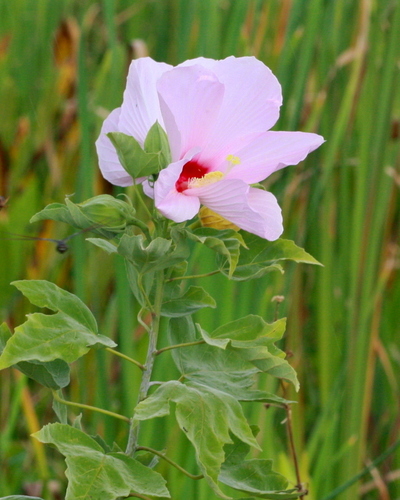
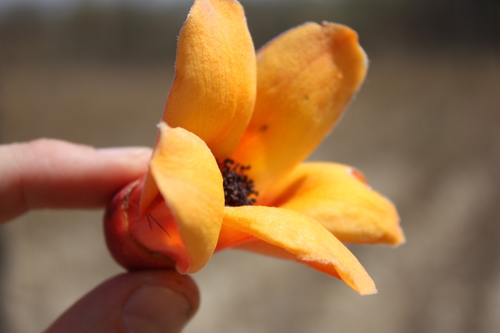
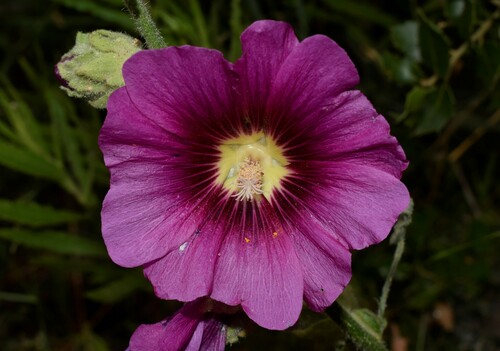
Its flowers come in a range of colors from white to dark red, and also include pink, yellow, and orange.
Variety Soil Preferences
Different colored varieties have different soil preferences: darker red varieties appear to favor sandy soils, while lighter colored varieties favor clay soils.
Propagation Traits
Alcea rosea is easy to grow from seed, and self-seeds readily.
Mollusk Pest Risk
Young tender plants, whether newly grown from seed or produced from older established stock, can be completely killed by slugs and snails.
Fungal Disease and Treatment
Its foliage is often attacked by rust fungus, which can be treated with fungicides.
Rust-Resistant Related Species
Commercial growers have noted that two closely related species, Alcea ficifolia and A. rugosa, are resistant to this rust fungus.