About Hibiscus schizopetalus (Dyer) Hook.fil.
Scientific Name and Growth Form
Hibiscus schizopetalus (Dyer) Hook.fil. is a shrub that grows up to 3 metres (9.8 ft) tall.
Flower Characteristics
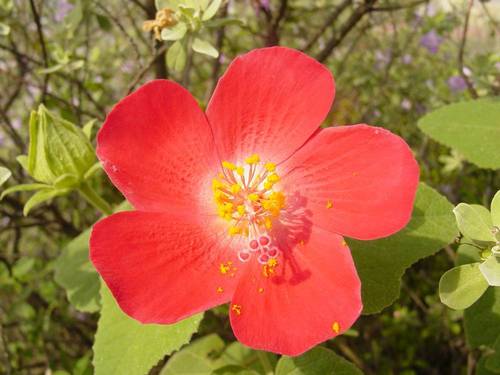
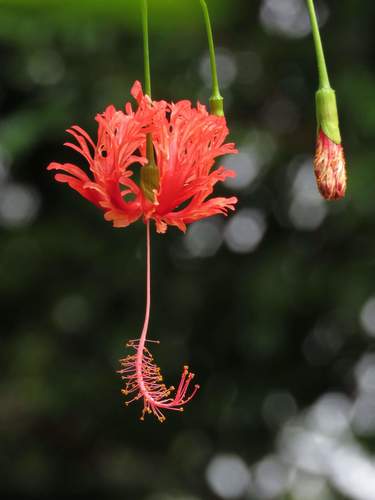
Its flowers are most commonly red, but may also be pink, and are very distinctive for their frilly, finely divided, finely dissected petals.
Leaf Appearance
Its leaves resemble the leaves of Hibiscus rosa-sinensis.
Flower Anthocyanin Content
The major anthocyanin found in the flowers of this species is cyanidin-3-sambusophoroside, as documented by Lowry in 1976.
Leaf Isolated Compounds
Two new triterpene esters have been isolated from its leaves, as reported by Jose and Vijayan in 2006.
Ornamental Cultivation Use
Hibiscus schizopetalus is cultivated as an ornamental plant for use in tropical and subtropical gardens.
Temperate Climate Cultivation Requirements
In temperate climates, it cannot tolerate temperatures below 10 °C (50 °F), corresponding to Royal Horticultural Society hardiness rating H1B; however, it can be placed outside during the summer months in a sheltered spot with full sun, grown in alkaline or neutral soil.
Horticultural Award
This species has received the Royal Horticultural Society's Award of Garden Merit.