About Hibiscus sabdariffa L.
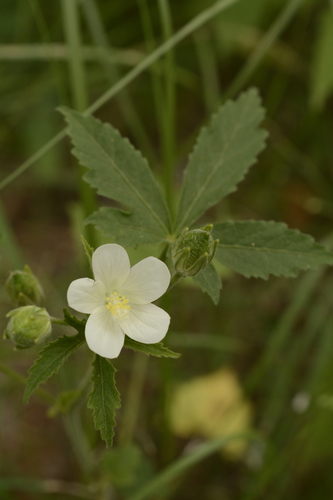
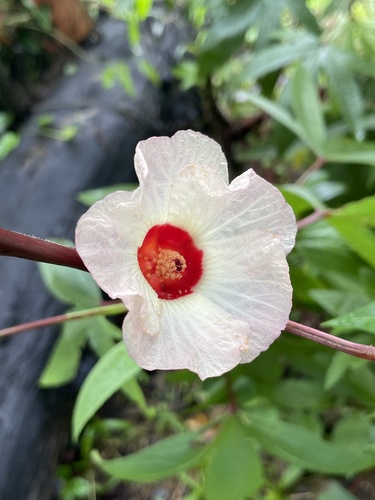
Roselle (Hibiscus sabdariffa L.) is an annual or perennial herb, or woody-based subshrub, that grows 2–2.5 m (7–8 ft) tall. Its leaves are deeply three- to five-lobed, 8–15 cm (3–6 in) long, and arranged alternately along the stems. Its flowers measure 8–10 cm (3–4 in) in diameter, and range from white to pale yellow with a dark red spot at the base of each petal. Each flower has a stout, noticeable calyx at its base that is 1–2 cm (0.39–0.79 in) wide when young. As the fruit matures, a process that takes roughly six months, the calyx enlarges to 3–3.5 cm (1.2–1.4 in), becomes fleshy, and turns a deep crimson red.
Regarding use in herbal medicine for high blood pressure, a 2021 meta-analysis by the Cochrane hypertension group concluded that current evidence is insufficient to confirm whether roselle is effective for managing or lowering blood pressure in people with hypertension, when compared to a placebo. An older 2015 meta-survey published in the Journal of Hypertension reports a typical blood pressure reduction of around 7.5/3.5 units (systolic/diastolic). Both studies note that additional well-designed research is needed. In a controlled laboratory experiment, extracts made from the calyx of Hibiscus sabdariffa were found to reduce both systolic and diastolic blood pressure in Wistar Rats over the course of a 4-week trial.
For cultivation research, limited research was carried out in early years by University of Malaya and the Malaysian Agricultural Research and Development Institute (MARDI). Research at Universiti Kebangsaan Malaysia (UKM) on this species was first started in 1999.