About Hibiscus laevis All.
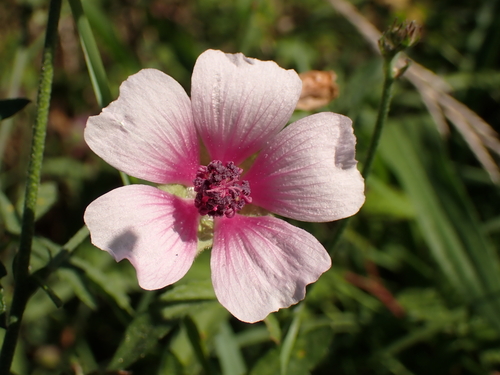
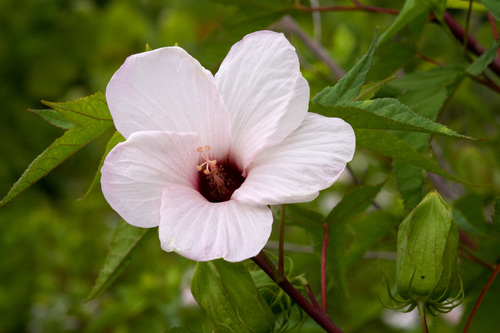
Hibiscus laevis All., also known by the synonym Hibiscus militaris and the common name halberd-leaf rosemallow, is a herbaceous perennial flowering plant native to central and eastern North America. This species produces showy, large flowers that are creamy-white or pink in color, growing up to 15 centimetres (6 in) across, making them easy to spot. Flowers need full sun exposure to open properly, and each individual flower only lasts one day. The plant produces unbranched, round, hairless stems that frequently reach 2 metres (6 ft) in height, and occasionally grow even taller. Its root system includes a taproot. The hairless leaves are arranged alternately along stems, measure 8 to 15 centimetres (3 to 6 in) long, and are divided into 3–5 pointed cleft lobes with serrate or crenate edges. Leaves are simple with pointed tips; three-lobed leaves resemble a medieval halberd because the middle lobe is much larger than the two side lobes, and five-lobed leaves also have a shape similar to halberds or daggers. Flowers grow either singly or in small clusters at the tops of upper stems. When fully open, they are typically around 13 centimetres (5 in) across, most often white or light pink with a maroon or rich purplish pink inner throat. Each flower has five petals, with five hairless green sepals below the petals. It has numerous stamens that are all attached to a central column. The pistils have superior ovaries, and five stigmas that protrude from the central column of the flower. The fruit is an ovoid capsule that holds many seeds. The blooming season runs from mid-summer to early fall, June to September, and the overall blooming period lasts about one month. As noted, each individual flower only lasts a single day. The plant spreads naturally through self-seeding. Its stems die back completely in winter and regrow new the following spring. Hibiscus laevis prefers full or partial sun and moist growing conditions. It can grow in sand or clay soils as long as sufficient moisture is present, and tolerates poor drainage. It is commonly found growing along streams, ponds, and lakes, in marshy areas, and in roadside ditches, and it sometimes grows in shallow standing water. Waterfowl and bobwhite quail eat the seeds of this plant.