About Corchorus siliquosus L.
Species Growth Habit
Corchorus siliquosus L. is a usually annual tall herb that grows 2–4 m high, and is either unbranched or only bears a few side branches.
Leaf Morphology
Its leaves are alternate, simple, lanceolate, 5–15 cm long, with an acuminate tip and a finely serrated or lobed margin.
Flower and Fruit
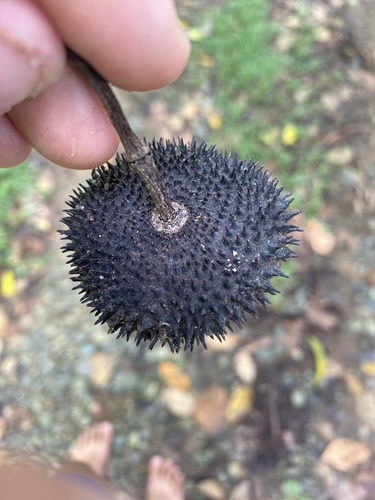
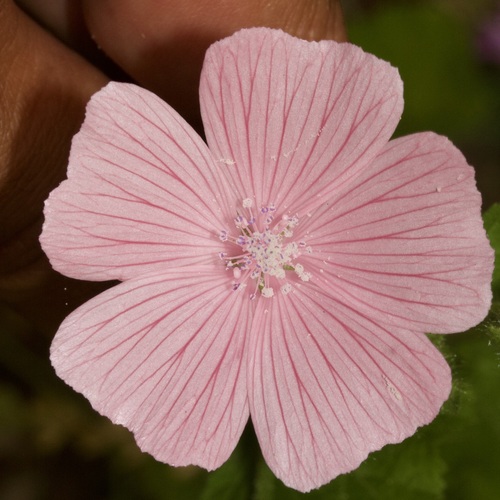
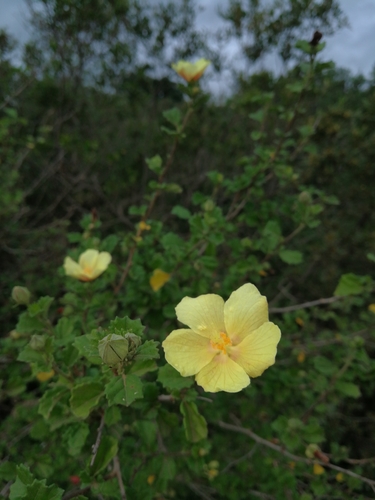
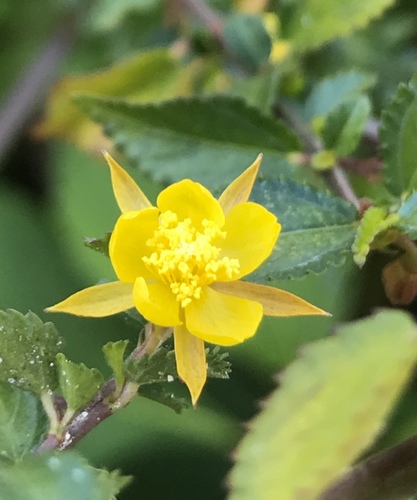
This species produces small yellow flowers 2–3 cm across with five petals, and the fruit is a many-seeded capsule.
Edible Leaf Use General
Leaves of Corchorus species are eaten as food in cuisines across many countries.
Species Specific Culinary Range
Corchorus olitorius is primarily used in the cuisines of southern Asia, the Middle East, North Africa, and West Africa, while Corchorus capsularis is used in Japan and China.
Cooked Leaf Texture
When cooked, Corchorus leaves have a mucilaginous, somewhat slimy texture similar to okra.
Other Plant Parts Culinary Use
Corchorus seeds are used as a flavouring, and herbal tea can be made from the plant's dried leaves.
Leaf Nutrient Content
Corchorus leaves are rich in beta-carotene, iron, calcium, and vitamin C.
Antioxidant Properties
The plant has antioxidant activity, with a significant α-tocopherol equivalent vitamin E content.
North Africa Middle East Common Name
In North Africa and the Middle East, young leaves of Corchorus species are called malukhiyah in Arabic and used as green leafy vegetables.
Malukhiyah Egyptian Use
Malukhiyah is widely eaten in Egypt, where it is considered by some to be the Egyptian national dish.
Regional Malukhiyah Distribution
It is also present in the cuisines of Lebanon, Palestine, Syria, Jordan, and Tunisia.
Turkey Cyprus Culinary Use
In Turkey and Cyprus, the plant is called molohiya or molocha, and is typically cooked into a type of chicken stew.
Egyptian Culinary History
Corchorus leaves have been a staple food in Egypt since the time of the Pharaohs, and the plant gained its recognition and popularity from this region.
Middle Eastern Stew Dish
Varieties of mallow-leaf stew served with rice are a well-known dish in Middle Eastern cuisine.
Nigerian Ewedu Dish
In Nigerian cuisine, Corchorus is used to make a stew called ewedu, which acts as a condiment for other starch-based foods such as amala, or is added to gbegiri, a local Nigerian soup.
Northern Nigerian Ayoyo Use
In Northern Nigeria, the plant is called Ayoyo, and is used to cook a sauce called Miyan Ayoyo that is commonly served with Tuwon Masara or Tuwon Allebo.
Ghanaian Ayoyo Culinary Use
In Ghana, the plant is mostly eaten by people in the North, where it is called ayoyo, and is most often eaten with Tuo Zaafi, a dish prepared with cornflour.
Sierra Leone Krain Krain Use
In Sierra Leone, it is known as krain krain (or crain crain), and cooked as a stew that is usually eaten with rice or foofoo, a traditional cassava-based food.
Kenyan Mrenda Use
Jute leaves are also consumed by the Luhya people of Western Kenya, where the plant is commonly called mrenda or murere.
Kenyan Starch Pairing
It is eaten with starchy foods like ugali, a staple food for most Kenyan communities.
Sudanese Common Name
In Northern Sudan, it is called khudra, which means "green" in Sudanese Arabic.
Malian Common Name
The Songhai people of Mali call it fakohoy.
Indian Nalta Sag Use
In India, it is locally known as nalta sag, and is a favourite summer food, especially in Sambalpur and western Odisha.
Indian Preparation Method
It is usually lightly sauteed and eaten alongside rice or rice gruel.
Philippine Saluyot Use
In the Philippines, C. olitorius is called saluyot, and is commonly eaten as a leafy vegetable together with bamboo shoots.
Thai Bai Po Use
In Thai cuisine, leaves of Corchorus olitorius (locally called bai po) are eaten blanched with plain rice congee, and their taste is similar to that of spinach and samphire.