About Hibiscus heterophyllus Vent.
Taxon Identity and Growth Form
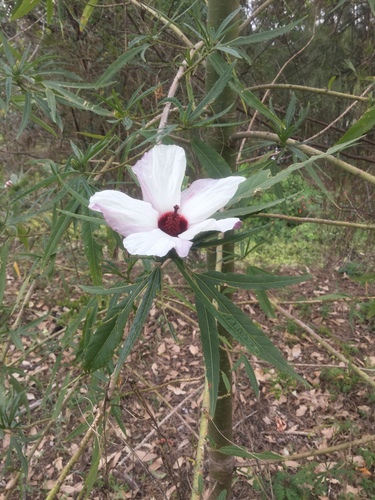
Hibiscus heterophyllus Vent. is a shrub or small tree with stems that are more or less smooth and bear prickles.
Leaf Morphology
Its lower leaves are either egg-shaped or have 3 to 5 lobes, while upper leaves range from narrowly oval to narrowly lance-shaped, and measure 5–18 cm (2.0–7.1 in) in length.
Inflorescence Arrangement
Flowers grow singly in leaf axils.
Calyx Characteristics
The calyx lobes are lance-shaped, 20–35 mm (0.79–1.38 in) long, and covered in a dense layer of short, matted, rusty-coloured star-shaped hairs.
Corolla Features
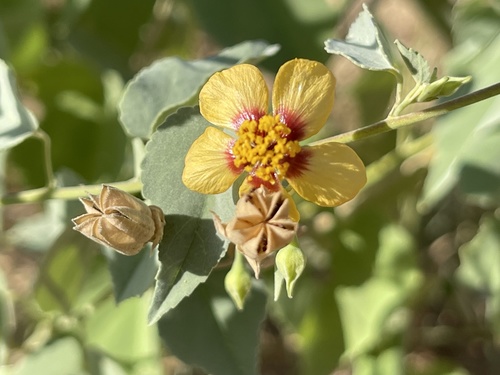
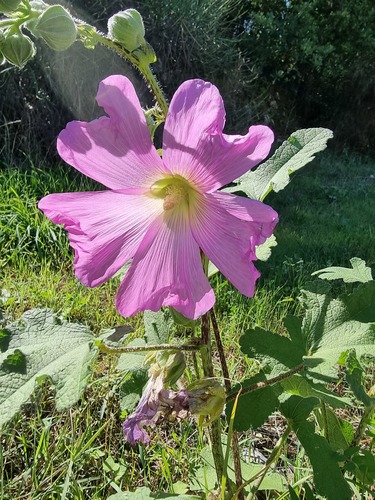
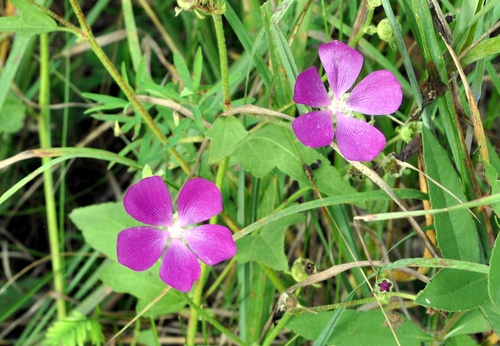
The flower corolla is 5–7 cm (2.0–2.8 in) long, and is pale pink, white, or yellow with a dark red centre.
Fruit Traits
The fruit is 20 mm (0.79 in) long, covered in short, soft, upright straw-coloured hairs.
Flowering Period
Flowering takes place from spring to summer.
Habitat and Distribution
This species typically grows in open forest, rainforest, or areas adjacent to these habitats, with a range extending from north-east Queensland to the south coast of New South Wales.
Traditional Food Uses
Indigenous Australians consumed the young shoots, leaves, and roots of this plant without any preparation. Its flowers were eaten either raw or cooked.
Traditional Fibre Uses
The plant's fibre is known for its strength; it was traditionally extracted via maceration and used to make items including dilly bags and hunting nets.