About Hemipus hirundinaceus (Temminck, 1822)
Scientific Name and Length
The black-winged flycatcher-shrike, Hemipus hirundinaceus (Temminck, 1822), is approximately 15 cm (5.9 in) long.
Male Head and Upperparts
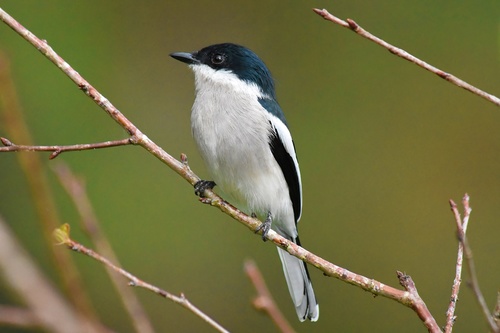
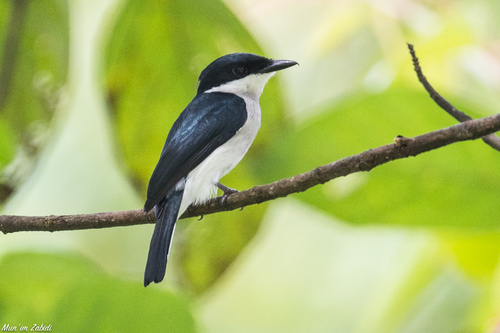
Males have black heads and upperparts with a green sheen. Their rumps are marked with black and white bars, and their tails are black.
Male Underparts
Their chin and upper throat are white, lower throat and breast are gull grey, and belly is white.
Male Soft Parts
Leg feathers are dark grey, eyes are dark brown, and beak and feet are black.
Female Plumage
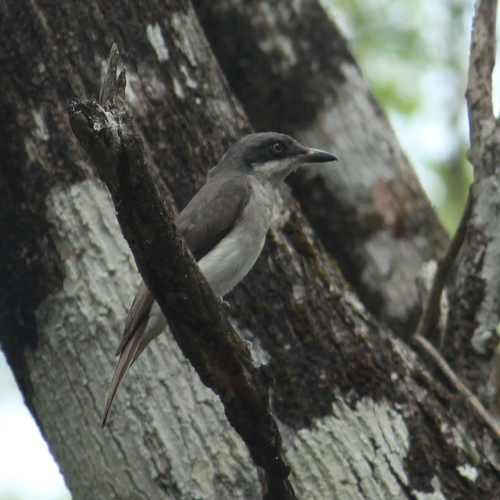
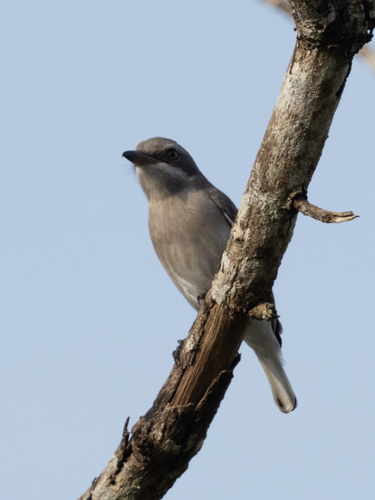
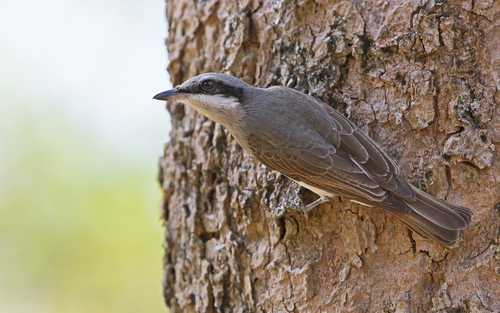
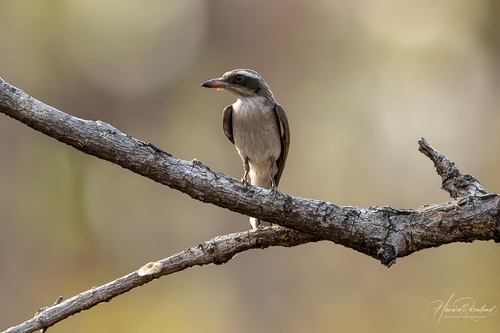
Females have sooty brown upperparts, rather than the black upperparts seen in males.
Juvenile Characteristics
Juveniles have a brownish black beak and sooty brown upperparts edged with buff fringes.
Geographical Distribution
This species has a distribution ranging from the Malay Peninsula to Sumatra, Borneo, Java and Bali. A reported record from southern Tenasserim has no supporting evidence.
Elevation Range
It occurs at elevations below 800 m (2,600 ft), and is more common at elevations below 300 m (980 ft). It typically occurs at lower elevations than the related bar-winged flycatcher-shrike (Hemipus picatus).
Habitat Preferences
The black-winged flycatcher-shrike inhabits the canopy of lowland forests, forest edges, areas along forest roads, and areas along forest streams. It can sometimes also be found in swamps, mangroves, and secondary forest.