About Hemiprocne coronata (Tickell, 1833)
Taxonomy and Size
The crested treeswift, scientifically named Hemiprocne coronata (Tickell, 1833), is a large slender bird that reaches 23 cm (9 inches) in length.
General Plumage
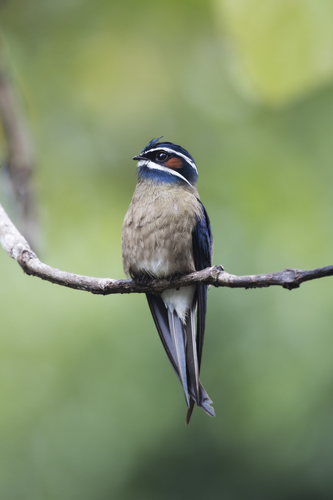
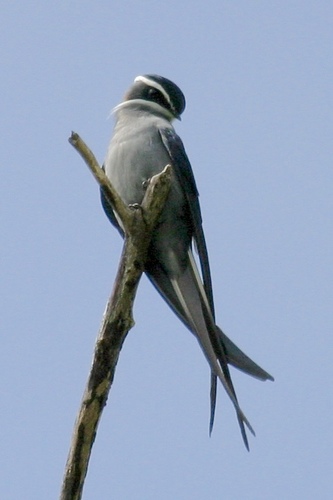
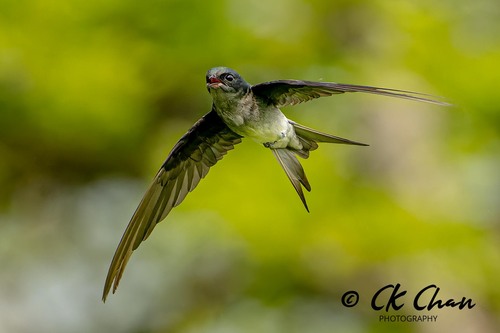
This species has dove grey plumage on its upperparts and white plumage on its underparts. Its long, swept-back wings are darker grey on the upper side. The crested treeswift has a crest, as well as a long, deeply forked tail.
Adult Male Markings
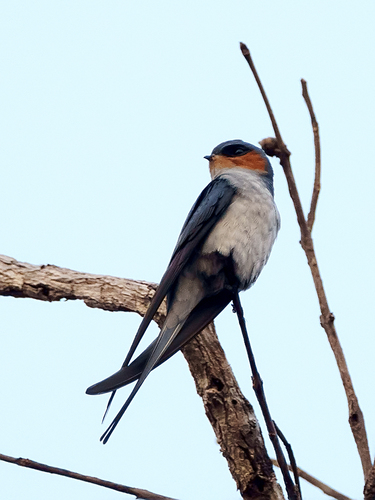
Adult males have orange cheeks and ear coverts, with a narrow white streak under the eye and a faint white supercilium.
Adult Female Markings
Adult females also have a thin white stripe below the eye, which runs under the grey cheek and ear coverts.
Juvenile Plumage
Juvenile crested treeswifts have dark grey heads and wings, with white edges on their feathers; the rest of their soft plumage is much more heavily streaked than the plumage of adults.
Group Behavior and Perching
These birds live in small groups that fly in wide circles over open forest, and occasionally perch on top of tall, leafless trees. When perched, they hold themselves very upright.
Vocalizations
The species’ call is a harsh kee-kyew, or a three-note kip-kee-kep with stress placed on the middle note.
Geographical Range
The crested treeswift is a common resident breeding bird native to the Indian subcontinent, and can be found in India, Sri Lanka, Bhutan, Bangladesh, Nepal, Myanmar, Thailand, Vietnam, Cambodia, Laos, and China.
Habitat Preferences
It inhabits open woodland and deciduous forests, and is also found in open areas near trees, as well as in parks and gardens.
Elevation Range
Most populations of this bird live in lowlands below 1000 m in elevation.