About Hemidactylus depressus Gray, 1842
Nomenclature & Head Features
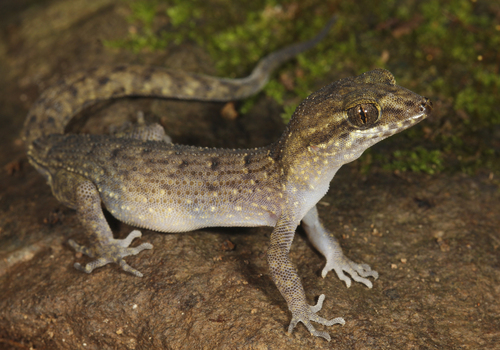
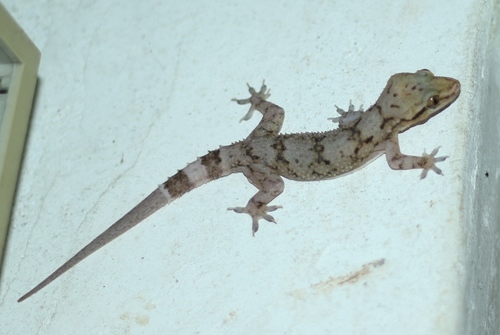
This species, Hemidactylus depressus Gray, 1842, has a large head covered in large granules, with particularly prominent granules on the snout.
There are 36 to 40 mid-ventral scales.
Digit Morphology
Its digits are webbed at the base, and 10 to 11 lamellae are found under the fourth toe.
Tail Structure
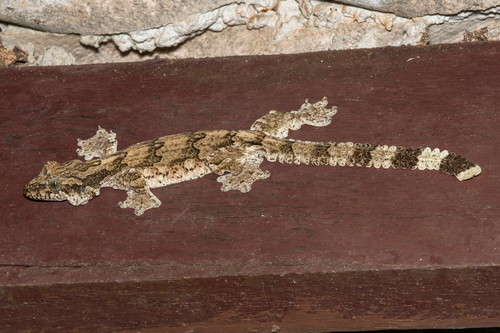
The tail is depressed, with serrated lateral edges.
Dorsal Coloration
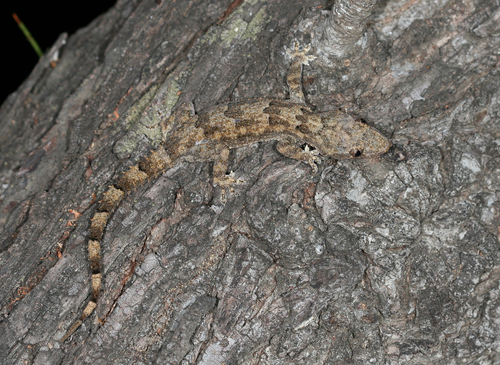
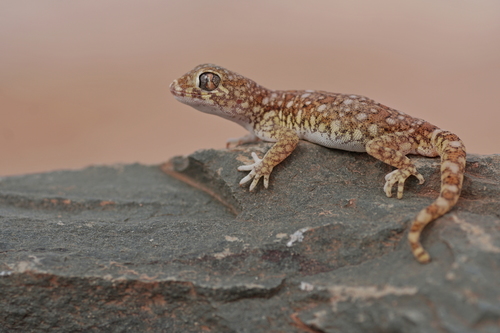
The dorsum ranges from light brown to gray, marked with 4 to 5 dark, transverse angular markings.
Head & Tail Markings
A dark canthal stripe is present, bordered by a pale stripe, and the tail has dark cross bars.
Venter Coloration
The venter is grayish-creamy in color.
Distribution Range
Hemidactylus depressus is a gecko endemic to Sri Lanka, and has only been recorded from the following localities: Kantale, Giritale, Mankulam, Alutnuwara, Hunugalla, Elkaduwa, Matale, Rattota, Gammaduwa, Kandy, Knuckles Mountain Range, Haragama, Wakwalla, Palatupana, Balangoda and Vanathavilluwa.
Habitat
It is an arboreal species of the plains, found on trees, boulders, and in caves, and it sometimes enters human houses.
Diet
Its diet consists of insects.
Reproduction
For reproduction, this species lays clutches of 2 eggs at a time, deposited in rock crevices, tree holes, or leaf litter, between June and August.
Hatchlings emerge during August and September.