About Harengula jaguana Poey, 1865
Scientific Classification
The scaled sardine, scientifically named Harengula jaguana, is a herring-like fish that belongs to the family Clupeidae.
Distribution
It is native to coastal waters of the western Atlantic Ocean, ranging from the Gulf of Mexico — where it is called pilchard or whitebait — south to Brazil, where it is known as mata.
Coloration and Markings
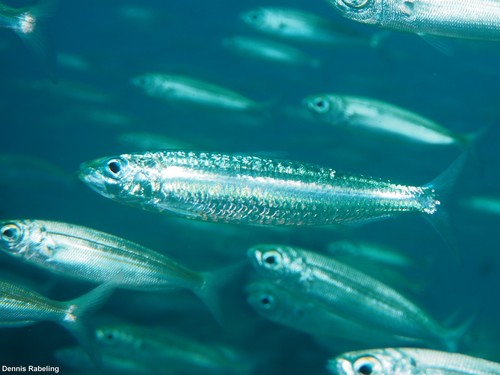
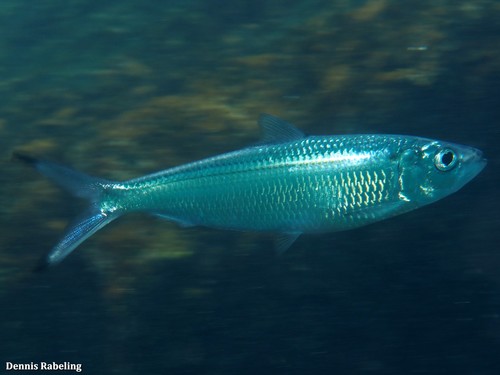
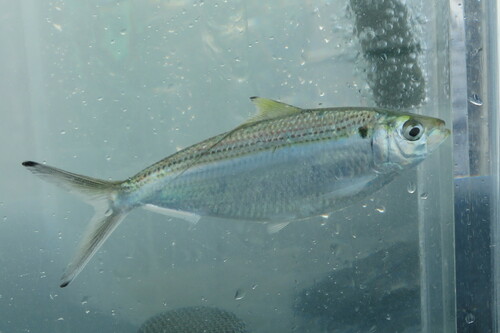
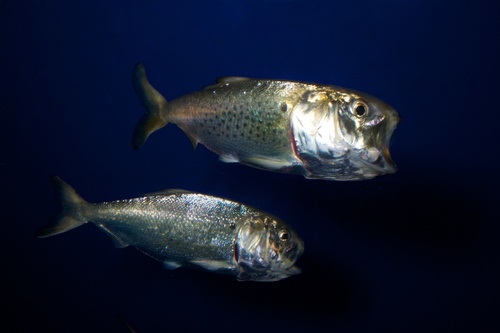
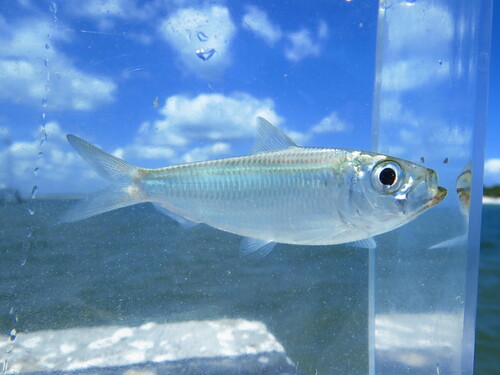
Its back is solid with dark streaks; it usually has a small dark spot at the upper edge of the operculum, and sometimes has an additional spot at the shoulder.
Size
This species can reach a maximum length of 9 inches (23 cm), but most individuals grow to little more than half that maximum size.
Growth and Lifespan
It is a fast-growing species with a typical lifespan of only 12 to 18 months.
Common Names
Anglers often call scaled sardines greenbacks, though this common name is also used for the Atlantic threadfin herring, also called the Atlantic thread herring.
Fishing Methods
People usually catch this species using strings of wire loops called minnow rings, sabiki rigs, or by cast netting.
Human Uses
Anglers catch scaled sardines to use as bait or for personal eating.