About Halogeton glomeratus (M.Bieb.) C.A.Mey.
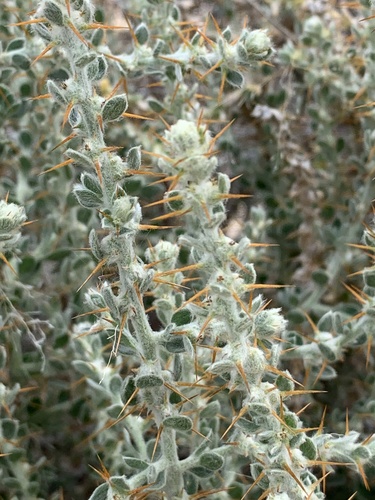
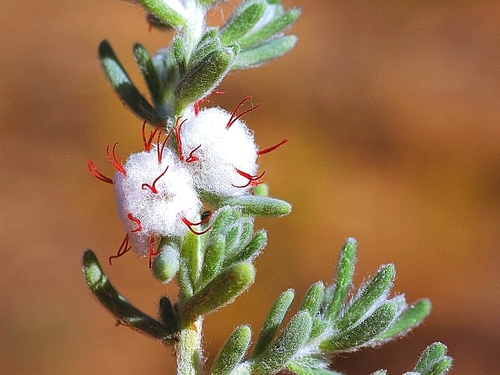
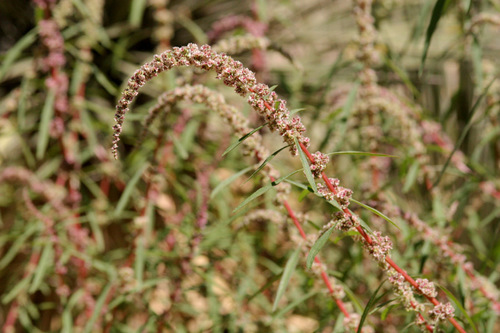
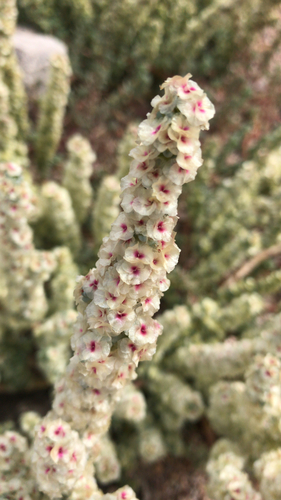
Halogeton glomeratus (M.Bieb.) C.A.Mey. is a species of flowering plant in the Amaranthaceae family, commonly known by the common names saltlover, Aral barilla, and halogeton. It is native to Russia, Central Asia, and China, but it is most widely recognized in the western United States, where it is an introduced, notoriously noxious weed. This annual herb is a hardy halophyte, able to thrive in soils that are far too saline to support most other plants. It also grows in alkali soils, including those found on alkali flats, as well as in disturbed, barren habitats. It can occur in sagebrush and shadscale habitats, and grows well in areas with cold winters. This plant typically produces an erect stem with several curving branches, reaching a total height of around 25 centimeters (9.8 inches). It has a taproot that grows up to half a meter deep into the soil, plus many lateral roots. The branches are lined with narrow, fleshy, blue-green leaves, each up to about 2 centimeters long, tipped with a stiff bristle. Inflorescences are found all along the stem branches, positioned next to the leaves. Each inflorescence is a small cluster of tiny bisexual and female-only flowers, accompanied by waxy bracts. Winged, membranous floral structures surround the developing fruit; when the fruit is ripe, all that remains on the plant is the fruit, as leaves and flower parts have already fallen away. The fruit is a pale, cylindrical utricle. The plant produces large numbers of seeds, which are dispersed by many agents including human activity, animals (including ants), water flow, wind, and when the dry whole plant breaks off at ground level and rolls away as a tumbleweed. Its seeds can germinate within one hour after exposure to water. This herb is a pest on rangelands in the western United States. It has a very high oxalate content: up to 30% of the plant's dry weight consists of oxalate crystals, making it toxic to grazing livestock. It is especially toxic to sheep; as little as twelve ounces (340 grams) of the plant can cause fatal poisoning. Halogeton was first recognized as a danger to sheep in the 1940s, after a rancher lost a herd of 160 sheep to poisoning. The oxalate causes acute hypocalcemia in sheep, leading to staggering, spasms, and ultimately death. A fatal dose can kill a sheep in under 12 hours. Ranchers often provide calcium-supplemented feed to sheep grazing on land infested with halogeton. Sheep can also adapt to halogeton in their diets over time, making them less susceptible to sickness, and the plant is not very palatable, so sheep tend to avoid it when possible. Halogeton is also damaging to land in the western United States, because it excretes mineral salts that make it harder for other plants to grow in areas where it establishes. Its growth is controlled by introducing certain nonnative plants, such as prostrate kochia (Kochia prostrata) and crested wheatgrass (Agropyron cristatum), which compete successfully with halogeton. Grazing practices are also modified to prevent land from becoming denuded, since land disturbed by overgrazing is susceptible to halogeton invasion.