About Gunnera tinctoria (Molina) Mirb.
Taxonomic Name and Growth Habit
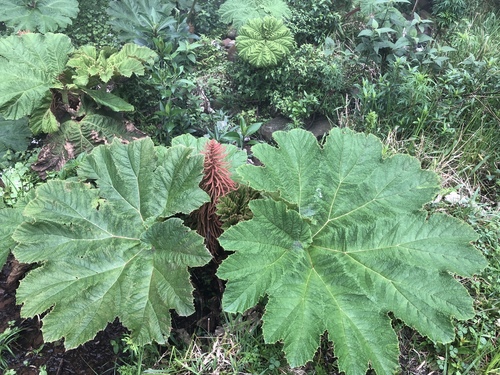
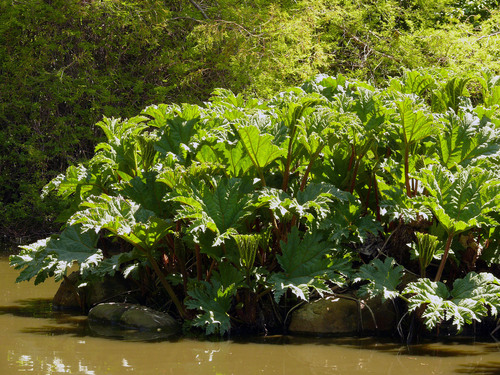
Gunnera tinctoria (Molina) Mirb. is a giant, clump-forming herbaceous perennial plant.
Leaf Characteristics
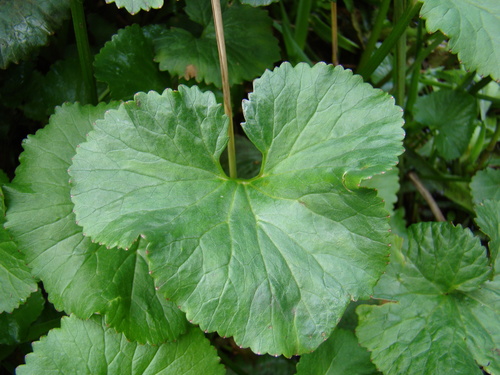
Its leaves can reach up to 2.5 meters (8.2 feet) across; they are cordate, palmate, and have margins with up to 9 lobes.
Stem Texture
Numerous spikes cover the plant's stems.
Inflorescence Features
From spring to early summer, it produces erect panicles of cone-shaped inflorescences that grow 1 meter (3.3 ft) tall and can weigh as much as 14 kg (30 lb), and these inflorescences hold small dimerous flowers.
Fruit Trait
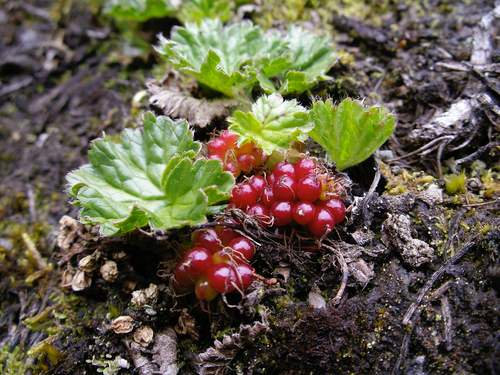
The fruit of Gunnera tinctoria is orange.
Seed Production
Seed production estimates range from 80,000 seeds per seedhead to 250,000 seeds per individual plant.
Habitat
This species grows in habitats near streams and roadsides.
Local Common Names
In its native Chile, where it is known locally as nalca or pangue, Gunnera tinctoria is used similarly to European rhubarb.
Stalk Culinary Uses
After peeling, the stalks are eaten fresh, or cooked to make jam or cordial.
Leaf Culinary Use
Its leaves are used to prepare the traditional Chilean dish curanto.
Root Traditional Uses
Traditionally, the plant's roots are also used to tan leather and produce a black dye.
Harvest and Commercialization
This species is rarely cultivated; instead, stalks are harvested from wild populations and informally sold commercially by local people called nalqueros.