About Grevillea longistyla Hook.
Nomenclature and Growth Form
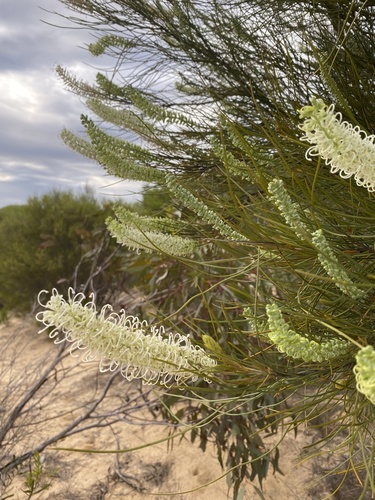
Grevillea longistyla Hook. is a shrub that typically reaches a height of 1.5 to 5 meters (4 feet 11 inches to 16 feet 5 inches) and forms a lignotuber.
Leaf Length
Its leaves are 120 to 300 millimeters (4.7 to 11.8 inches) long.
Leaf Shape and Structure
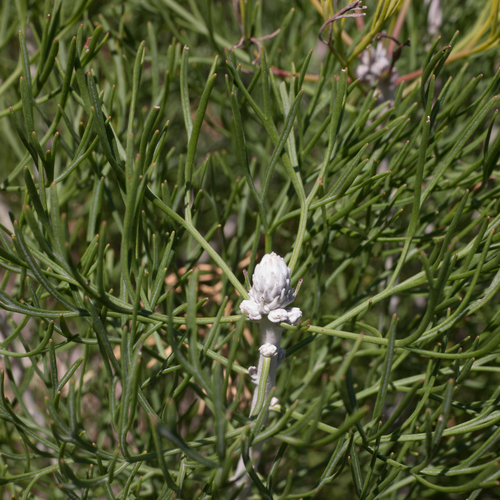
Leaves can be either simple, or divided into two to six lobes; both undivided leaves and lobes are 1.5 to 4 millimeters (0.059 to 0.157 inches) wide and do not have sharp points.
Leaf Margin Characteristics
The edges of the leaves are turned downward or rolled under.
Inflorescence Structure
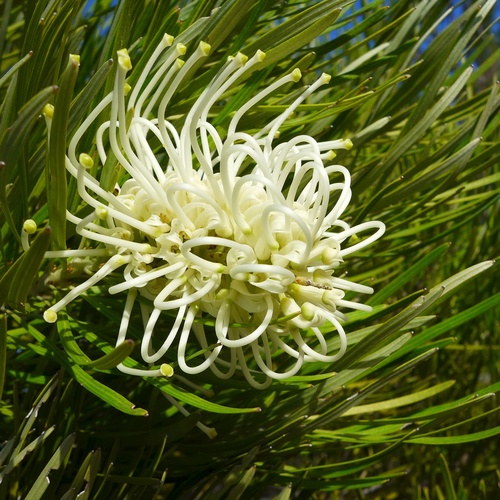
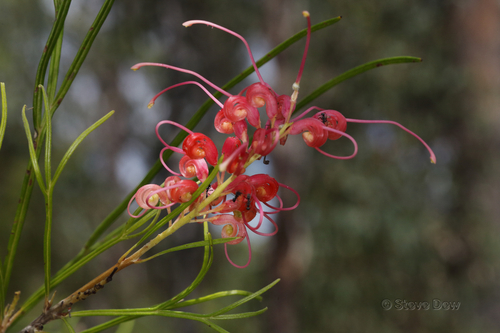
The flowers grow in groups that are sometimes branched, attached to a rachis that is usually 25 to 85 millimeters (0.98 to 3.35 inches) long.
Flower Color and Pistil Length
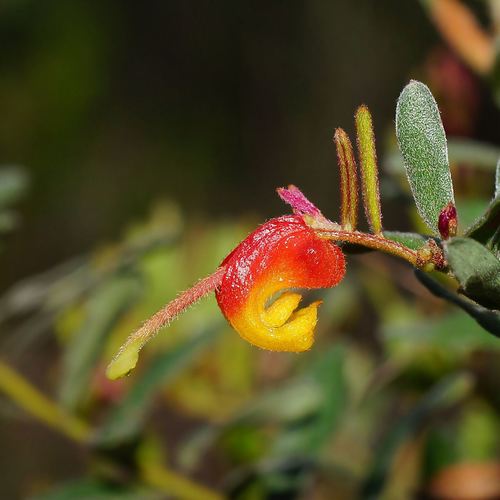
Flowers are red, orange-red, or bright pink, and the pistil is usually 40 to 52 millimeters (1.6 to 2.0 inches) long.
Flowering Period
Flowering can occur in most months of the year, with the peak blooming period from August to November.
Fruit Characteristics
The fruit is an oblong follicle 10 to 14 millimeters (0.39 to 0.55 inches) long that has a rough surface.
Habitat
This grevillea most commonly grows in woodland or forest habitats.
Distribution
It is found between Chinchilla, Gurulmundi, and Blackdown Tableland National Park in central and south-eastern Queensland.