About Glottiphyllum longum (Haw.) N.E.Br.
Distinguishing Traits Overview
Glottiphyllum longum can be distinguished from other members of its genus by key traits.
Leaf Arrangement
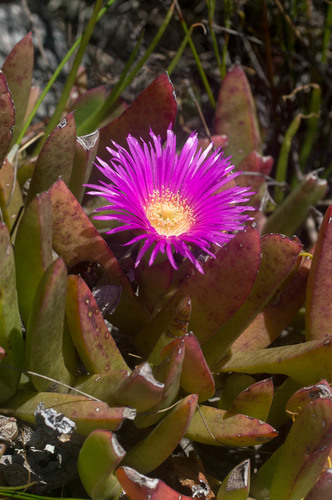
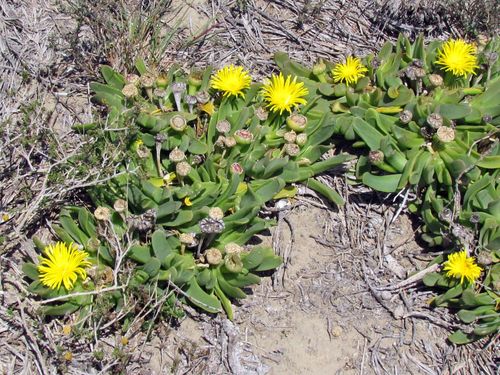
Its flat, green, fleshy, tongue-shaped leaves all grow in two opposite distichous rows, lying flat and mostly prostrate along the ground.
Leaf Shape
The long leaves are distinctively strap-shaped with rounded margins; they are sometimes mildly curved or upturned at the tips, but never hooked.
Leaf Marginal Cells
The bladder cells along the leaf margins are oriented horizontally and are not elongated.
Fruit Stalks
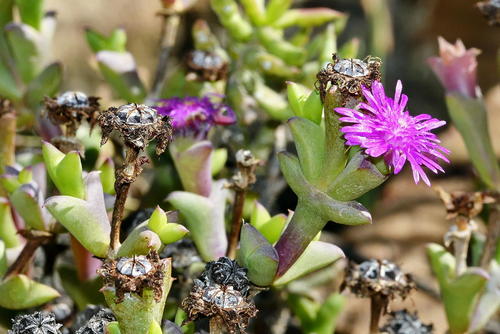
Fruits of this species grow on long stalks.
Seed Capsule Characteristics
Its seed capsules have 9 or more locules and remain attached to the stem for many years.
Seed Traits
The seeds are very small and have smooth sides.
Genus Distribution Status
This is the most widespread and common species in the entire genus Glottiphyllum.
Habitat and Distribution Range
It grows in shrubby thicket on loamy-sandy soil, ranging from near Ceres in the west, through the Little Karoo and Overberg regions, to the Albany region of the Eastern Cape.
Sympatric Relative
In the far eastern part of its distribution range, it grows alongside its close relative Glottiphyllum grandiflorum, the species it most resembles.