About Gliricidia sepium (Jacq.) Kunth
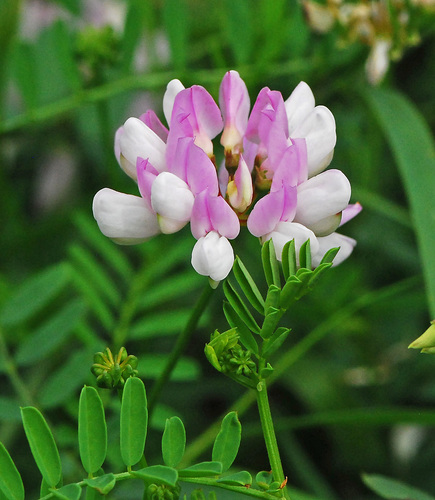
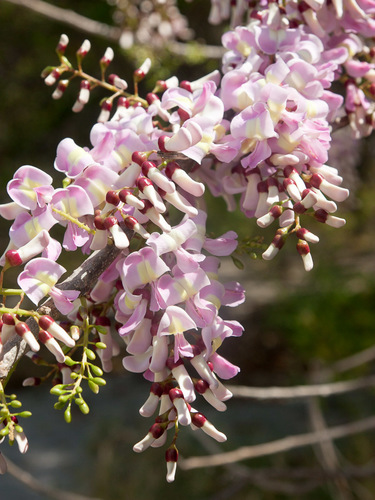
Gliricidia sepium is a medium-sized tree that reaches 10–12 m (33–39 ft) in height. It has smooth bark that ranges in color from whitish gray to deep red-brown. Its flowers grow on the ends of leafless branches, and are colored bright pink to lilac tinged with white, usually with a pale yellow spot at their base. The tree’s fruit is a 10–15 cm (4–6 in) long pod. Unripe pods are green, turning yellow-brown when mature, and each pod holds four to ten round brown seeds. Indigenous American cultures across North, Central, and South America have cultivated G. sepium extensively since the pre-Columbian era, which makes it hard to confirm its original native distribution. Genetic studies have found the center of genetic diversity for G. sepium is the dry zones of southern Mexico and northern Central America, which is now widely accepted as its true native range. G. sepium was first introduced to the Philippines from Mexico via Manila galleons as early as the early 1600s, alongside 200 other tropical American plant species. Its popularity as a shade tree for cacao, coffee, and tea plantations led to further spread. Later introductions included the Caribbean before 1850; Sri Lanka in the 1800s; India and Indonesia around 1900; and West Africa, Uganda, and Kenya in the early 1900s. Additional introductions followed in the 20th century, and G. sepium now has a pantropical distribution. G. sepium grows well in acidic soils with a pH between 4.5 and 6.2. Within its native range in Mexico and Central America, it occurs on volcanic soils, but it can also grow in sandy, clay, and limestone soils. Originally spread from its native range across the tropics to shade plantation crops like coffee, G. sepium is now used for many other purposes, including live fencing, fodder, firewood, green manure, intercropping, and rat poison. Its use grew after widespread defoliation of Leucaena by psyllids in the 1980s. In the charsutri method of paddy cultivation, Gliricidia leaves are incorporated into the soil during ploughing.