About Glechoma hederacea L.
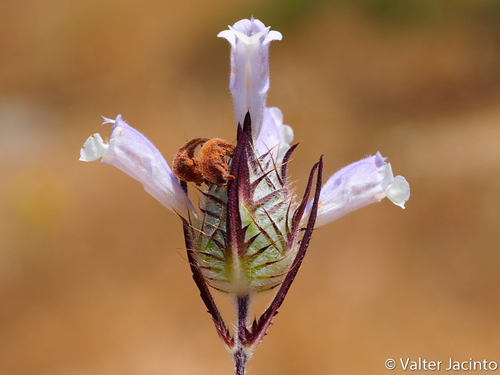
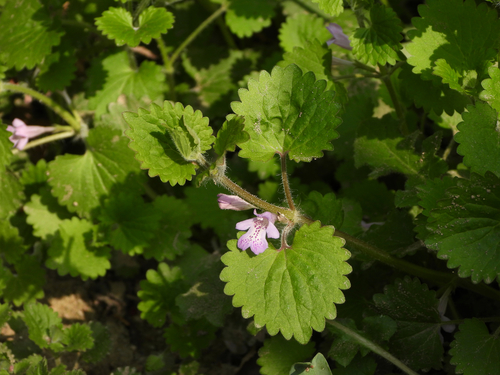
Glechoma hederacea L. can be identified by its opposite round to kidney- or fan-shaped, round-toothed leaves. These leaves measure 2–3 cm (3⁄4–1+1⁄4 in) in diameter, and grow on 3–6 cm (1+1⁄4–2+1⁄4 in) long petioles attached to square stems that root at the nodes. The plant spreads by either stolons or seed, which makes it exceptionally difficult to eradicate. It is a variable species, with its total height influenced by environmental conditions, ranging from 5–50 cm (2–19+1⁄2 in) tall. The flowers of G. hederacea are bilaterally symmetrical, funnel-shaped, and range in color from blue to bluish-violet to lavender. They grow in opposite clusters of two or three flowers in the leaf axils on the upper part of the stem or near the tip, and usually bloom in the spring. European settlers carried this species around the world, and it has become a well-established introduced and naturalized plant in a wide variety of localities. In some parts of North America, it is considered an aggressive invasive weed of woodlands and lawns; it is classified as a non-native plant in the United States, and is listed as invasive in some U.S. states. It has invaded wild areas, sometimes choking out native wildflowers. G. hederacea thrives in moist shaded areas, but also tolerates sun very well. It is a common plant in grasslands, wooded areas, and wasteland. It also grows well in lawns and around buildings, since it survives mowing. Its rhizomatous reproduction is part of the reason for its wide distribution. Glechoma hederacea is gynodioecious, with individual genets being either female or hermaphrodite. Female plants depend on pollen from hermaphrodites for pollination, and female flowers tend to be smaller than hermaphrodite flowers. Biologists disagree on whether hermaphrodite flowers can self-pollinate. The plant overwinters as either a small ramet or a small rosette. It produces flowers between April and July, which are visited by many types of insects, fitting a generalized pollination syndrome. Each pollinated flower can produce up to four seeds. Seeds are dispersed when the stem bends over to deposit ripe seeds on the ground adjacent to the parent plant, though ants may carry seeds further. Seeds germinate a few days after contact with moisture, but can be stored dry; dry storage for up to one month is thought to improve germination rate. The plant can also reproduce clonally: stems bend down to the ground, where they root and form new growth. Single clones can grow several metres across, though precise data on this is not available. A number of wild bees collect pollen from this plant, including Anthophora furcata, Anthidum manicatum, Anthophora plumipes, Anthophora quadrimaculata, Osmia aurulenta, Osmia caerulentes, and Osmia uncinata. Several insects induce galls on this plant, including Rondaniola bursaria, which causes lighthouse gall, and the gall wasps Liposthenes glechomae and Liposthenes latreillei (Kieffer, 1898). It forms dense mats that can overtake areas of lawn and woodland, so it is considered an invasive or aggressive weed in suitable climates where it is not native. Although humans have used this species as a salad green and in herbal medicine for thousands of years, it is believed to be toxic to livestock, particularly horses. Wild pigs are reported to feed on it. Some sources note it is toxic to rodents, while bank voles in Great Britain have been observed using it as a food source. Like other members of the Lamiaceae, G. hederacea contains bioactive volatile oils, including terpenoids and pulegone; these compounds create the characteristic minty odor and taste shared by plants in the mint family. Effects on humans vary depending on many factors, including concentration, amount consumed, and whether the plant is used internally or externally. Lamiaceae plants with very high volatile oil concentrations, such as European pennyroyal (Mentha pulegium), have traditional uses as disinfectants, flea-killers, and abortifacients, and are hepatotoxic to humans. Other members of the family, such as spearmint (Mentha spicata), are widely and safely used in teas and flavorings for their volatile oils. The concentration of volatile oil in G. hederacea is less than 1/30th of that found in European pennyroyal, and the effects of Glechoma on humans have been little studied. It is grown as a potted garden plant and occasionally used as a groundcover. It is easily cultivated and grows well in shaded places. A variegated variety is commercially available; in many areas, this is the dominant cultivated form, which has escaped cultivation and become established as an aggressive, adventitious groundcover. Pre-bloom leaves can be cooked as a vegetable or made into tea. G. hederacea was also widely used by the Saxons in brewing ale as a flavoring, clarifier, and preservative, and later by the English, before hops were introduced to brewing in the late 15th century. This brewing use gave rise to common names related to brewing, such as alehoof, tunhoof, and gill-over-the-ground. In the 18th century, beer brewed with ground ivy was called gill ale, and was said to have medicinal properties. It was made by infusing the herb in strong ale and sold at coffee houses and victualling houses. Enzymes similar to chymosin found in G. hederacea have been used in cheese-making as a substitute for animal rennet. G. hederacea has been used in European traditional medicine for thousands of years; Galen recommended the plant to treat eye inflammation. English herbalist John Gerard recommended it to treat tinnitus, and described it as a diuretic, astringent, tonic, and gentle stimulant useful in treating kidney diseases and indigestion. It has also been used as a lung herb. Its presence as an invasive weed in North America stems from European settlers’ value for it as a medicinal herb and ale preservative; the species was imported and widely cultivated in herb and kitchen gardens. Other traditional uses include as an expectorant or astringent, and to treat bronchitis. In traditional Austrian medicine, the herb has been prescribed for internal use as salad or tea to treat a variety of conditions, including disorders of the liver and bile, gastrointestinal tract, respiratory tract, kidneys and urinary tract, fever, and influenza. In traditional Chinese medicine, it is known as Jiangsu Jinqiancao.