About Gevuina avellana Molina
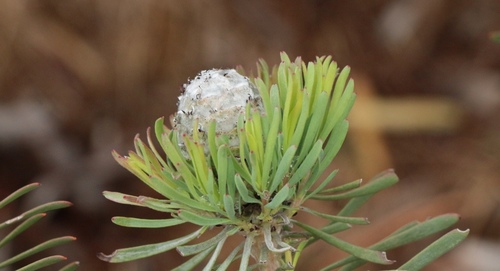
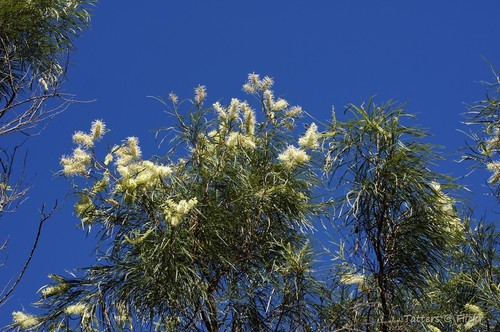
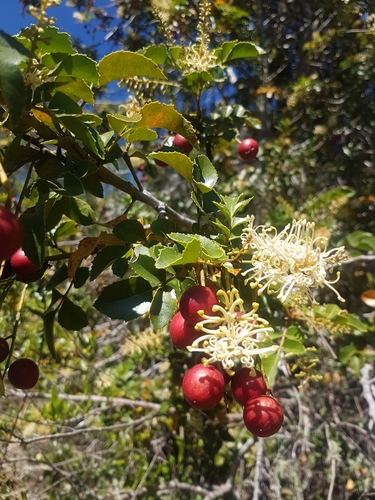
Gevuina avellana, commonly called the Chilean hazelnut (avellano chileno in Spanish) or Gevuina hazelnut, is an evergreen tree that can grow up to 20 meters (65 feet) tall. It is the only species currently classified in the genus Gevuina. It is native to southern Chile and the adjacent valleys of Argentina, where it occurs from sea level up to 700 meters (2,300 feet) above sea level. Its natural range extends between 35° and 44° south latitude. It has bright, toothed composite leaves, and flowers between July and November. Its flowers are very small, ranging from beige to whitish in color, are bisexual, and grow in pairs along long racemes. The fruit is a dark red nut when young, and turns black as it matures, with a woody outer peel. The plant can grow straight as a single-trunked tree, or branch from the soil to form a shrub. The genus name Gevuina comes from guevin, the Mapuche Indigenous name for this species. The Spanish common name avellano originated because Spanish settlers thought the nuts resembled the European hazelnuts they knew, though the two species are not closely related. The occurrence of Gevuina avellana within forests is highly irregular and hard to predict. It can grow on both flat and hilly terrain, and in either clay or stony soils. It most often grows in association with other broad-leaved trees including Nothofagus obliqua, Nothofagus dombeyi, Nothofagus alpina, Nothofagus glauca, and Laureliopsis, but it can also grow in stands dominated by the conifers Austrocedrus, Fitzroya, and Pilgerodendron. It never forms pure, single-species stands. The seeds of Gevuina avellana are eaten raw, boiled, or toasted. The nuts are composed of approximately 12% protein, 49% oil, and 24% carbohydrates. The seed has a very high concentration of monounsaturated oils, and is harvested for multiple uses in Chile. It is rich in antioxidants including vitamin E (α-tocotrienol) and β-carotene. Its oil is used as an ingredient in some sunscreens, and as a cosmetic ingredient for its moisturizing properties, and because it is a source of omega 7 fatty acids (palmitoleic acid). Seed production varies widely between individual trees. The plant is also a source of cetoleic acid, a rare fatty acid. The tree is a good honey plant for bees, and is cultivated as an ornamental plant. The seed shells contain tannin that is used for tanning leather. Mature trees have good frost resistance, tolerating temperatures of at least −12 °C (10 °F). Its wood is cream-colored with dark brown streaking, and is used for cabinetry and making musical instruments. Gevuina avellana was introduced to Great Britain in 1826, and grows well there, as well as in Ireland, New Zealand, and California. A small number of specimens are cultivated in Spain and the Pacific Northwest of the United States. It grows well in temperate oceanic climates with cool temperatures and frequent winter frosts, and has thrived in southern New Zealand. Trees need 5 years of growth before their first harvest, and 7 to 8 years to reach full production. In Seattle, Washington, squirrels and birds eat the seeds from cultivated Gevuina avellana trees. New varieties with higher yields than the original wild stock are currently being developed in both Chile and New Zealand. As of 1982, only a very small portion of nuts from wild stands were collected for processing.