About Gavia pacifica (Lawrence, 1858)
Breeding Adult Size Comparison
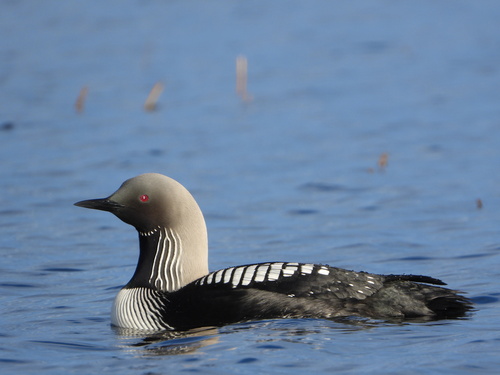
Breeding adult Pacific loons are smaller and sleeker than common loons.
Measurements
They measure 58–74 cm (23–29 in) in total length, have a 110–128 cm (43–50 in) wingspan, and weigh 1–2.5 kg (2.2–5.5 lb).
Breeding Plumage
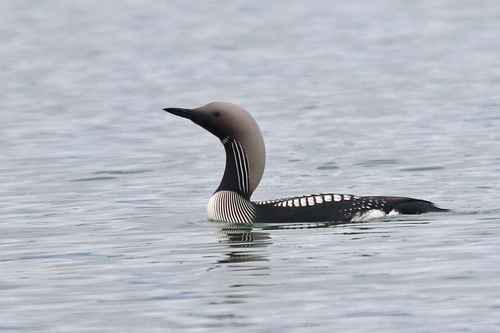
Breeding adults have a grey head, black throat with purple reflections, white underparts, and a chequered black-and-white mantle.
Non-breeding Plumage
Non-breeding plumage is duller, with white coloring on the chin and foreneck.
Bill Characteristics
The Pacific loon has a dagger-shaped grey or whitish bill.
Distinction from Black-throated Loon
In all plumages, this species can be told apart from the very similar black-throated loon by its lack of a white flank patch.
Distinction from Red-throated Loon
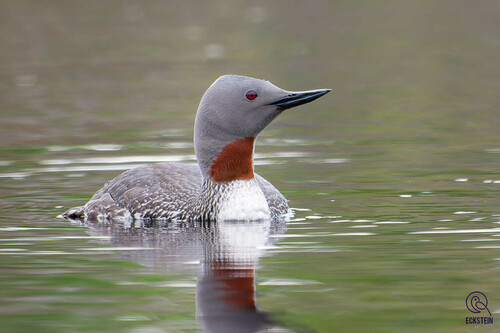
When seen in winter, the Pacific loon can be distinguished from the red-throated loon: red-throated loons have a paler overall appearance, less contrast between the crown, hindneck and throat, and an upturned-looking bill.
Leg Placement
Like other members of Gaviiformes, the Pacific loon has legs placed toward the back of its body.
Locomotion Impacts of Leg Position
This leg position makes walking on land difficult, but helps the loon forage for food efficiently underwater.
Takeoff Requirements
This body structure makes taking off from land practically impossible; Pacific loons need 27 to 46 meters (30 to 50 yards) of open water to take flight successfully.
Breeding Habitat Limitation
This takeoff distance requirement limits the number of lakes that Pacific loons can use for breeding and foraging.
General Habitat
The Pacific loon breeds on tundra lakes and winters on the open ocean or other large bodies of water.
Distribution Range
It breeds mainly in northern Canada and eastern Siberia, and winters along the Pacific coast of North America.