About Furcifer verrucosus Cuvier, 1829
Taxonomic Identification
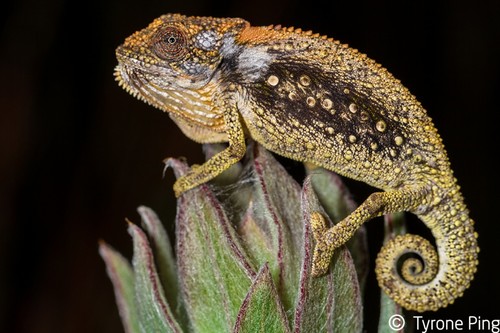
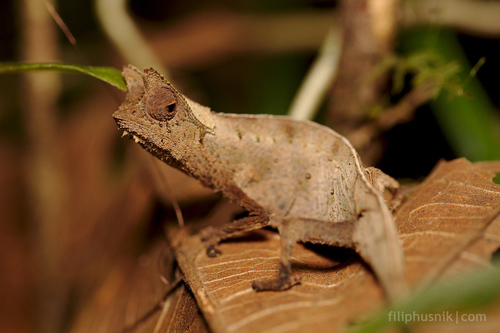
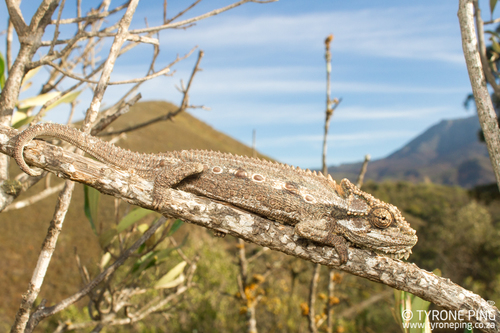
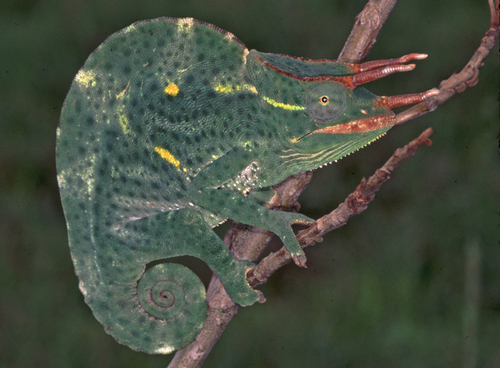
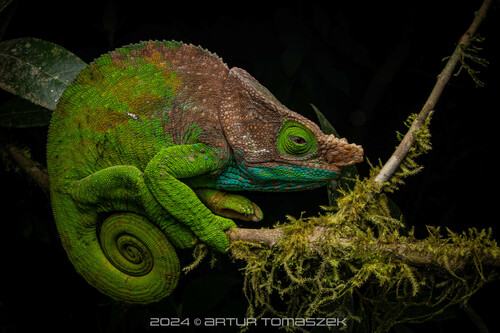
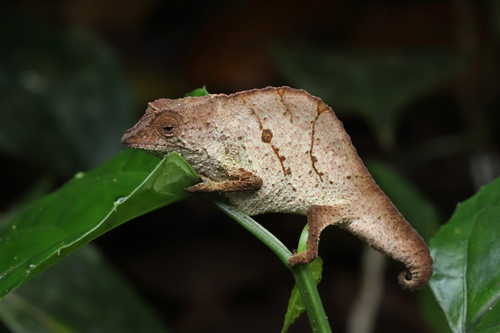
The warty chameleon, Furcifer verrucosus Cuvier, 1829, is a large chameleon species.
Size
Males grow to a total length of 56 centimetres (22 in), while females reach 21 centimetres (8 in).
Head Casque
It has a casque on its head, which is a helmet-like crest made of scales.
Head and Body Crests
A small crest runs along a raised ridge from its eyes to its snout, and additional low crests run along the flanks, down the throat, and along the belly.
Dorsal Spine Crest
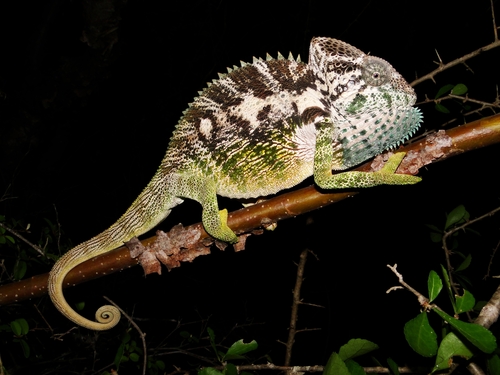
Males have a distinctive crest of up to forty 4 millimetre (0.16 in) spines along the back; in females this crest is shortened, and continues along the spine as tubercles instead.
Lateral Line Scales
Both sexes have a row of large scales that form a lateral line.
Tail Structure
The warty chameleon has a long, prehensile tail.
Base Coloration
Its general base colour is grey or brown, with varied blotching or indistinct banding, and an intermittent white streak along each side.
Sexual Color Dimorphism
Females are typically paler overall, while males often have a green tinge on the belly, tail, and limbs.
Endemic Range
This chameleon is found only on the island of Madagascar, including Manderano in the Tulear region.
Regional Distribution
It occurs across most of western Madagascar and in the drier areas of southern Madagascar.
Habitat Preference
It is seldom found in primary rainforest, and prefers arid disturbed land, including areas near the sea.
Locomotion and Perching
It is a terrestrial species, and also climbs in low bushes.
Thermoregulation Behavior
In hot weather, it sometimes retreats into sandy burrows to stay cool.
Conservation Protection
Both the subspecies Furcifer verrucosus verrucosus and Furcifer verrucosus oustaleti are listed CITES species, and are protected from international wildlife trafficking worldwide.