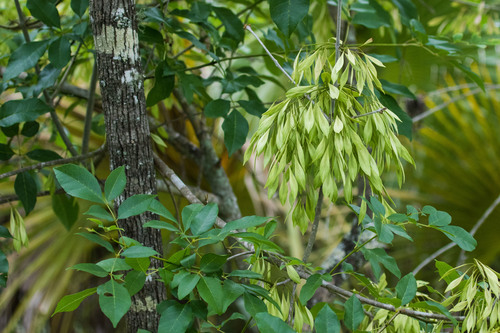
About Fraxinus caroliniana Mill.
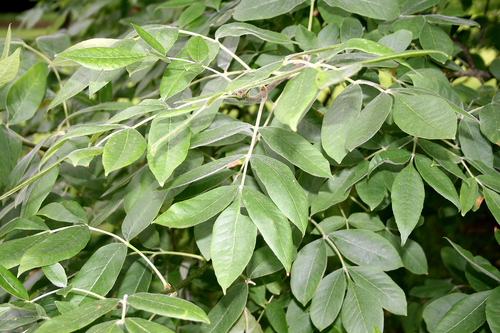
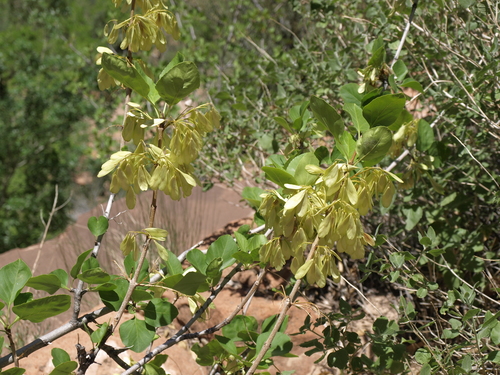
Fraxinus caroliniana, commonly called pop ash, Florida ash, swamp ash, Carolina ash, or water ash, is a species of ash tree. It was originally described by botanist Philip Miller. This species is native from Cuba through the subtropical Southeastern United States, ranging from southern Virginia to Texas. It is the smallest ash species native to eastern North America, growing as a small tree reaching around 40 feet in height. Its wood is light, soft, and weak, with a density of 22 pounds per cubic foot. The species typically grows in coastal swamps and subtropical lowlands. Its leaves are opposite and compound, measuring 7–12 inches long. Each leaf bears 5 to 7 leaflets, which are ovate to oblong in shape, with coarsely serrate or entire margins; individual leaflets are 3–6 inches long and 2–3 inches wide. The fruit is a samara that is frequently 3-winged, with a flat seed portion; the seed sometimes has a bright violet color. Like other species in the section Melioides, Fraxinus caroliniana is dioecious: male and female flowers are produced on separate individual trees. This tree is currently threatened by the emerald ash borer, an invasive species of beetle. Ash, and particularly swamp ash (Fraxinus caroliniana) due to its distinctive figure, is a popular tonewood used to make electric guitar bodies, and less commonly acoustic guitar bodies. It is valued for its bright, cutting tone and good sustaining quality. Some Fender Stratocasters and Telecasters are made from ash as an alternative to alder; one prominent example is Bruce Springsteen's Telecaster featured on the cover of the Born to Run album. Ash exhibits a pronounced bright tone with a scooped midrange. It is lightweight, easy to work and sand, accepts glue, stain, paint and finish very well, and is inexpensive. These properties have made it a favorite material for large factories that mass-produce musical instruments. The Fender musical instrument company has continuously and uninterruptedly used ash to make electric guitars since 1956.