About Forpus passerinus (Linnaeus, 1758)
Size and Weight
The green-rumped parrotlet, Forpus passerinus, measures 12 cm (4.7 in) long and weighs 20–28 g (0.71–0.99 oz).
General Plumage and Facial Features
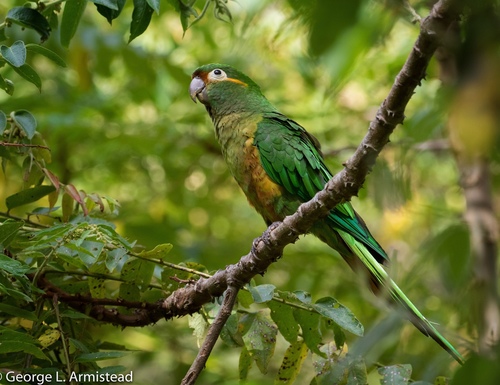
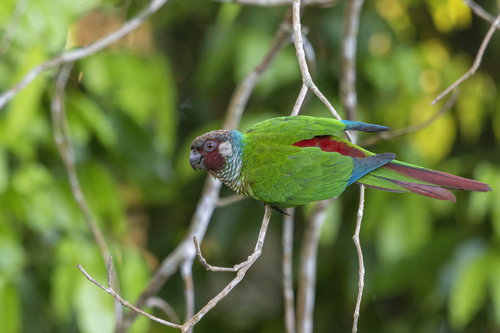
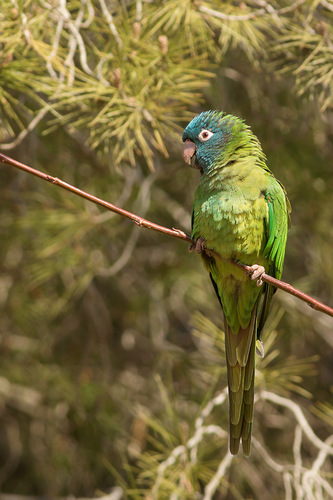
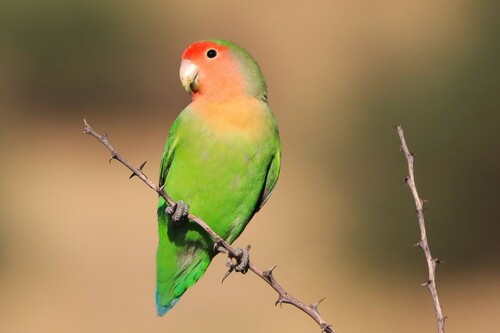
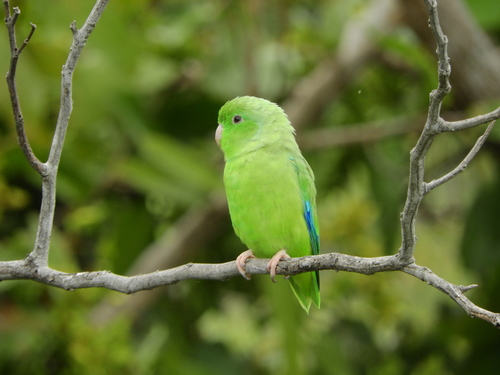
Its plumage is mainly bright green, with a duller, grayer nape. It has dark brown eyes, and light peach-colored beaks and feet.
Sexual Dimorphism in Adults
This species displays sexual dimorphism: males have purplish-blue coloring on their primaries, secondaries, and coverts, plus bright turquoise feathers along the leading edges of their wings. Females have no blue plumage, but have more yellow-green coloring on the head.
Foot Structure
Like all parrots, green-rumped parrotlets have zygodactyly, meaning two toes face forward and two face backward.
Juvenile Appearance
Juveniles have the same appearance as adult birds.
Subspecies Variations
Several subspecies differ from the nominate form: males of F. p. cyanophanes have more extensive purple-blue markings that form a clear patch on the closed wing; males of F. p. viridissimus have darker purple-blue markings on the secondaries; males of F. p. cyanochlorus have darker purple-blue markings than the nominate, and females of this subspecies are a brighter yellow-green; males of F. p. deliciosus have a brighter emerald green back and rump tinted with pale blue, and their primaries and secondaries are pale blue with purple-blue near the feather shafts, while females of this subspecies have a more yellow forehead.
Native Range
Green-rumped parrotlets are native to tropical South America, where they range from the Caribbean regions of Colombia, Venezuela, and Trinidad south and east to the Guianas and Brazil along the lower Amazon River.
Introduced Range
They have been introduced to Jamaica, Curaçao, Barbados, and Tobago, and there are no recorded observations of the species on Trinidad before 1916.
West Indies Distribution
Along with the lilac-tailed parrotlet (Touit batavicus), green-rumped parrotlets are one of only two parrotlet species found in the West Indies.
Habitat Types
They are fairly common in open, semi-arid habitats, including dry scrubland, deciduous woodland, gallery forest, farmland, forest edges, and deforested areas across their range.
Movement Patterns
They are non-migratory, but may make local movements to find food.
Altitudinal Limit
They do not live at altitudes above 1,800 metres (5,900 ft) above sea level.
Pair Bonding Behavior
Green-rumped parrotlets form strong pair bonds and rarely switch mates, though they typically only breed with the same partner for 1–2 breeding seasons.
Stepparent Adoption Behavior
Widowed individuals will usually take a new mate, and 48% of new stepparents adopt the previous mate's offspring. Stepfather parrotlets nest with their new mates, and reach first breeding at an earlier age than other competitors.
Sexual Selection in Parental Traits
Sample sizes for stepmother-widower pairs were too small (only 15 pairs) to generate usable results, so adoption of offspring appears to be a sexually selected trait in this species. Infanticide by stepfathers is also a sexually selected behavior.
Brood Frequency
Almost half of wild females attempt to raise a second brood during a single breeding season.
Breeding Season Timing
Green-rumped parrotlets breed during the rainy season, which falls between May and November, though each subspecies tends to breed in different months within this window.
Nest Site Preferences
They usually build their nests in unlined tree cavities, holes in arboreal termite nests, or cavities in wooden fence posts.
Nest Site Competition
Intense competition for limited nest sites has selected for non-breeding pairs that act as marauders, attempting to take over occupied nests and evict any existing offspring.
Egg Laying Details
The female lays 5–6 small white eggs over a period of 9–16 days.
Incubation and Hatching
She usually starts incubating after laying the first egg, which causes asynchronous hatching that begins 18–22 days after incubation starts. Based on the size of the clutch, the final egg hatches 2–14 days after the first egg.
Fledging Timeline
Chicks fledge 29–35 days after hatching, and the entire clutch fledges over an average period of 14 days.
Nestling Period Explanation
The unusually long nestling period of green-rumped parrotlets is thought to be caused or influenced by the low levels of nutrients and minerals available to young birds in the species' typical habitat.
Chick Feeding Allocation Research
Asynchronous hatching creates size differences between young chicks in the same clutch, and research has examined how parent green-rumped parrotlets allocate food between different sized chicks. Studies show that male parents tend to feed larger chicks more often, while females are far more likely to feed smaller chicks first, due to differing begging behavior: smaller chicks beg more actively, while larger chicks are more submissive.
Feeding Pattern Prevalence
This feeding pattern has also been recorded in other parrot species.
Asynchronous Hatching Energy Impact
Research has found that asynchronous hatching allows parent parrotlets to avoid spending extra time on the high energy expenditure associated with brooding, though their total energy expenditure does not change overall.
Female Body Mass Changes During Breeding
Observations show that a female green-rumped parrotlet's body mass changes greatly over the course of mating and raising a brood of chicks. Females can gain up to 25% more mass before laying eggs, and maintain this increased mass through incubation until hatching.
Mass Loss Factors
The amount of mass females lose during the brooding and fledging periods depends on the size of their brood. This mass change is thought to result from a combination of brooding-related starvation, adaptation to a new breeding lifestyle, and sexual activity.