About Fenestraria rhopalophylla (Schltr. & Diels) N.E.Br.
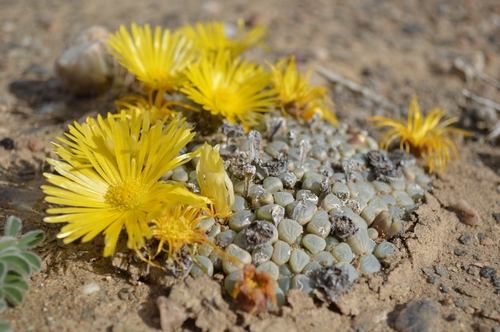
Fenestraria rhopalophylla is the only species currently recognized in the Fenestraria genus. Each of its leaves has a transparent, window-like epidermal window at its rounded tip; the genus gets its name from these structures, as the Latin word "fenestra" means window. Fenestraria rhopalophylla looks very similar to Frithia pulchra, but the two species differ slightly in leaf shape: F. rhopalophylla produces yellow flowers, while F. pulchra has pink flowers. In its natural wild habitat, this plant usually grows buried under sand, with only its transparent leaf tips exposed above the surface. These exposed tips let light enter the leaves for photosynthesis. The plant makes optical fibers from crystalline oxalic acid that carry light to underground photosynthetic tissue. Fenestraria rhopalophylla is native to Namaqualand in southern Africa and to Namibia. It typically grows in sandy or calciferous soils in regions that receive less than 100 mm of rainfall per year, which falls during the winter.