Formicidae
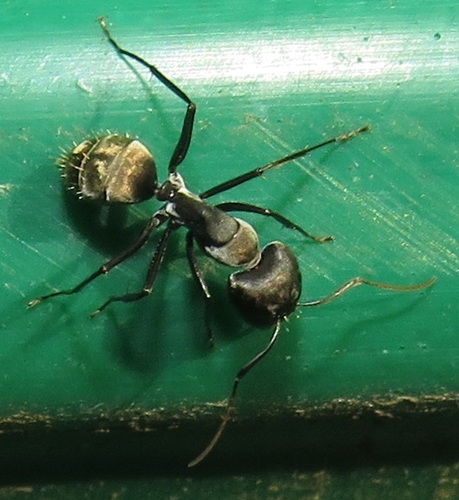
Camponotus cinctellus (Gerstaecker, 1859)
Camponotus cinctellus (Gerstaecker, 1859)
Camponotus cinctellus is an eastern African ant species identifiable by specific body traits that separate it from similar species.
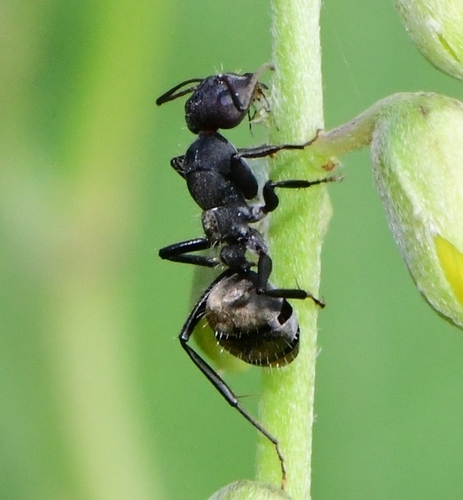
Camponotus sericeus (Fabricius, 1798)
Camponotus sericeus (Fabricius, 1798)
Camponotus sericeus is a widely distributed carpenter ant and a common damaging, hard-to-eradicate pest.
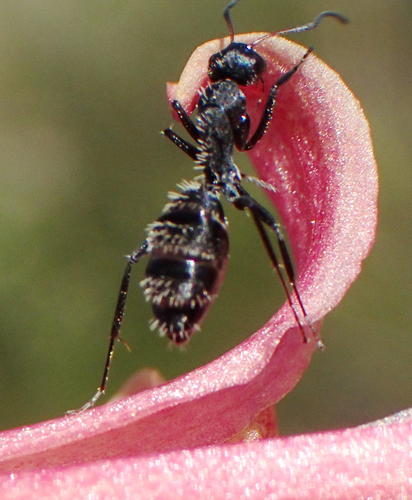
Camponotus niveosetosus Mayr, 1862
Camponotus niveosetosus Mayr, 1862
Camponotus niveosetosus is a distinctively haired ant found across much of eastern and southern Africa in a wide range of non-arid habitats.
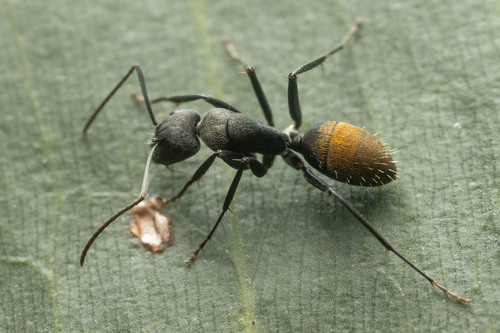
Camponotus aeneopilosus Mayr, 1862
Camponotus aeneopilosus Mayr, 1862
Camponotus aeneopilosus, the golden tail sugar ant, is a small black polymorphic ant with a golden-haired gaster found in eastern Australia.
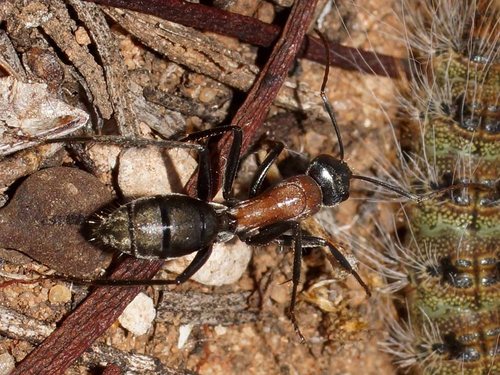
Camponotus ephippium (Smith, 1858)
Camponotus ephippium (Smith, 1858)
Camponotus ephippium is an Australian carpenter ant species with two recognized subspecies.
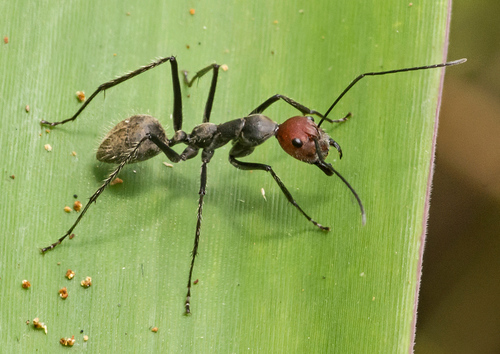
Camponotus singularis (Smith, 1858)
Camponotus singularis (Smith, 1858)
Camponotus singularis is a large ant species native to Asia with a wide range from Nepal to Borneo and Java.
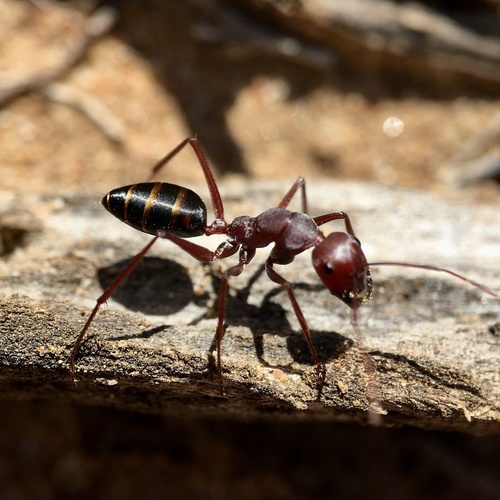
Camponotus aurocinctus (Smith, 1858)
Camponotus aurocinctus (Smith, 1858)
Camponotus aurocinctus is a Australian endemic ant species that prefers to nest in sandy soil and forages in late day.
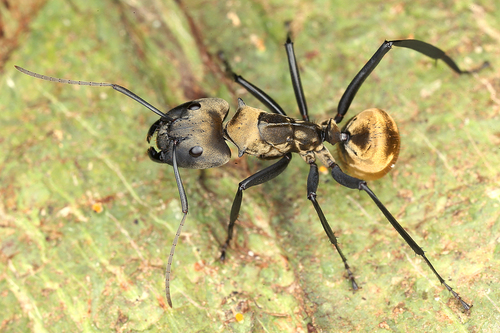
Camponotus sericeiventris (Guérin-Méneville, 1838)
Camponotus sericeiventris (Guérin-Méneville, 1838)
Camponotus sericeiventris, the shimmering golden sugar ant, is a Central and South American carpenter ant, the only species in subgenus Myrmepomis.
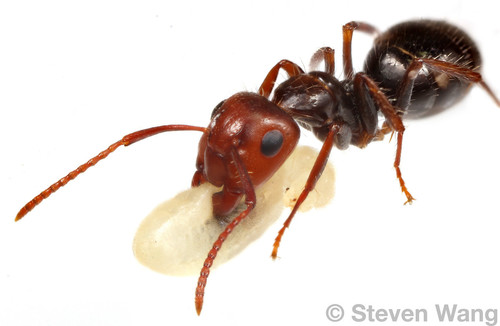
Camponotus sexguttatus (Fabricius, 1793)
Camponotus sexguttatus (Fabricius, 1793)
Camponotus sexguttatus is a carpenter ant native to the Neotropics and invasive in parts of the United States.
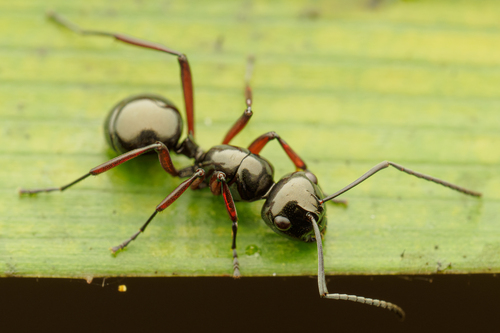
Polyrhachis rastellata (Latreille, 1802)
Polyrhachis rastellata (Latreille, 1802)
Polyrhachis rastellata is a Formicinae ant from Asia with disputed extra subspecies beyond two recognized ones.
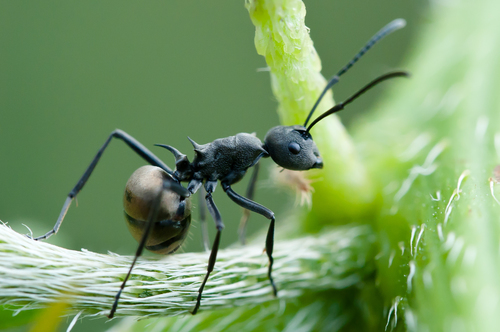
Polyrhachis dives Smith, 1857
Polyrhachis dives Smith, 1857
Polyrhachis dives is a morphologically stable ant species with consistent minor regional morphological differences.
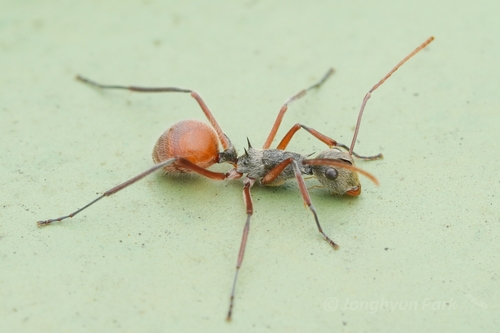
Polyrhachis bicolor Smith, 1858
Polyrhachis bicolor Smith, 1858
Polyrhachis bicolor is a camponotin ant in the genus Polyrhachis that ranges from Australia to southern China.
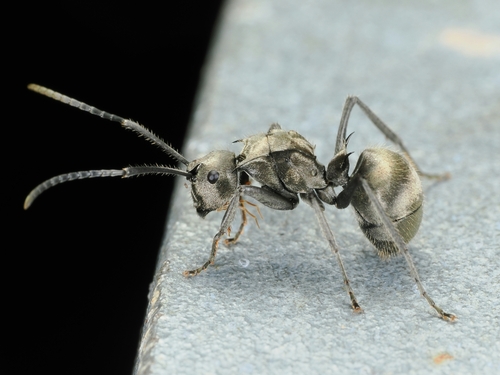
Polyrhachis illaudata Walker, 1859
Polyrhachis illaudata Walker, 1859
Polyrhachis illaudata is a large ant species distributed across South and Southeast Asia that nests in wood with single-queen colonies.
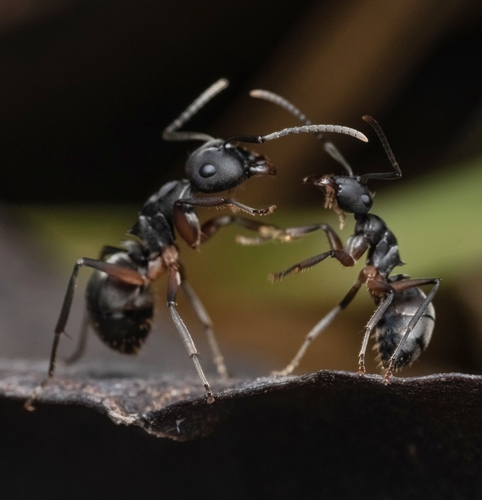
Polyrhachis exercita (Walker, 1859)
Polyrhachis exercita (Walker, 1859)
Polyrhachis exercita is a Formicinae ant species found in India, Sri Lanka, and Bangladesh.
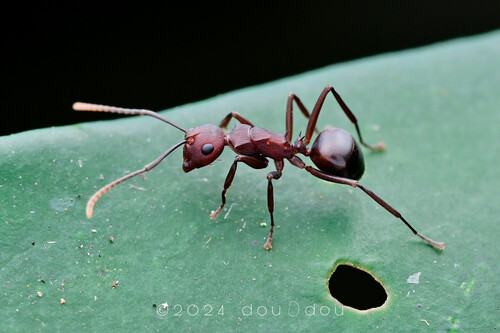
Polyrhachis thrinax Roger, 1863
Polyrhachis thrinax Roger, 1863
Polyrhachis thrinax is a Formicinae ant species found across multiple Asian countries, with 6 or 7 recognized subspecies.
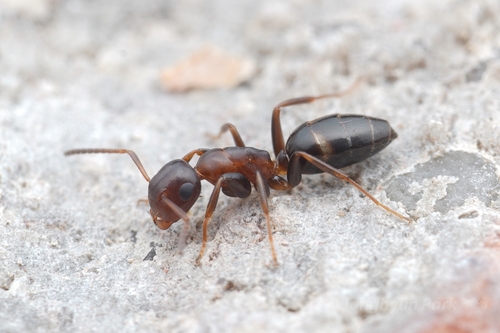
Camponotus truncatus (Spinola, 1808)
Camponotus truncatus (Spinola, 1808)
Colobopsis truncata (previously Camponotus truncatus) is a type of ant, first described 1808, found in parts of Europe and Spain.
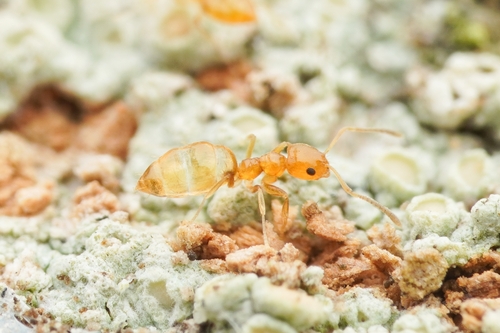
Plagiolepis alluaudi Emery, 1894
Plagiolepis alluaudi Emery, 1894
Plagiolepis alluaudi is a small yellow ant that protects honeydew-producing agricultural pest insects and forms large supercolonies.
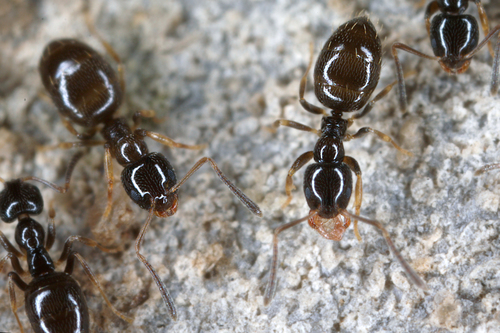
Plagiolepis pygmaea (Latreille, 1798)
Plagiolepis pygmaea (Latreille, 1798)
Plagiolepis pygmaea is a widely distributed ant species in the genus Plagiolepis, found across much of western Eurasia and nearby regions.
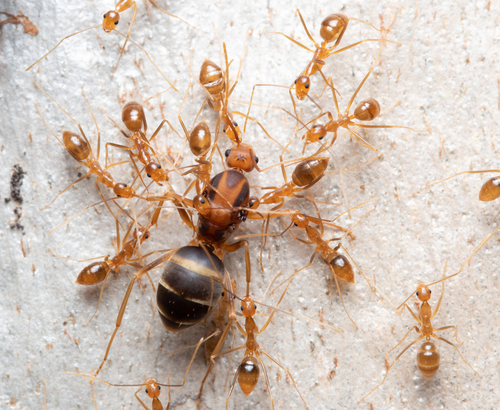
Anoplolepis gracilipes (Smith, 1857)
Anoplolepis gracilipes (Smith, 1857)
Anoplolepis gracilipes, the yellow crazy ant, is a widespread invasive tramp ant with a newly documented unique obligate chimeric male reproductive cycle.
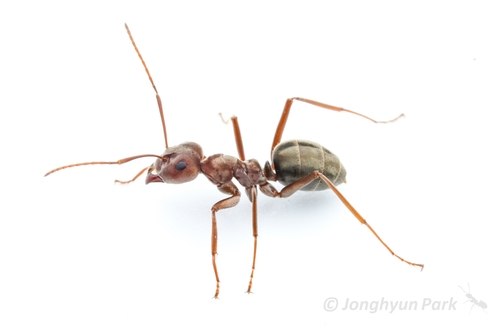
Anoplolepis custodiens (Smith, 1858)
Anoplolepis custodiens (Smith, 1858)
Anoplolepis custodiens, the common pugnacious ant, is an aggressive sub-Saharan African ant eaten by pangolins and aardvarks.
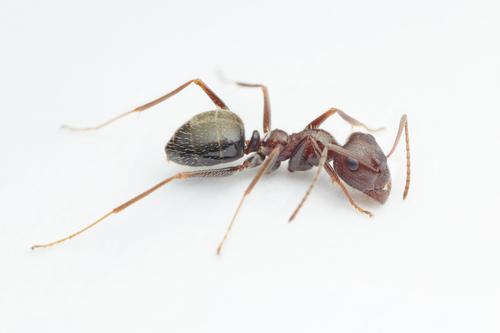
Anoplolepis steingroeveri (Forel, 1894)
Anoplolepis steingroeveri (Forel, 1894)
Anoplolepis steingroeveri, the black pugnacious ant, is an ant species native to southern Africa.
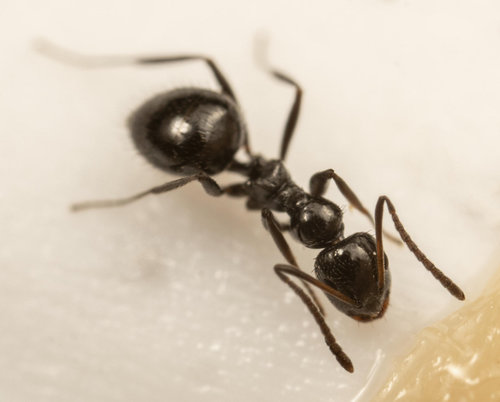
Lepisiota capensis (Mayr, 1862)
Lepisiota capensis (Mayr, 1862)
Lepisiota capensis, the small black sugar ant, is an Old World Formicinae ant found across four biogeographic regions.
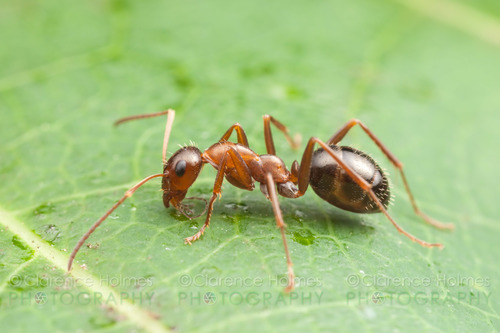
Formica incerta Buren
Formica incerta Buren
Formica incerta is a species of Formica ant native to the eastern half of the United States.
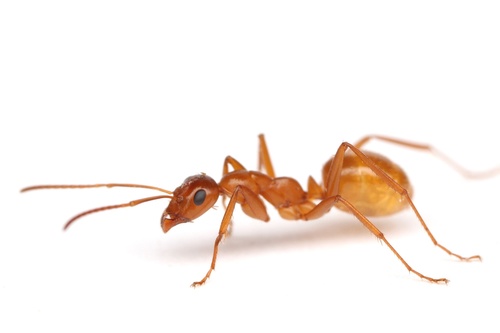
Formica pallidefulva Latreille, 1802
Formica pallidefulva Latreille, 1802
Formica pallidefulva is a variably coloured common ant found across a range of habitats in eastern North America.
Related Families
Start Exploring Nature Today
Download iNature for free. 10 identifications on us. No account needed. No credit card required.
Download Free on App Store
