About Falco biarmicus Temminck, 1825
Nomenclature and Taxonomy
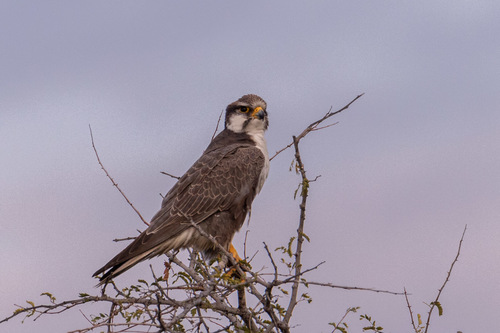
Falco biarmicus Temminck, 1825, commonly called the lanner falcon, is a large falcon species.
Size
It measures 43–50 cm (17–20 in) in length, with a wingspan of 95–105 cm (37–41 in).
Upperpart Coloration by Subspecies
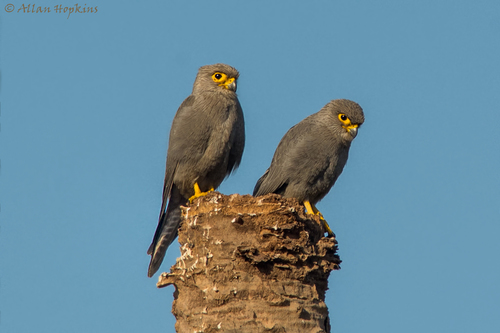
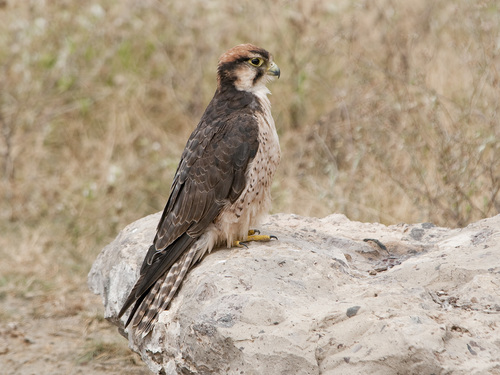
The Eurasian subspecies Falco biarmicus feldeggi, also known as Feldegg's falcon, has slate grey or brown-grey upperparts; most African subspecies have paler blue grey upperparts.
Adult Plumage and Identification
Northern populations have streaked breasts, which makes them resemble greyish saker falcons, but lanner falcons can be distinguished by a reddish back to the head. The sexes have similar plumage.
Juvenile Plumage and Identification
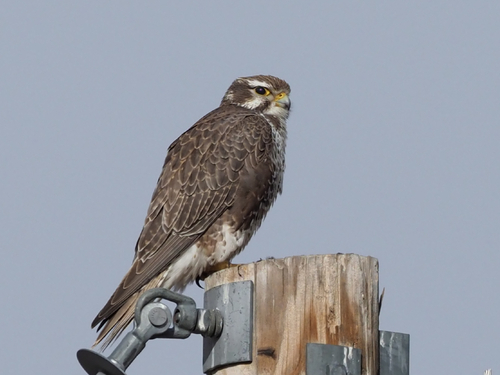
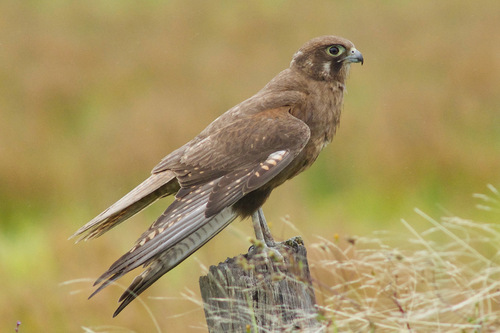
Browner juvenile lanner falcons resemble saker falcons even more closely, though saker falcons have a lighter-colored top of the head and less distinct patterns on the sides of the head.
Vocalization
The call of the lanner falcon is a harsh "wray-e".
General Habitat
Lanner faloccur mainly in open habitats, with a range that extends from forest edges to deserts. They are most common in open savannah and sour grasslands.
South African Distribution
In South Africa, they are commonly found in grasslands in the east of the country, and move into Fynbos, Nama Karoo and the Southern Kalahari during the non-breeding season.
Movement Patterns
While they make these seasonal movements, they are not truly migratory, and usually only move locally. Their movements are often tied to seasonal rains and altitude: they occupy higher elevations during the breeding season, and lower elevations during the non-breeding season.
Captive Breeding and Falconry Use
Lanner falcons are bred in captivity for use in falconry, and hybrids with peregrine falcons, called "perilanners", are commonly encountered.
Historical Falconry Records in England
In 1666, Merret claimed that "lanar" falcons lived in Sherwood Forest and the Forest of Dean in England; any such populations there are thought to be descended from escaped falconry birds owned by nobility. Edward I of England, who reigned from 1272 to 1307 and had a passion for falconry, owned at least one lanner falcon.
Population Status
In the wild, lanner falcon populations are strongly and steadily declining across Europe and all of North Africa, though the species remains relatively common in parts of Africa.
Ecological Role
In the Degua Tembien mountains of Ethiopia, the lanner falcon has been observed to help control pest rodent populations.