About Fabaceae
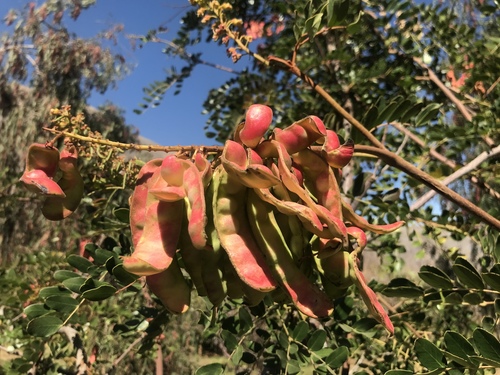
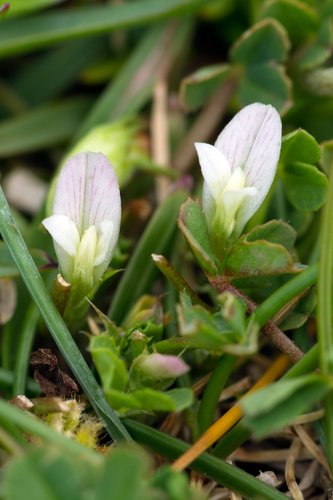
Fabaceae species vary in growth habit, ranging from giant trees like Koompassia excelsa to small annual herbs; most species are herbaceous perennials. Members of this family have indeterminate inflorescences, which are sometimes reduced to a single flower. Their flowers have a short hypanthium and a single carpel with a short gynophore, and after fertilization they produce fruits called legumes. Fabaceae have an essentially worldwide distribution, found everywhere except Antarctica and the high Arctic. Tree species are often located in tropical regions, while herbaceous plants and shrubs are predominant outside the tropics. Many species across multiple genera of leguminous plants, including Astragalus, Coronilla, Hippocrepis, Indigofera, Lotus, Securigera and Scorpiurus, produce chemicals derived from 3-nitropropanoic acid (3-NPA, beta-nitropropionic acid). Free 3-NPA is an irreversible inhibitor of mitochondrial respiration, and as a result it blocks the tricarboxylic acid cycle. This inhibition is especially toxic to nerve cells, and acts as a very general toxic mechanism; the large number of species that produce this compound and its derivatives suggests it has profound ecological importance. A second closely related group of secondary metabolites found in many leguminous species consists of isoxazolin-5-one derivatives. These compounds often occur alongside 3-NPA and its related derivatives within the same species, as seen in Astragalus canadensis and Astragalus collinus. Both 3-NPA and isoxazolin-5-one derivatives also occur in many species of leaf beetles. The history of legumes is closely tied to human civilization; they were already present in Asia, the Americas (common bean, several varieties) and Europe (broad beans) by 6000 BCE, where they became a staple crop and a critical source of protein. Legumes can fix atmospheric nitrogen, which lowers fertilizer costs for farmers and gardeners that grow them. This nitrogen-fixing ability also lets legumes be used in crop rotation to replenish soil that has lost its nitrogen. Because of the extra nitrogen legumes gain through fixation, their seeds and foliage have a comparatively higher protein content than non-legume plant material, and legumes are commonly used as natural fertilizers. Some legume species can perform hydraulic lift, making them ideal for intercropping. Farmed legumes can be grouped into several categories: forage, grain, bloom, pharmaceutical/industrial, fallow/green manure and timber species. Most commercially farmed species fill two or more roles at the same time. There are two broad types of forage legumes. Some, such as alfalfa, clover, vetch, and Arachis, are sown in pastures and grazed by livestock. Other forage legumes like Leucaena or Albizia are woody shrubs or trees; their biomass is either consumed directly by livestock or regularly cut by humans to provide fodder. Grain legumes are grown for their seeds, and are also called pulses. Their seeds are used for human and animal consumption, or to produce oils for industrial purposes. Grain legumes include both herbaceous plants like beans, lentils, lupins, peas and peanuts, and tree species like carob, mesquite and tamarind. Lathyrus tuberosus, once widely cultivated in Europe, forms tubers that are used for human consumption. Bloom legume species include plants such as lupin, which is farmed commercially for its blooms and is popular in gardens worldwide. Laburnum, Robinia, Gleditsia (honey locust), Acacia, Mimosa, and Delonix are ornamental legume trees and shrubs. Industrially farmed legumes include Indigofera, cultivated to produce indigo, Acacia, grown for gum arabic, and Derris, grown for the insecticidal compound rotenone it produces. Fallow or green manure legume species are grown to be tilled back into the soil, to make use of the high nitrogen levels present in most legumes. Many legumes are farmed for this purpose, including Leucaena, Cyamopsis and Sesbania. Multiple legume species are farmed for timber production worldwide, including numerous Acacia species, Dalbergia species, and Castanospermum australe. Many Fabaceae species are important sources of pollen and nectar for bees, and support honey production in the beekeeping industry. Melliferous plants produce nectar to attract bees and other insects to encourage pollination. Examples including alfalfa, and various clovers such as white clover and sweet clover, are key sources of nectar and honey for the Western honey bee.