About Eurycea longicauda (Green, 1818)
Coloration
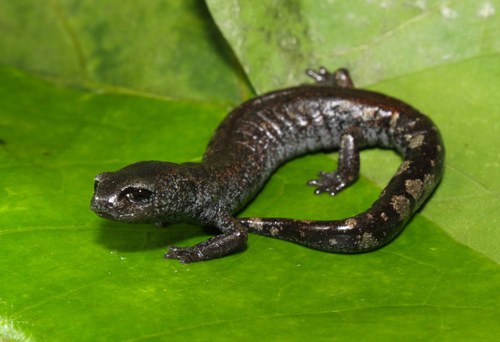
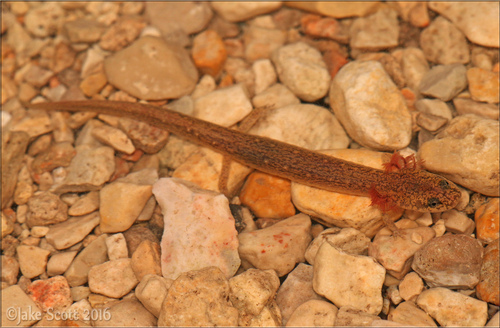
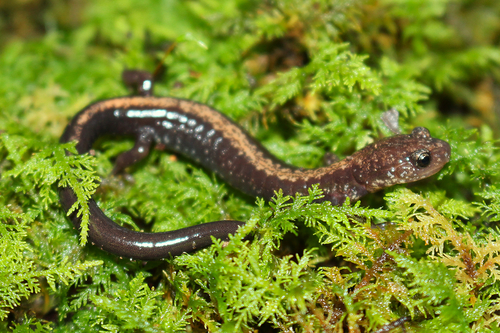
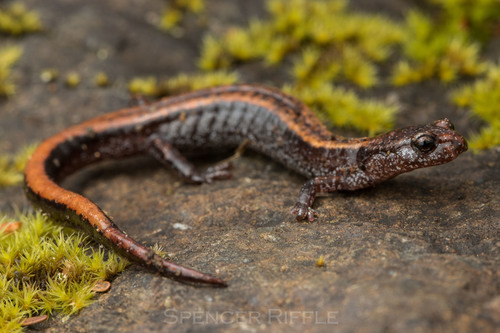
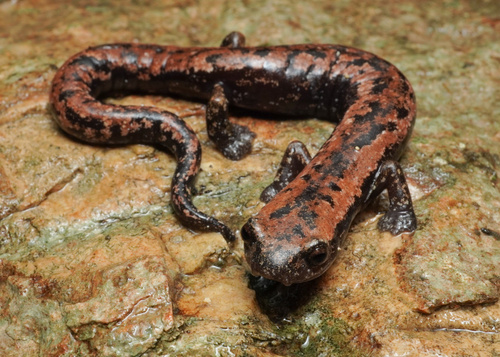
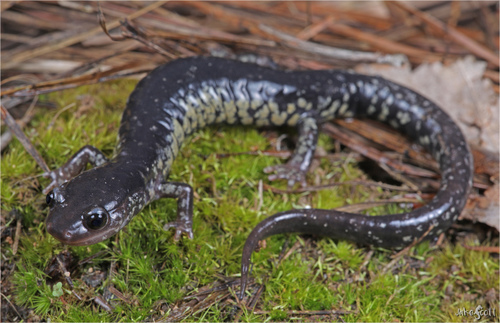
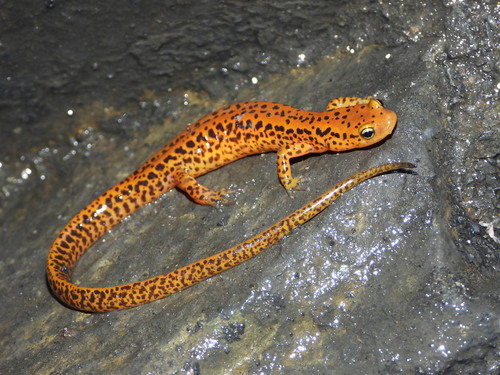
This species, scientifically named Eurycea longicauda (Green, 1818), has a body color that ranges from yellow to orange-red to red, marked with random black spots.
Body Size
Nominate individuals (E. l. longicauda) have an average snout–vent length (SVL) of 50 mm (2.0 in), and their tails reach an average length of 72 mm (2.8 in).
Habitat Range
Eurycea longicauda lives in streamsides, spring runs, ponds, cave mouths, and abandoned mines. During wet weather, they can move into wooded terrestrial habitats.
Shelter Habits
They take shelter in rock crevices, or under rocks, logs, and similar cover.
Reproductive Egg Laying
Eggs are laid in underground crevices connected to aquatic environments; in caves, eggs may also attach to objects in or above water.
Population Status
The total population of this species is large, likely numbering over 100,000 individuals.
Threat Assessment
Some local populations have been affected by strip mining and acid drainage from coal mining, but there are no major overall threats to the species.
Protected Range Overlap
The range of Eurycea longicauda overlaps with multiple protected areas.
Reproductive Period
The subspecies E. l. melanopleura reproduces from November to February.
Egg Characteristics
Its eggs have a diameter of 7 mm (0.28 in).
Larval Hatching
Larvae hatch between January and March at an approximate SVL of 10 mm (0.39 in).
Metamorphosis Details
They undergo metamorphosis seven months after hatching, at a SVL of 23–28 mm (0.91–1.10 in).
Sexual Maturity Sizes
Males reach sexual maturity when their SVL is between 31–43 mm (1.2–1.7 in), while females reach sexual maturity at 33–43 mm (1.3–1.7 in) SVL.
Maximum Recorded Size
The largest recorded males and females both have a maximum SVL of 55 mm (2.2 in).