About Eurostopodus mystacalis (Temminck, 1826)
Common Name and Size
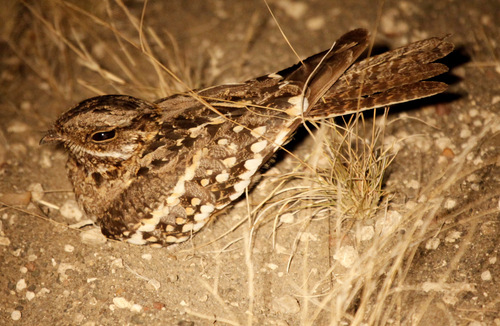
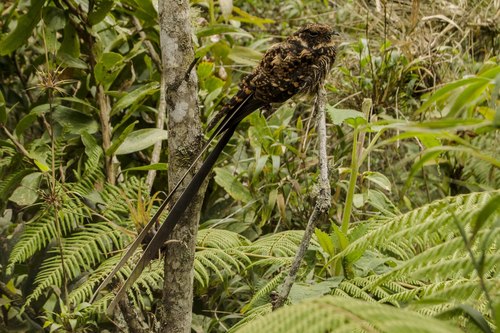
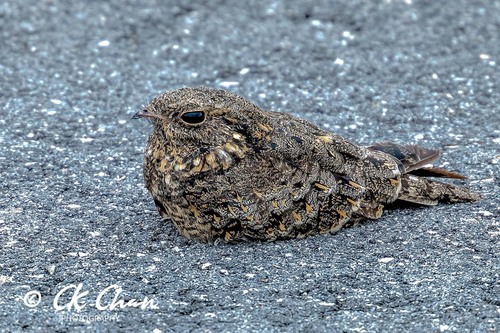
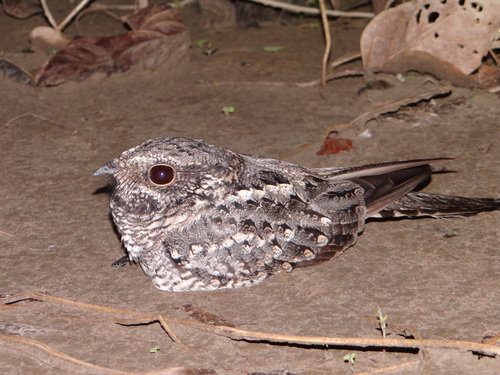
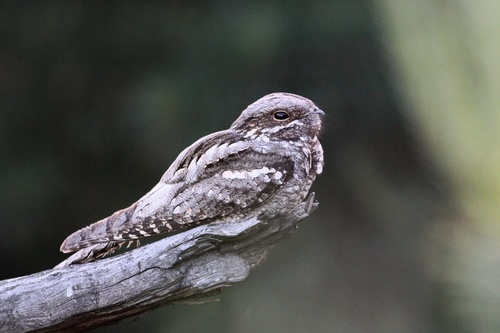
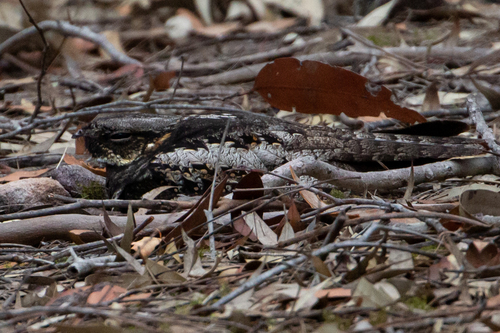
Eurostopodus mystacalis, the white-throated nightjar, is the largest nightjar species found in Australia, measuring 30 to 37 centimetres in length. Males and females are nearly identical in appearance, with dark variegated bodies.
Upper Body and Wing Markings
The upper body and wings are greyish-brown, marked with broad blackish-brown streaks and spots. The underbody is spotted brown or greyish white and barred with rufous. The leading edge of the wing is greyish-white but also speckled with brownish-black.
Throat and Neck Markings
The bird’s neck is buff-coloured, with a large white patch on either side of the throat that gives the appearance of a collar. The four outermost primary feathers have a distinct white spot, which helps distinguish this species from similar-looking nightjars.
Tail, Beak and Leg Features
Its tail is brown with black speckles and has no white markings. The beak is greyish black, and the legs are short and dark brown, which makes moving on the ground difficult for this bird.
Flight Characteristics
When in flight, its wings are long, pointed, and held above the head. This species flies with a buoyant bouncing motion, interspersed with frequent glides that are accompanied by a double wing beat.
Geographic Distribution
The white-throated nightjar is endemic to eastern Australia. Some birds live year-round in northeast Australia, while others travel south to breed. Its breeding range spans areas of Australia east of the Great Dividing Range, as well as New Caledonia and the Solomon Islands.
Population Abundance
It is most abundant in New South Wales and Queensland.
Non-breeding Migration
During the non-breeding winter season, the species migrates to Papua New Guinea between February and April, arriving as non-breeding visitors. While most individuals overwinter outside of Australia, some stay in north and central Queensland year-round.
General Habitat Preference
This species can inhabit a wide variety of habitats, but is most commonly found in dry low-elevation forests. It prefers to nest and roost in dry sclerophyll woodlands with a sparse, discontinuous understory. Many individuals live specifically in woodlands that have experienced disturbances such as forest fires.
Regional Habitat Variation
In New South Wales, this species has also been found living along the edges of rainforests and mangroves. Individuals that overwinter in New Guinea occupy savannas, open grasslands, forest edges, marshlands, and gardens. Wintering birds may also be found along the beaches of the Solomon Islands.
Breeding Season Timing
Breeding season for this species runs from September to February, with slight variation by region. In southern Australia, breeding occurs mainly from October to December; in the Solomon Islands it occurs from October to November; and in New Caledonia it occurs from August to September.
Courtship Behaviour
Courtship behaviour consists of males chasing females, male display movements, and vocal exchanges between the two sexes. Males often land on low branches and wave their wings up and down while calling.
Nesting Habits
White-throated nightjars do not build nests; instead, they lay their eggs directly onto leaf litter or bare soil. The eggs are pale yellow with purplish-brown splotches, and the clutch size is always one. Preferred nesting sites are on hilltops or stony ridges, and the species often reuses the same nesting sites every year.
Incubation Schedule
Both sexes participate in parental care, and take turns incubating the egg. During the day, the female incubates the egg while the male roosts nearby. At night, the male takes over incubation, allowing the female to hunt for food.
Nest Defense Behaviours
If the nest or nestling is threatened, the parents use a variety of distraction displays, including short flights, vocal hisses and barks, and flicking tail movements while on the ground.
Chick Development
Incubation lasts 29 to 33 days, and newly hatched chicks are precocial. Chicks are mobile and capable of moving on their first day after hatching. Chicks fledge approximately 30 days after hatching.
Breeding Productivity
Females may lay a second egg as early as three weeks after the first egg hatches. If an egg is lost, the female will lay a replacement egg, and can lay up to five eggs per breeding season.