About Eupatorium perfoliatum L.
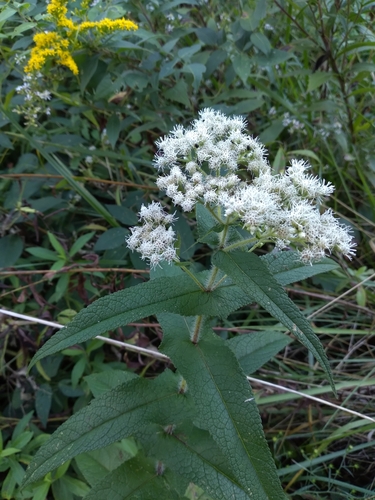
Eupatorium perfoliatum L., commonly called boneset, grows up to 100 cm (39 inches) tall. It has hairy stems, opposite, serrate perfoliate leaves that clasp the stem, and dense clusters of tiny white flower heads held above its foliage. In Illinois, this species blooms in late summer and early fall. Its native habitats include damp prairies, bogs, and alluvial woods. It can form hybrids with other species in the genus Eupatorium, such as Eupatorium serotinum.
This plant is distributed from Nova Scotia west to Manitoba, and south to the northern Florida peninsula and Texas. It grows in wet habitats including swamps, bogs, marshes, and wet pastures.
The leaves and roots of Eupatorium perfoliatum contain a mixture of phytochemicals: polysaccharides (with xylose and glucuronic acid), tannins, volatile oil, sesquiterpene lactones, sterols, triterpenes, alkaloids, and various flavonoids such as quercetin, kaempferol, and caffeic acid derivatives. E. perfoliatum and several of its related species are listed on the US Food and Drug Administration Poisonous Plants Database. The US National Library of Medicine describes E. perfoliatum as an unapproved homeopathic medicine with unknown safety. In 2020, the US Food and Drug Administration warned holistic health companies that marketed fraudulent supplements containing E. perfoliatum with claims that it protected against COVID-19, citing illegal health claims and consumer scams.
Boneset was used in traditional medicine by Native Americans, who applied its extracts to treat fever and common colds. By the early 20th century, it was recorded as commonly used by rural African-Americans in the Deep South to treat fever, including dengue fever, though it was considered less effective for yellow fever and typhoid fever. No adequate scientific research has defined possible effects of E. perfoliatum for these uses, and high-quality clinical research has not confirmed these effects. Consuming large amounts of tea made from its leaves may cause diarrhea.