About Eulamprus tympanum (Lönnberg & Andersson, 1915)
Common Name & Size
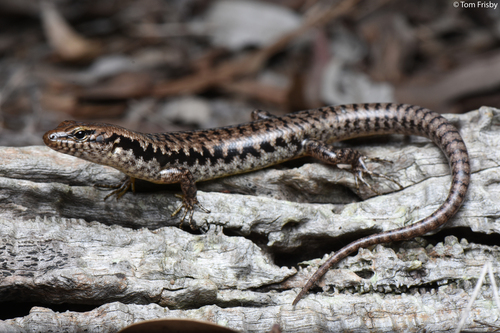
Eulamprus tympanum, commonly known as the southern water skink, is a medium-sized skink that reaches a maximum snout-to-vent length of 85 mm (3.3 in).
Coloration
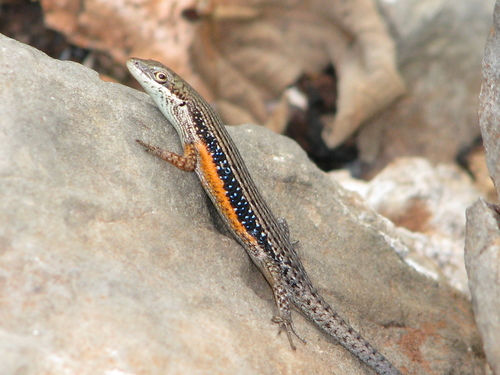
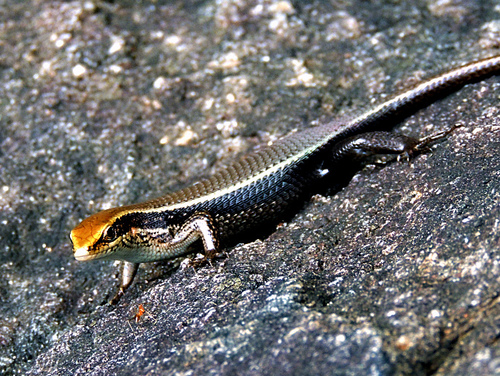
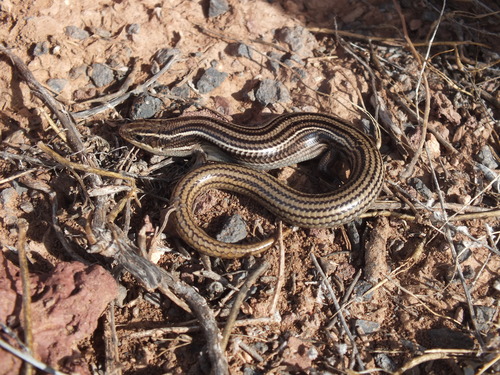
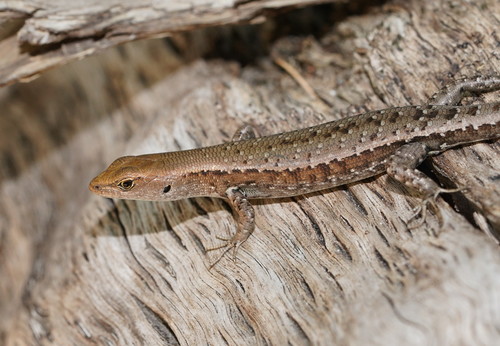
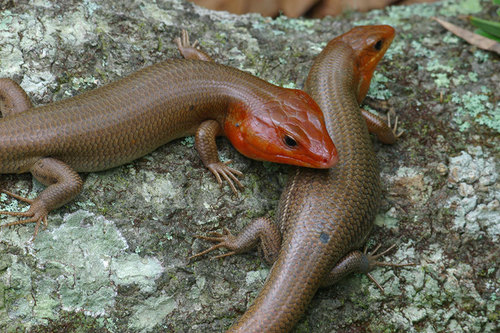
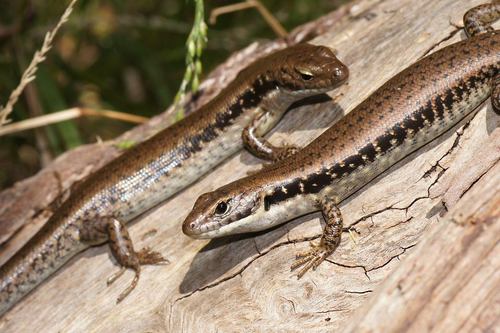
Its head and main body are primarily olive-brown and marked with darker speckles, while its flanks are olive-brown with pale speckling.
Distribution
This species is native to southeastern Australia, where it occurs in the Australian states of New South Wales, Victoria, eastern South Australia, and Tasmania; on Tasmania, it is only found on Rodondo Island.
Habitat & Altitudinal Range
It inhabits areas near fresh water, and its altitudinal range spans from sea level up to near the summit of Mount Kosciuszko.
Diet
The southern water skink typically lives close to small creeks, where it hunts small prey including invertebrates, tadpoles, small frogs, and other small skinks.
Post-Feeding Metabolic Rate
After feeding, its metabolic rate rises to approximately 2.4 times its pre-feeding level, and stays elevated for up to 48 hours.
Metabolic Rate Context
this pattern is probably typical for active lizards that feed relatively often, and the recorded increase is greater than that seen in ambush predatory lizard species.
Reproductive Mode
The southern water skink is viviparous, giving birth to live young in mid to late summer.
Offspring Sex Selection Mechanism
Females of this species can select the sex of their offspring by regulating their body temperature, which they do by adjusting how much time they spend basking in sunlight.
Sex Selection Research Status
The specific cues that influence this sex-selection decision making are not yet fully understood.
Sex Ratio Adjustment
When adult males are scarce, southern water skink litters contain more male offspring, and when adult males are abundant, litters produce more female offspring.