About Eranthis hyemalis (L.) Salisb.
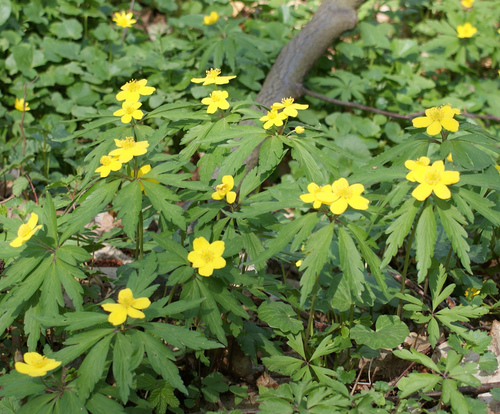
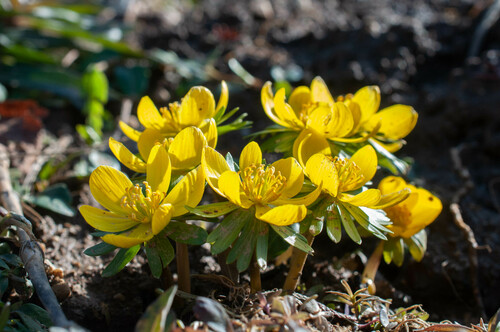
Eranthis hyemalis (L.) Salisb. is a tuberous-rooted herbaceous perennial that reaches up to 15 centimetres (6 inches) in height.
Flower Characteristics
It produces large yellow cup-shaped flowers, measuring 2–3 cm (0.79–1.18 in) across, that are held above a collar of three leaf-like bracts, and blooms in late winter and early spring.
Floral Structure
Its six sepals are bright yellow and petal-like, while its petals are developed into tubular nectaries. This species has numerous stamens and usually six unfused carpels.
Fruit Characteristics
Its fruit takes the form of follicles, each holding several seeds.
Ephemeral Growth Cycle
As a spring ephemeral, it completes its above-ground life cycle by taking advantage of the deciduous woodland environment: it flowers when the maximum amount of sunlight reaches the forest floor, then dies back completely to its underground tuber after flowering ends.
Toxicity Cause
All parts of this plant are poisonous when eaten by humans and other mammals, because it contains cardiac glycosides that are similar to those found in Adonis vernalis.
Glycoside Effects
Small doses of these glycosides stimulate the heart, but very large doses can cause serious, often irreparable heart damage.
Poisoning Symptoms
Symptoms of poisoning include colicky abdominal pain, nausea, vomiting, diarrhoea, vision disturbances, dyspnea, and bradycardia; severe cases can lead to cardiac arrest.
Isolated Glycosides
The specific cardiac glycosides found in E. hyemalis are Eranthin A and B, which belong to the bufadienolide group. This group is also found in, and named for, the toad venom bufotoxin.
Cultivation Value
In cultivation, this plant is valued as one of the earliest flowering plants to emerge each year.
Horticultural Awards
Both E. hyemalis and the sterile hybrid cultivar 'Guinea Gold' have been awarded the Royal Horticultural Society's Award of Garden Merit.