About Anemone parviflora Michx.
Nomenclature and Classification
Anemone parviflora Michx., commonly called northern anemone or small-flowered anemone, is a herbaceous flowering plant in the buttercup family Ranunculaceae.
Growth Form and Rhizome
Individuals grow 10 to 30 cm (3.9 to 12 inches) tall from a thin rhizome that is 2 mm thick.
Stem Leaf Characteristics
Stem leaves do not have petioles.
Basal Leaf Characteristics
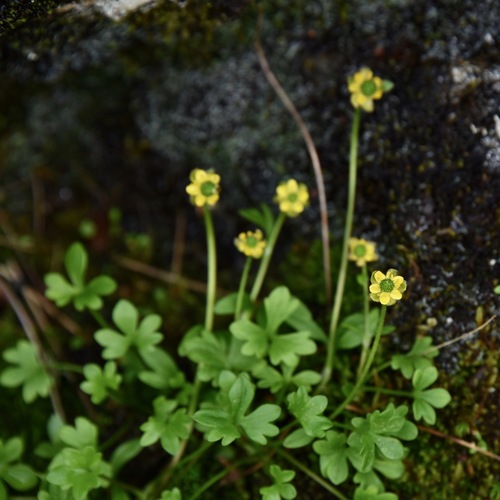
Basal leaves are few, have long petioles, and are deeply split into three sections.
Flowering Period
This species flowers from late spring to mid summer.
Sepal Traits
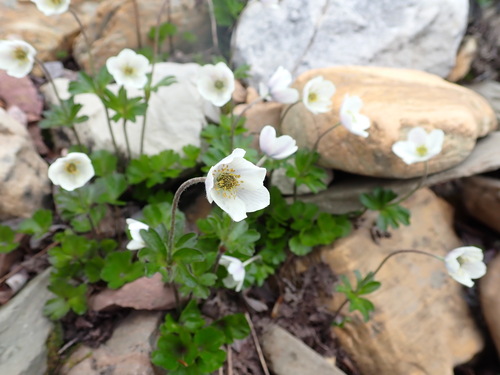
Its flowers have five or six sepals, which are most often white or soft bluish, and measure 8 to 13 mm long.
Flower Arrangement
Each plant produces one peduncle that bears a single solitary flower.
Fruit Head Shape and Size
Fruits grow in ovoid-shaped heads that are 10 mm long or shorter.
Individual Fruit Traits
Individual fruits are densely woolly, not winged, and have straight beaks 1 to 2.5 mm long.
Native Range
This species is native to central and western North America.
Geographic Distribution
It occurs mostly across Canada and Alaska, and also ranges south into Idaho and even Utah.
Habitat and Soil
It grows on wet rocky ledges, in meadows, and along stream banks, typically in calcareous soils.