About Engystomops petersi Jiménez de la Espada, 1872
Taxonomic Background
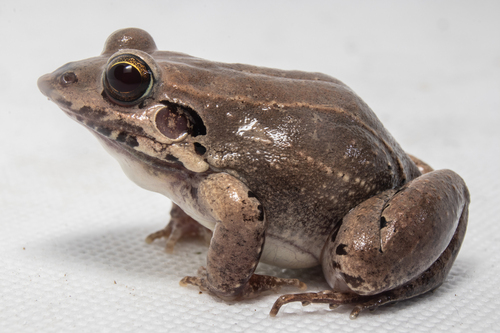
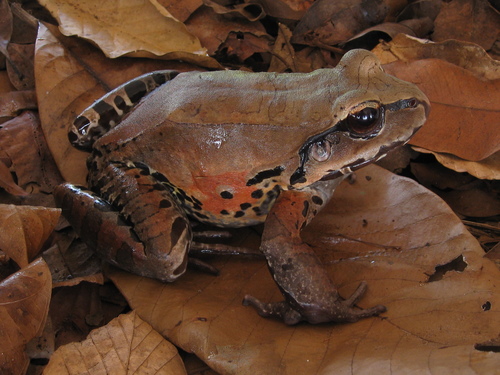
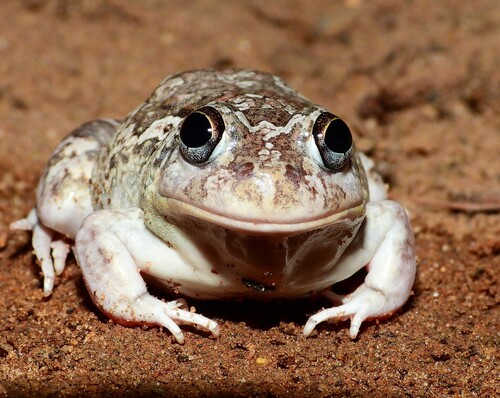
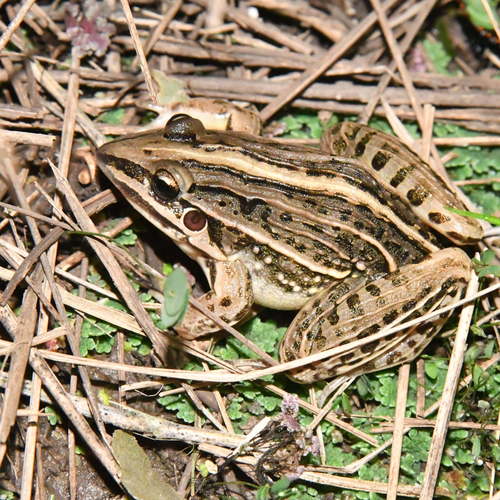
Engystomops petersi (described by Jiménez de la Espada in 1872) are relatively small frogs.
Adult Size
Males measure 21–31 mm (0.83–1.22 in) in snout–vent length, while females measure 25–39 mm (0.98–1.54 in).
Dorsal Coloration
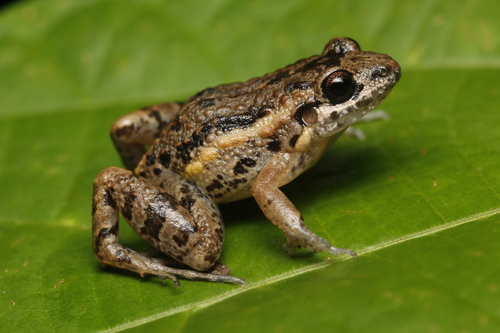
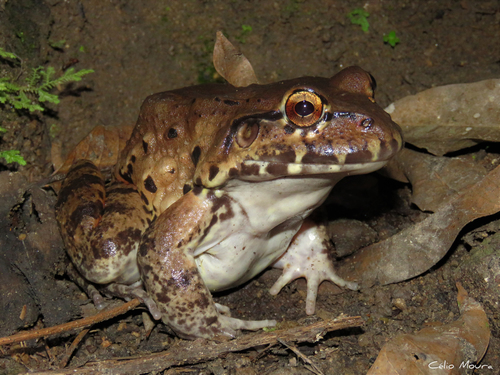
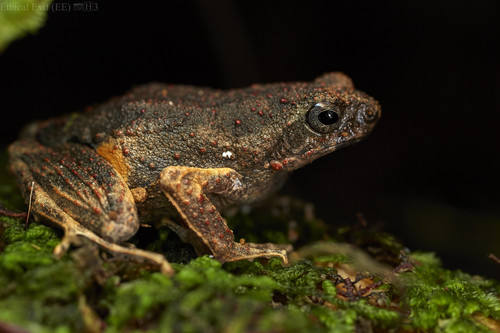
Their dorsal coloration is variable.
Dorsal Skin Texture
The dorsal skin is warty, bearing small tubercles with scattered larger tubercles.
Oral Anatomy
This species lacks maxillary and premaxillary teeth.
Phalange and Gland Traits
It also has T-shaped terminal phalanges and two generally visible parotoid salivary glands.
Limb Structure
The hands and feet have bulbous fingers, and the first finger is longer than the second finger.
Body Build
Overall body build ranges from slender to stocky.
Tympanum Distinguishing Trait
This species can be distinguished from other similar frogs by its tympanum (eardrum) trait: some females have concealed tympani, while males have prominent tympani.
Larval Morphology Research Context
The larval morphology of E. petersi has been thoroughly studied and compared to other members of the genus Engystomops.
Larval Size Comparison
E. petersi larvae are generally the largest among all Engystomops larvae.
Larval Structural Components
Larval structure consists of the body, snout, oral disc, vent tube, tail, dorsal fin, ventral fin, and other organs.
Total Larval Length
Total larval length is usually around 22.7 mm, with body length making up slightly less than half of the total length.
Larval Snout and Nostril Traits
It has a broad, wide, rounded snout, with nostrils that have slightly discolored outer rims.
Larval Oral Disc Features
Its oral disc is filled with small papillae arranged in rows, with papillae varying in tip length and shape.
Larval Jaw Structure
The jaw is dark-colored and marked with serrations that follow an arc-shaped pattern.
Larval Vent Tube Trait
E. petersi tadpoles have a vent tube attached to the body's ventral fin.
Larval Tail Characteristics
Their tails make up approximately 60% of total length, and have a narrowly rounded tip.
Larval Distinguishing Gland Trait
A distinguishing feature of E. petersi larvae compared to other Engystomops species is the presence of prominent elliptical paravertebral glands.
Preserved Larval Coloration Context
Only the preserved larval coloration of this species has been reported.
Preserved Larval Body Coloration
In preservative, larval coloration ranges from mainly dark to light brown, with a visible spottty mesh pattern and speckles across certain body regions.
Preserved Larval Tail and Fin Coloration
The tail is light brown with uniform speckles, and the fins are translucent with threadlike markings.
Adult Habitat
Engystomops petersi is a common species that inhabits primary forests, secondary forests, and forest edges.
Adult Activity and Microhabitat
It is a terrestrial, nocturnal frog that is often found in leaf litter and prefers humid environments.
Breeding Habitat
Though terrestrial, it breeds near water bodies, specifically along the edges of lakes, ponds, and pools.
Male Mating Call Behavior
Males produce mating calls while floating on their backs in the water.
Genus Distribution
The genus Engystomops is a frog lineage found in the Andean foothills of Ecuador, Peru, and Bolivia, extending into the Amazon basin of Brazil.
Genus Speciation Research Methods
Speciation events within the genus are well studied, and are typically defined through research on mitochondrial DNA, mating calls, and cytogenetic variation among regional frogs.
Species Clade and Range
Engystomops petersi forms the northwestern clade of the genus Engystomops, and is recognized as a distinct species found in northern Peru and Ecuador.
Karyotypic Analysis Population
Puyo, Ecuador is a central location for E. petersi, and this population has been used for comparative karyotypic analysis with other regional frog species.
Karyotype Distinction
Its karyotype is unique compared to other Engystomops species in the area, and it is especially distinct from the southwestern clade E. freibergi, which is found in southern Peru and Brazil.
Breeding Period
The breeding period of E. petersi coincides with the rainy season.
Male Call Structure
The male call consists of a prefix and a "whine" component, with an additional third "squawk" component present only in some populations.
Oviposition Trait
Eggs are laid in foam nests.