About Emberiza leucocephalos S.G.Gmelin, 1771
Taxonomy and Basic Morphology
The pine bunting, scientifically named Emberiza leucocephalos S.G.Gmelin, 1771, is a robust bird measuring 16–17.5 centimetres, with a thick bill suited for eating seeds.
Breeding Male Plumage
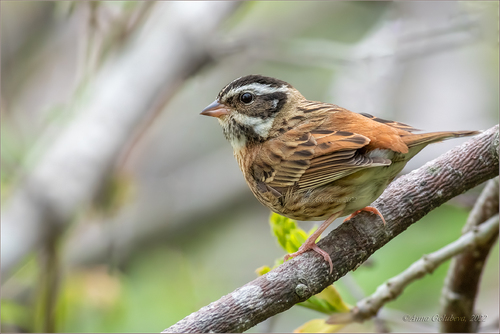
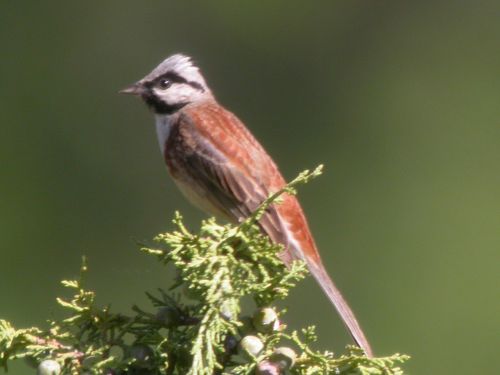
Breeding males have a white crown and cheeks, a chestnut forehead and throat, and a heavily streaked brown back.
Female Plumage
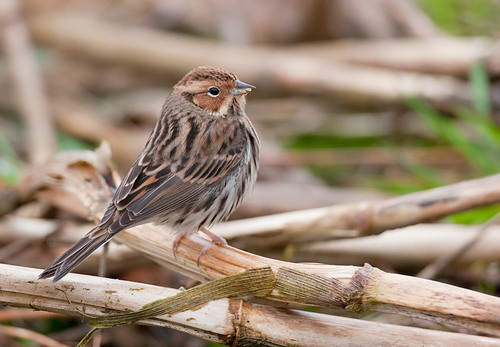
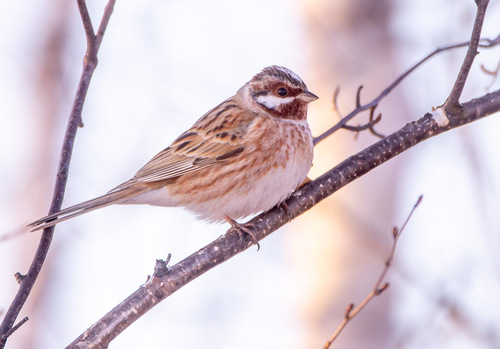
Females are much duller in color and have more streaking on their undersides.
Non-Breeding Plumage
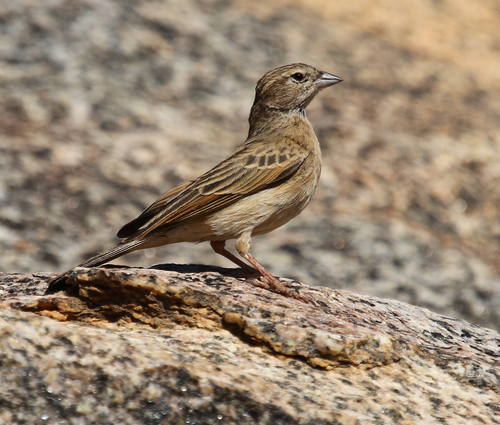
The species' non-breeding plumage resembles that of a yellowhammer, except all yellow coloration is replaced with white.
Vocalizations
This bird's song and calls are similar to those of the yellowhammer.
Breeding and Wintering Range
Pine buntings breed across most of temperate Asia; they migrate south for winter to central Asia, northern India, and southern China.
General Habitat Preferences
They are common in a wide range of open landscapes with some scrub or trees, including cultivated areas.
Habitat Preference Relative to Yellowhammer
Compared to the closely related yellowhammer, pine buntings have a stronger preference for open forest, usually made up of pines.
Occurrence in Western Europe and Italy
While this species is a rare vagrant to western Europe, it often winters in northeast Italy and Tuscany.