About Ellobius talpinus (Pallas, 1770)
Common Name and Basic Classification
Ellobius talpinus, commonly known as the northern mole vole, is a small mammal adapted to an underground lifestyle.
Size and Sexual Dimorphism
Adults reach roughly 130 mm (5.1 in) in total length, weigh up to 70 g, and females are slightly larger than males.
Body Structure
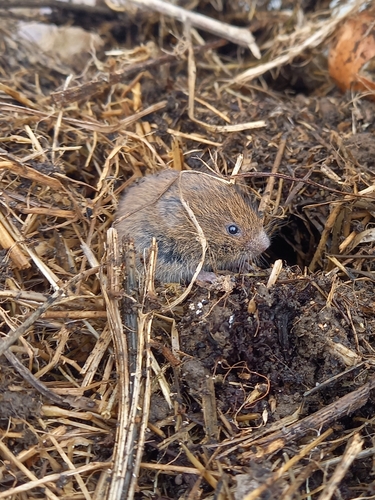
It has a wedge-shaped body, a flat head, a short neck, and strongly developed musculature in its forelimbs.
Fur Coloration
Its fur is short, dense, and brownish, with paler coloring on the underparts.
Digging Adaptations and Burrowing Behavior
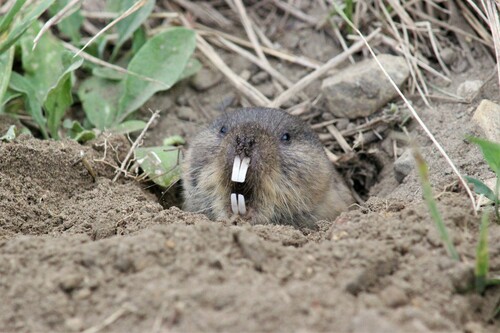
Its feet are naked and pink, and it digs underground burrows using its large incisors.
Geographic Distribution
This species is distributed across Kazakhstan, Turkmenistan, Kyrgyzstan, Uzbekistan, Ukraine, southern Russia, western Siberia, northern Afghanistan, Mongolia, and northern China.
Social Structure
The northern mole vole is a colonial species that lives in groups of around 10 individuals, typically a single family group made up of one adult pair plus young from one or two litters.
Burrow Entrance Characteristics
It constructs complex burrows, whose entrances are usually sealed with soil.
Burrow Chamber Placement
Nesting and food storage chambers are generally located about 4 m (13 ft) below the ground surface.
Diet and Food Storage
Its diet consists of plant roots, bulbs, tubers, and juicy rhizomes, and it stores small food supplies during summer and autumn.
Above Ground Activity
Individuals rarely come to the surface, only doing so to dispose of excavated soil or move to new territory; when moving above ground, they can travel distances up to 800 m (2,600 ft).
Population Limiting Factors
Population sizes of this species are limited by several factors: infectious diseases, parasites, severe winters with deeply frozen ground, spring flooding of burrows by meltwater, and predation by birds and mammals.